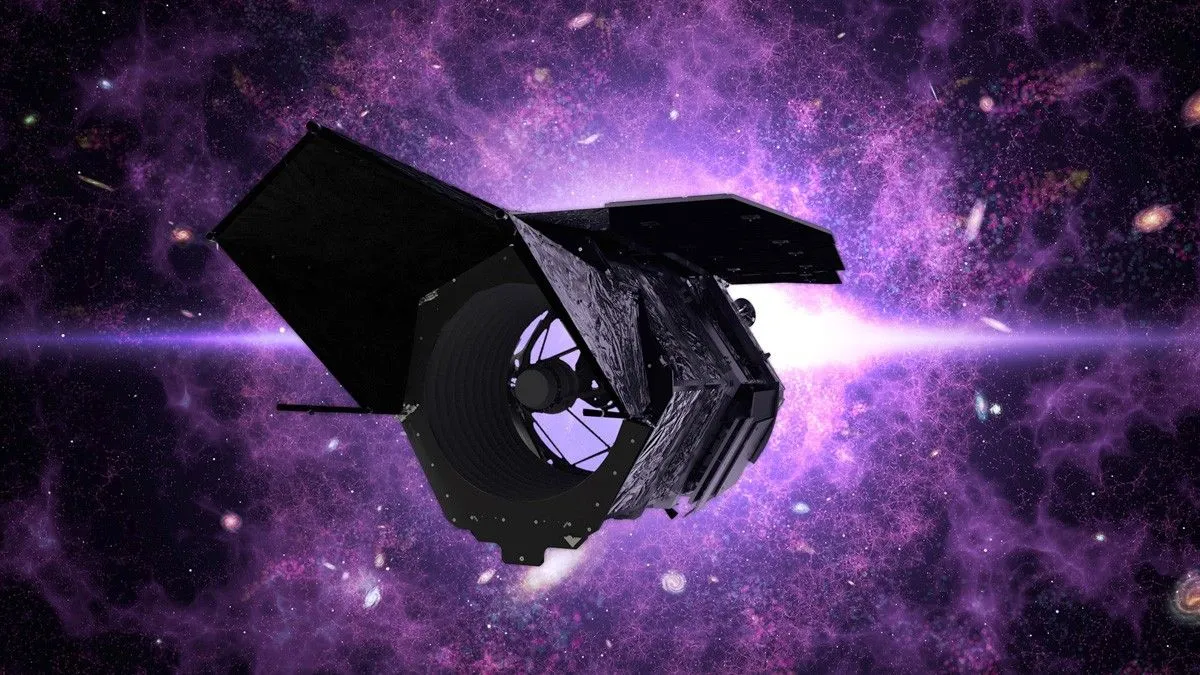
NASA Launches the Roman Space Telescope: A Wide-Eye Mission to Map the Hidden Universe

NASA launched the Nancy Grace Roman Space Telescope aboard a SpaceX Falcon Heavy rocket just after dawn on Sunday, August 30, 2026, from Launch Complex 39A at NASA's Kennedy Space Center in Florida (Al Jazeera). The $4.3 billion observatory separated from the Falcon Heavy's second stage at 7:57 a.m. EDT and began flying on its own, concluding a launch campaign that NASA wrapped up later that morning (NASA).
The launch followed a methodical pre-flight timeline. Engine chill began the previous day, August 29, at Launch Complex 39A. About an hour before liftoff, at 6:51 a.m. EDT, Falcon Heavy's second stage was being fueled. Both the rocket and the Roman observatory switched to internal power before launch, drawing on internal batteries rather than ground supply. During ascent, the Falcon Heavy was seen transiting the sun, and the two side boosters separated from the center core and began their return flight (NASA).
Falcon Heavy's first stage comprises three Falcon 9-derived cores, each powered by nine Merlin engines, for a total of 27 engines firing in parallel (NASA). The selection of Falcon Heavy rather than a smaller launch vehicle reflects the mass-to-orbit requirements of the Roman observatory and its trajectory toward Lagrange Point 2 (L2), a gravitationally stable location 1.6 million kilometres from Earth where spacecraft can maintain a fixed orientation relative to the Sun and Earth. There, Roman will join the James Webb Space Telescope (Al Jazeera). The transit to L2 will take more than three months.
Roman's primary science objectives span three domains: dark energy, exoplanets, and broad astrophysical survey work. NASA states the telescope will "settle essential questions" across these areas (NASA). Its observations will gauge dark matter's gravitational pull and dark energy's repulsive push across cosmic scales (News8000). The mission will also hunt for planets around other stars and survey the cosmos at wide-field resolution (PBS NewsHour).
To put those targets in perspective: dark matter and dark energy together account for roughly 95 percent of the universe's contents. Ordinary matter, everything telescopes have traditionally observed, represents about 5 percent. Dark matter constitutes about 27 percent, and dark energy approximately 68 percent.
The scale of Roman's survey is the telescope's defining technical advantage. Its field of view is more than 100 times wider than that of the Hubble Space Telescope. Its main survey, set to take more than a year to complete, will cover more than 2 billion galaxies (Al Jazeera).
The mission launched nearly a year ahead of schedule and within budget. Its planned duration is five years, though NASA says the telescope may carry enough fuel for five additional years and is designed to be refuelled, a capability that could extend the mission's operational lifetime well beyond its baseline (Al Jazeera).
The telescope is NASA's first space telescope named after a woman. Nancy Grace Roman, the agency's first chief astronomer, earned the nickname "Mother of Hubble" for her role in advocating for the Hubble Space Telescope program. She died in 2018 at age 93 (Al Jazeera).
The broader context here is a shift in observational strategy for astrophysics. Where Hubble and Webb are optimized for deep, narrow-field observations of individual objects at high resolution, Roman is built for breadth. Think of Hubble as a telephoto lens and Roman as a wide-angle lens: each Roman exposure captures vastly more sky area, enabling statistical studies of large-scale structure and the distribution of galaxies across cosmic time. That makes Roman particularly well-suited to probing dark energy, whose effects show up in the expansion history of the universe and the clustering of matter on the largest scales. The 2-billion-galaxy survey will map that structure with a sample size that no previous space telescope could assemble in a comparable timeframe.
Roman's co-location with Webb at L2 also carries operational implications. Two major observatories at the same Lagrange point means NASA will need to coordinate tracking, data downlink, and potentially servicing schedules for both missions over overlapping operational windows. The refuelling design of Roman, in particular, suggests forward planning for sustained presence at L2 beyond the initial five-year window.
The successful launch closes a development cycle that, by NASA's own accounting, came in under cost and ahead of schedule, an outcome worth noting given the budgetary and schedule pressures that have historically accompanied flagship astrophysics missions. Whether Roman's scientific output over its planned five-to-ten-year mission lives up to its survey ambition will depend on instrument performance, data pipeline throughput, and the telescope's ability to deliver calibrated wide-field imaging at the sensitivity levels the dark-energy science cases require. Those answers are months away at minimum, with L2 arrival expected by late 2026 or early 2027 and the main survey beginning thereafter.