Anker's eufyMake Is Building a Consumer Fabric Printer for T-Shirts, Jeans, and More
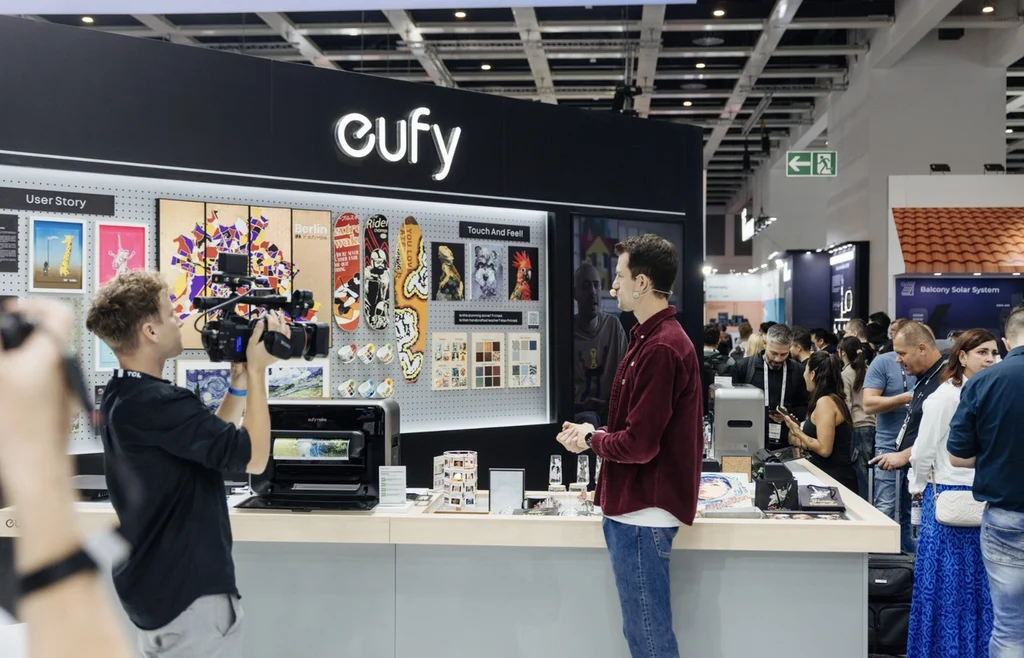
Anker's eufyMake brand is developing a personal fabric printer that can apply photos and custom designs directly onto T-shirts, jeans, bags, and hats, with a planned launch in spring 2027. The device does not yet have an official name and will be shown as a next-generation prototype at IFA 2026 in Berlin (The Verge; eufyMake).
The printer supports two distinct decoration methods. Direct-to-garment (DTG) printing applies ink straight onto soft, breathable fabrics — think of it like an inkjet printer, but for cloth. Direct-to-film (DTF) printing first puts the design onto a special transfer film, which is then pressed onto a wider range of fabric types using a heat press. The eufyMake device can use both techniques on a single garment, though not at the same time. Anker says it achieves accurate color reproduction on both light and dark materials (The Verge).
One of the more technically interesting claims is that the printer's DTG mode can apply color to embroidered designs. Paired with eufyMake's cheaper single-color embroiderer, this would let users add multiple colors to stitched designs without buying a more expensive multicolor embroidery machine. Whether the color actually holds up on raised, textured embroidery thread after repeated washing is the kind of question a trade-show prototype cannot answer, and Anker has not yet released detailed specifications or pricing (The Verge).
The fabric printer is not eufyMake's first entry in consumer-grade printing hardware. The brand previously introduced a UV printer — the E1 — capable of depositing designs on wood, metal, glass, and acrylic, broadening the range of materials accessible to hobbyists and small creators. That device debuted at a Shopify pop-up event in New York City (eufyMake). eufyMake also offers a UV DTF laminator for producing weatherproof stickers (eufyMake).
The product strategy is consistent: take professional-grade decoration techniques that have historically required industrial equipment or costly service-bureau relationships, and package them for individual buyers. DTG and DTF printing are well-established in commercial apparel decoration, but the equipment has typically been large, expensive, and demanding in terms of maintenance. A consumer device combining both methods in one unit would lower the barrier to entry considerably, assuming print quality, ink durability, and per-print costs hold up at a consumer price point.
The embroidery-color pairing is the detail worth watching. Multicolor embroidery machines carry a significant price premium over single-color models, and the ability to print over single-color stitching could change the cost equation for small-scale apparel customization. Much depends on how precisely the printed color lines up with the embroidered areas, and on how ink interacts with thread fibers versus flat woven fabric. These are engineering questions Anker will need to address between the IFA prototype and the spring 2027 launch.
Anker has not disclosed print resolution, ink system details, maximum garment dimensions, throughput speeds, or consumable costs. The spring 2027 target gives the company roughly six months from the IFA showcase to refine the prototype, though the distance between a trade-show demo unit and a shipping consumer product is typically measured in iterative hardware revisions, software tuning for color management, and supply-chain readiness for consumables.
For now, the eufyMake personal fabric printer is an announcement of intent. The combination of DTG and DTF in a single consumer device, plus the embroidery-color workaround, is technically ambitious. Whether it delivers on that ambition at a price and quality level that resonates with hobbyists and small-business creators will determine whether this becomes a category-defining product or an interesting prototype that never quite finds its market.