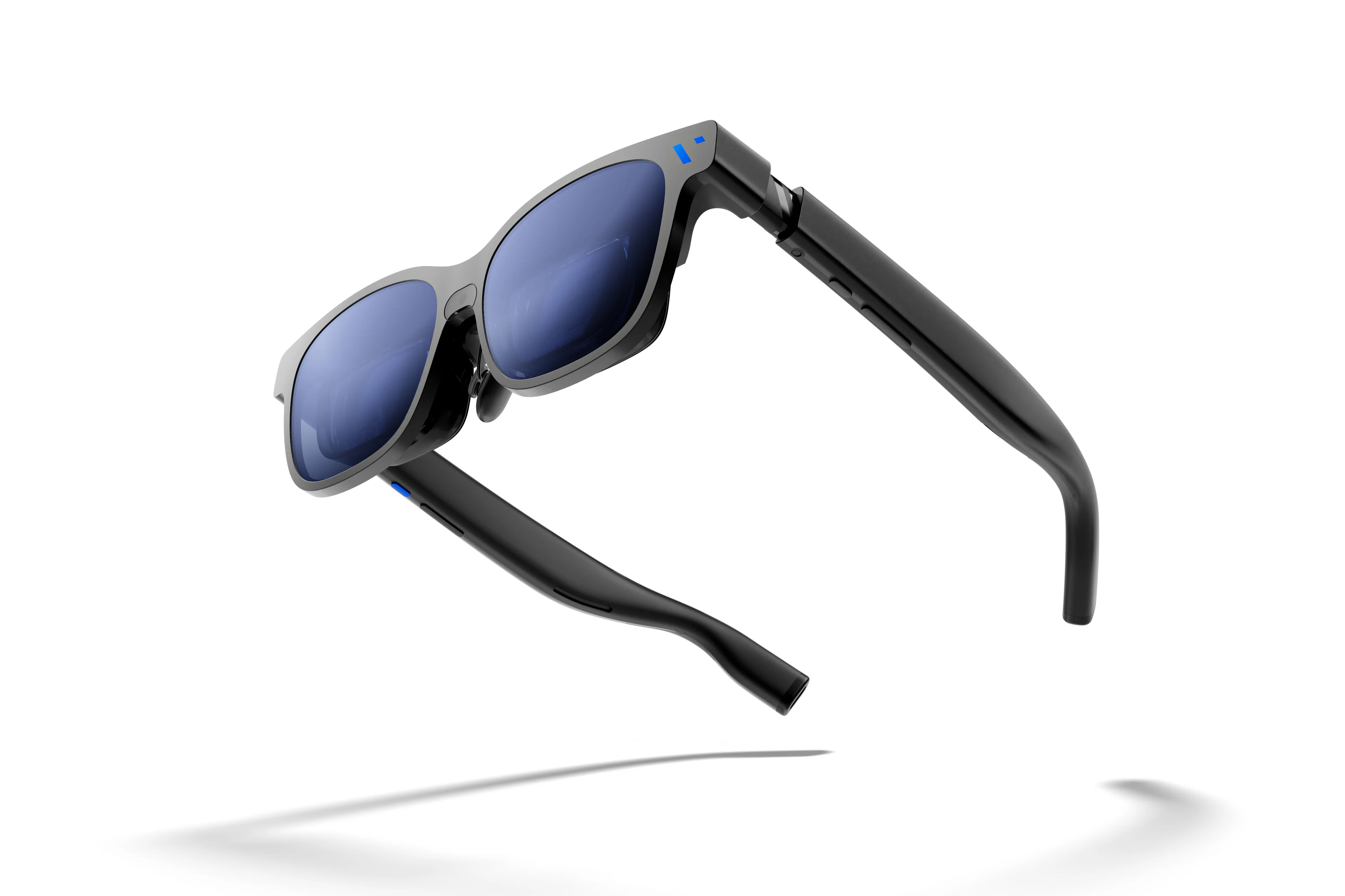
HTC Vive Eagle at $499: Camera, Battery and VIVE AI Explained

HTC's Vive Eagle is now available in the US at $499 for the Panto model with non-prescription sunglass lenses. The release follows a Taiwan debut about a year earlier, with the Western rollout covering the US, Europe, the UK and Australia Engadget.
The design uses a Wayfarer-style frame, a familiar thick-rimmed shape, with Panto (round) or Square lens options in black or tinted translucent plastic. It weighs about 49 grams (1.7 ounces), which is light for glasses with a built-in camera. It is one gram heavier than Meta's Ray-Ban smart glasses.
Processing comes from a Snapdragon AR1 Gen 1 SoC, the Qualcomm chip built for this class of glasses, with 4GB of memory and 32GB of storage. It connects over Bluetooth 5.3 and Wi-Fi 6E, with Wi-Fi used to move photos and video to a phone. Power comes from a 235mAh battery rated for 4.5 hours of music playback, 3 hours of calls, and 36 hours of standby. Storage is fixed, with no expansion path described.
Imaging centers on a 12-megapixel ultra-wide camera in the left hinge, a lens that takes in a wider view than a standard lens. It captures 3,024 x 4,032 stills and 1,512 x 2,016 vertical video, a tall shape suited to phone screens. It can also shoot slow-motion vertical video at 120 frames per second at 960 x 1,280 resolution. Clips are limited to 10 minutes, and the 32GB of storage holds up to 3,000 photos or up to 50 videos.
Audio uses open-ear drivers, speakers that sit outside the ear so the wearer still hears the surroundings, paired with a four-microphone array. The array combines one directional microphone in the nose bridge and three omnidirectional microphones that listen in all directions. The layout keeps ears open while picking up voice for calls and assistant queries.
On software, HTC uses its own VIVE AI voice assistant, with real-time assistance and live translation listed as core functions HTC. The box includes the glasses, charging cable, glasses case, ear grips, and safety and warranty card. A white LED warns people nearby when recording is occurring.
For context, the Taiwan introduction priced the device at NT$15,600 with four color options: Berry, Coffee, Grey, and Black. Those details date to August 2025 and describe that earlier launch, while current US review coverage describes black or tinted translucent plastic for the frames now on sale in the West.
Engadget's review of the Western model concludes HTC can't win on price and can't win on the arguments against Meta's camera-equipped smart glasses.
The broader context here is where differentiation is still possible in this form factor. Battery life, weight, capture resolution, and wireless transfer are now tightly limited by physics and by a shared chip base. In my view, HTC's path depends less on matching Meta feature for feature and more on whether VIVE AI, translation quality, and comfort across a full day prove steady enough that owners use voice and camera without a second thought. If that daily use holds, 49 grams with open-ear audio could support hands-free capture and on-the-spot help, the kind of quiet utility that often outlasts launch debates over price.