Thousands Flee Yemen to Djibouti as Fighting Spreads Along the Red Sea Coast

More than 3,400 people fleeing renewed fighting in Yemen landed on Djibouti's northern coast in a 48-hour period reported September 15, 2026. Djibouti's state news agency reported the figure on Sunday. The total capped a surge that began the previous weekend and has continued to climb. Al Jazeera
Most arrivals landed near Obock, on Djibouti's northern coast close to the narrowest part of the Bab al-Mandeb, the strait that separates the Horn of Africa from Yemen. The strait acts like a narrow doorway between the Red Sea and the Gulf of Aden. People crossed in many kinds of vessels, from small wooden dhows, the traditional boats used in the region, to larger ships. One vessel carried hundreds of people. Finance Minister Ilyas Dawaleh described the acceleration: about 500 arrivals by September 11, 1,400 the next day and more than 2,000 by that evening. By September 13, he said the pace was becoming increasingly difficult for the country. Djibouti has fewer than 1.2 million people.
According to the September 15 reporting, the driver was a Houthi offensive that seized the Red Sea port of Mocha and advanced along the coast toward the strait separating Yemen from Djibouti. The Houthis, a group that controls much of northern Yemen, also seized the Yemeni island of Mayyun, also known as Perim, in the Bab al-Mandeb strait. The September fighting was between Yemen's government forces and the Iran-allied Houthis. On September 11, Djibouti's Ministry of Foreign Affairs said it was following developments on Mayyun with increased attention. It said it backed efforts to ease tensions and reach a political solution in Yemen.
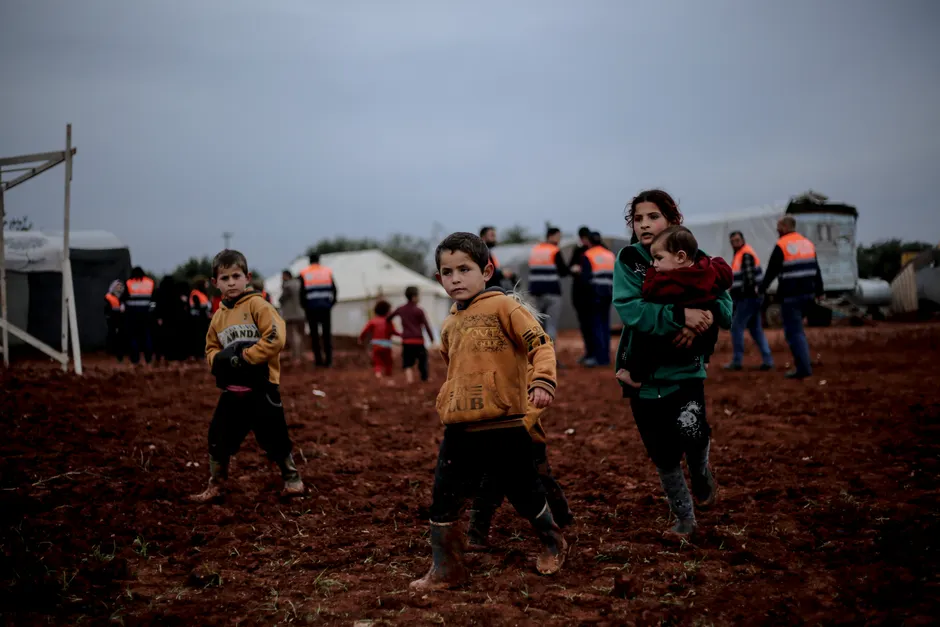
Displacement inside Yemen is larger than the movement across the strait. The International Organization for Migration (IOM), the United Nations migration agency, put displacement inside Yemen at more than 85,000 people, most of it in the first two weeks of September 2026. The agency said fighting drove residents from entire districts, including Maqbanah and Jabal Habashi. Some families were stranded on the Yemeni side because of fuel shortages. Those who secured passage faced severe conditions at sea. UNICEF, the United Nations children's agency, said children crossing to Djibouti were exposed to extreme heat, dehydration and a lack of safe drinking water.
Djibouti deployed its coastguard, navy, army and health services to rescue people stranded at sea and receive them ashore at sites including Obock and Khor Angar. Prime Minister Abdoulkader Kamil Mohamed travelled to Obock to meet officials from UNHCR, the United Nations refugee agency, the World Food Programme, which provides food aid, and the IOM. Alexandre Coissac heads the IOM in Djibouti. The crossing is short. Officials point to reception capacity as the constraint.
In 2026, an estimated 22.3 million people in Yemen will require humanitarian assistance, including 5.2 million internally displaced people, people forced from home but still inside the country, according to UNHCR. UNHCR The Bab al-Mandeb route has a long record of lethal crossings in both directions. In 2010 reporting, UNHCR said more than 40 corpses had been discovered since June along the Yemeni Red Sea shore. In separate 2010 reporting, it said at least 40 Ethiopian men had died since June after arriving in Yemen from Djibouti.
The broader context here is chokepoint geography meeting limited absorption capacity. Mayyun sits inside a lane used by commercial traffic and military deployments, so control changes there register beyond Yemen's coast. For Djibouti, a state hosting foreign bases and operating Obock as a reception point, a maritime inflow measured in thousands within days tests triage, water, shelter and onward screening simultaneously. Whether the flow stabilizes will turn on fighting around the coastal districts and access to fuel and boats on the Yemeni shore, factors that have already left families stranded before departure.