Brent at $90, Then $74: Inventories, Hormuz Flows and Why Oil Prices Stay High
The U.S. Energy Information Administration expects Brent crude, the benchmark for most of the world's oil, to average about $90 per barrel in the second half of 2026, then fall to about $74 per barrel in 2027 as production rises and stored oil is rebuilt.
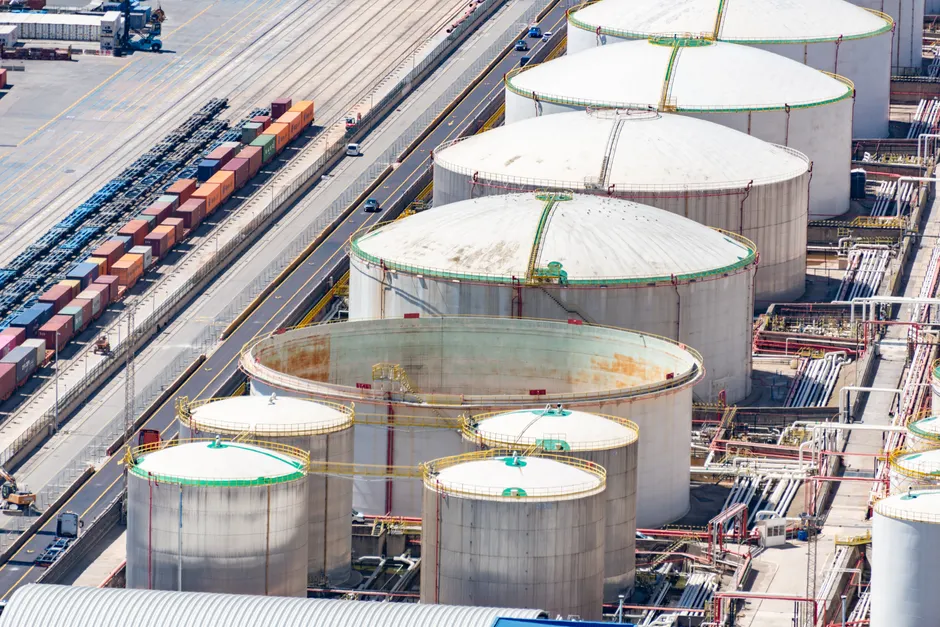
Global prices averaged $91 per barrel in August 2026, up $7 per barrel from July. EIA estimates global oil inventories, or stockpiles held in tanks and reserves, have fallen by 400 million barrels so far in 2026 and will keep falling through the end of 2026. That keeps prices near the August level in coming months. EIA
The forecast assumes limits on exporting oil from the Middle East will last through the end of 2026. Regional crude production stays below pre-conflict averages until the second quarter of 2027. At the same time, EIA expects Middle East production to rise in coming months as flows gradually increase through the Strait of Hormuz, the narrow waterway that carries much of the region's oil, and as producers use alternative routes. The agency locked in model inputs for the September 2026 Short-Term Energy Outlook on September 3, 2026, so the forecast does not include market events after that day. The outlook was released September 9, 2026, after the prior forecast released August 11, 2026.
OPEC crude production fell by 900,000 barrels per day in August 2026 to an average of 19.91 million barrels per day, according to a survey. Bloomberg OPEC tries to manage production among its members by setting targets that limit how much each country can pump. EIA For readers following that task, the September 2026 outlook publishes data on OPEC surplus production capacity, oil that is ready but held back, in XLSX and PNG formats. It also provides data on estimated unplanned production outages among OPEC and non-OPEC producers.
Demand is heading down while price stays up. The IEA's May 2026 Oil Market Report forecast world oil demand would shrink by 420 kb/d, or thousand barrels per day, year-on-year in 2026 to 104 mb/d, or million barrels per day. That is 1.3 mb/d less than its pre-war forecast. IEA On August 12, 2026, the agency said global inventories would fall that quarter at more than twice the rate previously estimated. In March 2026, it had proposed a release of emergency oil reserves that would be the largest in its history.
Outside estimates show how fast stocks are being used, like drawing down a pantry faster than it is restocked. Morgan Stanley estimated global stockpiles dropped by about 4.8 million barrels a day between March 1 and April 25. Fortune In May 2026, Goldman Sachs said global crude and product stockpiles were being drawn down at a record pace as the Middle East war continued. Permanent buffers such as increased pipeline flows and the earlier global supply surplus replace roughly 6.4 mb/d of lost Hormuz flows, according to Brookings analysis. Brookings
U.S. balances for refined fuel and natural gas are headed in different directions. EIA forecasts U.S. distillate fuel oil inventories, which include diesel and heating oil, will drop below 100 million barrels in September 2026 and stay below the 2021-2025 five-year low through much of 2027. U.S. natural gas inventories are forecast at 3,969 billion cubic feet on October 31, 2026, 5% above the five-year average. U.S. electricity sales are expected to total 4,135 billion kilowatthours in 2026 and 4,211 billion kilowatthours in 2027.
Outside the conflict zone, OPEC's July 2026 Monthly Oil Market Report forecast OECD liquids production, excluding Mexico as a Declaration of Cooperation participating country, would increase by 0.3 mb/d in 2026 to average 32.7 mb/d. OPEC That was up from 32.5 mb/d in the March report and 32.3 mb/d projected in September 2025. OPEC's January 2026 report stated that product stocks in OECD America and OECD Europe recorded month-on-month draws of 1.3 mb and 1.8 mb, respectively.
The broader context here is a market running on two clocks. One is physical and near term, shaped by Hormuz throughput, alternative export routes, unplanned outages and the pace of inventory draws. The other is slower, shaped by lower demand, surplus capacity and the rebuild of stocks into 2027.
In my view, worth flagging for readers is the split in the EIA numbers. Crude and distillate point to tight supply extending into 2027, while U.S. gas storage and steady growth in electricity sales point to a power system with more headroom. For operators of energy-intensive infrastructure, that split matters more than the headline Brent path. Fuel costs and power costs are not moving together, and buying or siting plans that treat them as linked will need revision until Middle East flows normalize and inventories rebuild.