Boox Palma 3, Note Air6 C and Note Mini C Bring Android 16 to E Ink

Boox has unveiled three new E Ink devices, the Palma 3, Note Air6 C and Note Mini C, all running Android 16 with the Google Play Store pre-installed. Engadget
The company introduced the lineup on September 15, 2026. Mashable
The Palma 3 is the palm-sized model. It has a 6.13-inch HD E Ink screen, a paper-like display that stays readable in bright light, with a dual-tone front light that shifts between cool and warm white. It sits in an anodized aluminum frame. Boox is pitching it on portability. It supports the Boox InkSense Plus stylus, which adds handwriting to a size that was mainly built for reading.
On hardware, the Palma 3 ships with 128GB of storage, expandable with a microSD memory card up to 2TB. It carries a 3,950mAh battery. It includes a 16MP rear camera with flash for scanning documents, plus dual microphones for voice memos and speech-to-text.
The Palma 3 will sell in black or white for $320. The InkSense Plus stylus is sold separately for $46.
The Note Air6 C is the large-format entry of the three. Boox describes it as "a refined 10.3-inch color ePaper notebook for knowledge workers." Boox It uses a 10.3-inch color E Ink display and supports the Boox Pen3 stylus. Its Dual Notes feature allows annotating two documents side by side.
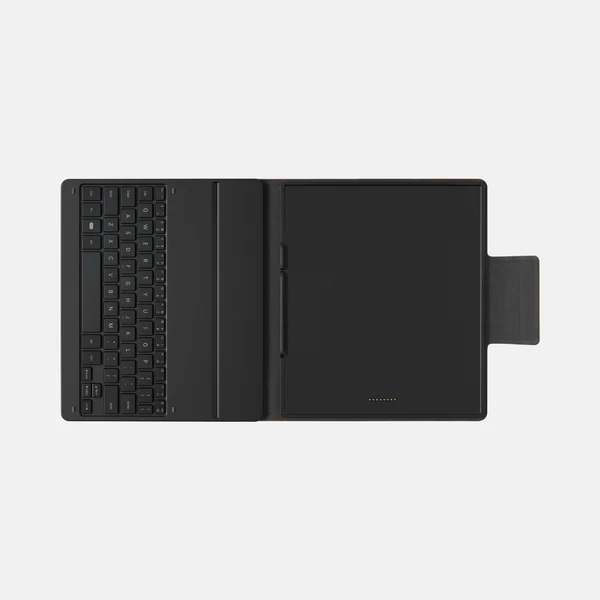
The Note Air6 C costs $580 without keyboard and $657 bundled with a keyboard cover. The Note Mini C sits between the other two. It has an 8.52-inch color E Ink screen and a fingerprint-enabled power button for biometric unlock. It is listed as available soon for $550.
The broader context here is the operating system choice. Shipping with Android 16 and the Play Store removes the sideloading friction, or manual installs from outside the store, that long defined E Ink Android tablets. That matters because standard management controls used by IT, standard login systems, and standard apps for notes, storage, task tracking and read-later services can run natively. E Ink refresh behavior and power management remain the variables to tune.
In my view, Boox is segmenting by working distance rather than screen quality alone. The Palma 3 covers capture on the move, voice notes, scanning, and pocketable reading with optional pen input. The 8.52-inch Mini C maps to focused reading and light annotation with one-handed carry still plausible. The 10.3-inch Air6 C targets desk-adjacent work, where review workflows, PDF markup, and reference-plus-notes use avoid constant context switching, and where a keyboard cover turns the device into a low-power drafting surface. Color E Ink on the two larger models fits technical PDFs, charts and highlighted code that no longer render cleanly in grayscale. A decade ago, running mobile apps on these displays took compromises only enthusiasts tolerated. Now the constraint is software tuning, touch latency, ghosting control and battery trade-offs with front-light use. If Boox has kept input latency and app compatibility stable on Android 16, these devices fit more easily inside existing Android toolchains rather than as isolated gadgets. That quiet compatibility work will determine whether they stay secondary screens or become daily drivers for specific roles.