How the U.S. Military Is Striking Drug Boats in the Pacific and Caribbean—and Why It Matters

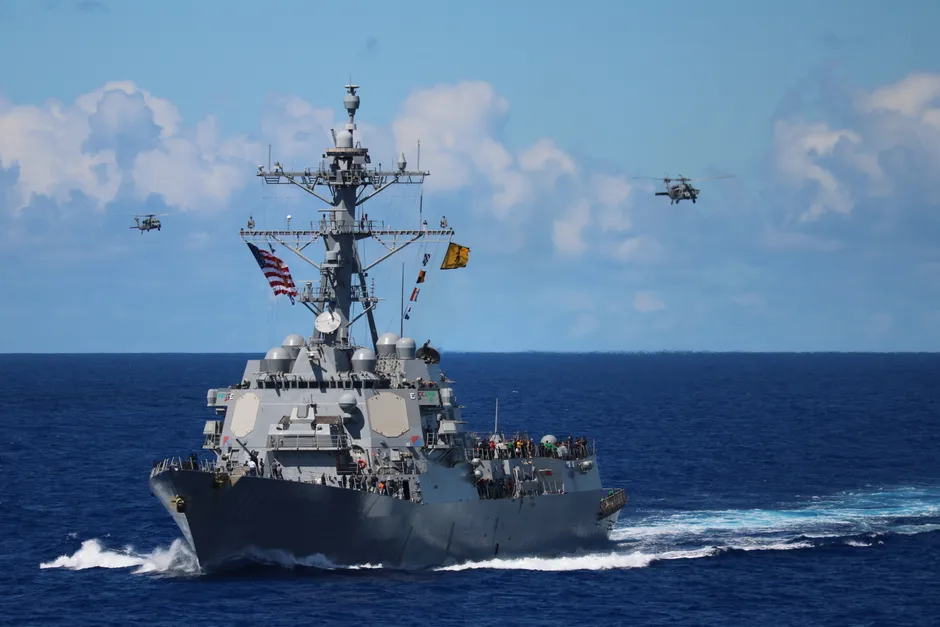
The U.S. military has destroyed at least 45 small boats in the eastern Pacific Ocean and Caribbean Sea between September 2025 and March 2026, killing or presuming dead 156 people. This campaign, called Operation Southern Spear, has continued into April and May 2026.
The operation is run by a military task force under U.S. Southern Command (SOUTHCOM). Early on, the Defense Secretary approved each strike directly. By spring 2026, that authority had moved down to SOUTHCOM's commander, General Francis L. Donovan. This shift — from top-level civilian approval to a field commander making the call — suggests the operation has shifted from something temporary and ad hoc to something permanent and routine.
The Legal Foundation
The strikes rest on an order President Trump signed on January 20, 2025. It labeled certain drug cartels as Foreign Terrorist Organizations (FTOs) and Specially Designated Global Terrorists (SDGTs). These labels do important legal work. FTO status means anyone who helps these groups can face criminal charges. SDGT status lets the U.S. Treasury freeze their money. Together, they do something bigger: they allow the military to treat cartel-linked boats as enemy combatants in wartime, rather than as targets for ordinary law enforcement. That moves the operation from a police action into the laws of armed conflict — a fundamental legal category shift.
SOUTHCOM press releases consistently describe the struck vessels as run by "Designated Terrorist Organizations," tracking directly to that January order. In December 2025, one vessel confirmed to be carrying illicit narcotics was hit along a known trafficking route. The most recent confirmed strike occurred on May 8, 2026.
The death toll is significant. Reuters reported three people killed in one April 2026 strike. In October 2025, five alleged smugglers died in two separate strikes. AP reporting from June 2026 documented incidents that killed one and three people respectively. The total — 156 dead or presumed dead in just the first six months — makes this among the deadliest sustained U.S. military interdiction campaigns in the Western Hemisphere in recent decades. The Trump administration frames it entirely as counterterrorism, not drug enforcement.
Where Diplomacy Gets Complicated
That framing has real diplomatic stakes. In September 2025, U.S. Secretary of State Marco Rubio and Mexico's Foreign Secretary Juan Ramón de la Fuente held a joint press conference focused on U.S. weapons reaching narco-terrorist groups in Mexico and Latin America. Both countries said they saw the same threat. But there's a tension underneath: Mexico has not approved U.S. lethal military strikes in the waters near its coast. The U.S. conducts these strikes in international waters specifically to avoid needing that permission.
The White House has been direct about how it talks about this. In January 2026, Rubio declared that Trump "delivered justice to terrorists" on September 23, 2025 — language designed to fit the FTO designation and counterterrorism framing, not drug interdiction law.
What Comes Next
The broader context here is institutional normalization. A campaign announced at the White House level in late September 2025 now generates routine press releases from SOUTHCOM. The regular reporting, congressional documents, delegated authority — these are the administrative signatures of a program built to last, not a temporary spike. What nobody has tested yet is whether a court will agree with the legal theory. No federal judge has ruled on whether simply designating a cartel as a terrorist organization is enough to justify lethal force against people on boats in international waters without a specific, immediate threat. Congress has received the required reports, but there has been no public debate about how broad these strikes can be, what rules should limit them, or how deaths are being counted. With 45 vessels struck in six months, that silence is unlikely to hold.