How the U.S. Military Shifted From Seizing Drug Boats to Striking Them
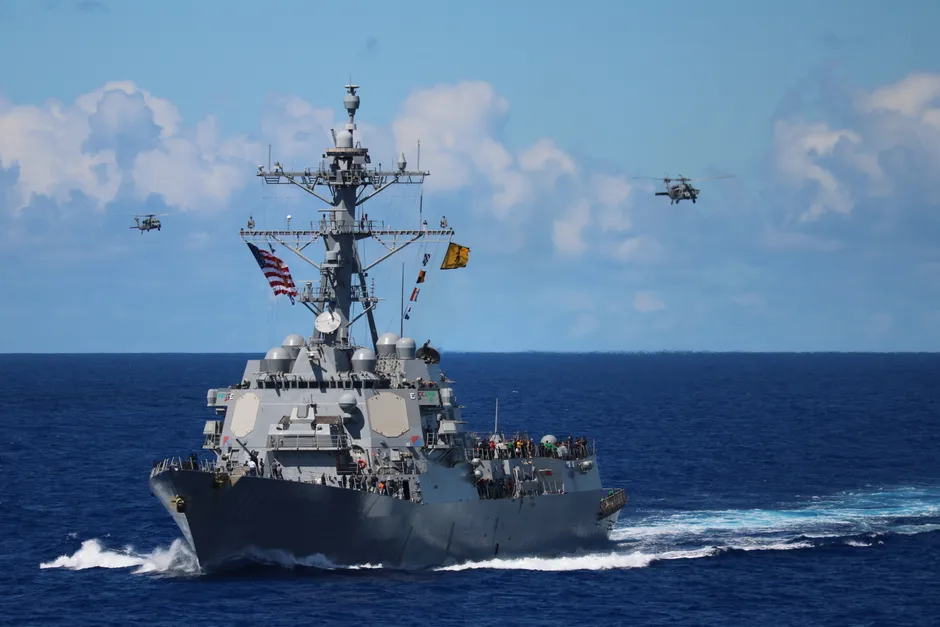
A U.S. military strike on a vessel in the Eastern Pacific Ocean on June 19, 2026, killed three people identified by American forces as narco-terrorists, Reuters reported. The operation was carried out by Joint Task Force Southern Spear, the counter-narcotics unit authorized to conduct lethal strikes against vessels operated by groups designated as terrorists.
This was not an isolated incident. In May 2026, a similar strike in the same ocean region killed two people and left one survivor, Reuters reported. Going further back, a December 2025 strike on a suspected drug boat in the eastern Pacific killed two and left six survivors, AP News reported. A separate strike near Costa Rica's Pacific coast in March 2026 adds another data point, AP News noted. The pattern suggests a sustained operational approach, not one-off actions.
A New Legal Framework
These strikes differ significantly from standard counter-narcotics work. Traditional operations—boardings, cargo seizures, formal notifications to the vessel's flag state—operate under bilateral maritime agreements and international law. Lethal strikes against non-state actors occupy different legal territory, one the administration has formalized by designating trafficking groups as terrorists.
That designation carries legal weight. It shifts operations from a law-enforcement framework into the laws of armed conflict, which requires less evidence before targeting and removes the obligation to attempt detaining suspects. In practice, crews on suspected trafficking vessels can now be treated as combatants rather than suspects to be arrested.
Congress reacted swiftly. Lawmakers from both parties requested oversight reviews almost immediately after news of the strikes surfaced, AP News reported in late November 2025. When a senior admiral subsequently testified before Congress, he felt obliged to state there was no blanket "kill them all" order governing the operations—AP News reported—a clarification that itself signaled bipartisan concern about the rules of engagement.
The Broader Interdiction Effort
These lethal strikes represent one dimension of a larger counter-narcotics operation that continues to rely on conventional seizure. On June 22, 2026, U.S. Coast Guard Cutter Resolute offloaded approximately 2,570 pounds of cocaine valued at over $19.3 million on the street—the product of routine interdiction operations running in parallel to the military's kinetic strikes.
Coast Guard Cutter Bertholf completed a three-month deployment conducting 24 boardings or approaches of suspected trafficking vessels, USCG reported. That pace—roughly two significant maritime contacts per week—reflects the volume of trafficking activity in the Eastern Pacific corridor. The same assets running counter-narcotics operations also conduct search-and-rescue missions. On April 3, 2026, Coast Guard and Puerto Rico Police aircrews rescued three federal agents and two boaters off Isla de Cabras in Toa Baja, Puerto Rico. On June 1, 2026, Coast Guard units rescued a boater following a vessel fire near St. Thomas.
Why This Shift Matters
The move from seizure to strike carries strategic implications beyond individual operations. Traffickers have long adapted to boarding-and-seizure pressure—deploying semi-submersibles, high-speed vessels, and distributed networks because these traditional interdiction methods, while expensive for smugglers, are survivable. A doctrine that makes the vessel itself a lethal target fundamentally alters that calculation.
Whether this change disrupts trafficking networks durably, or simply redirects volume toward harder-to-detect routes and methods, requires months of data to assess. What is already clear: the U.S. military has conducted multiple lethal maritime strikes in the Eastern Pacific within roughly six months. The legal framework supporting these strikes—and Congress's willingness to examine it—will determine both the scope of future operations and the diplomatic questions they may raise. This policy is still taking shape in real time.