Orion's $2,195 Mattress Pad Uses Temperature to Reduce Wake-Ups
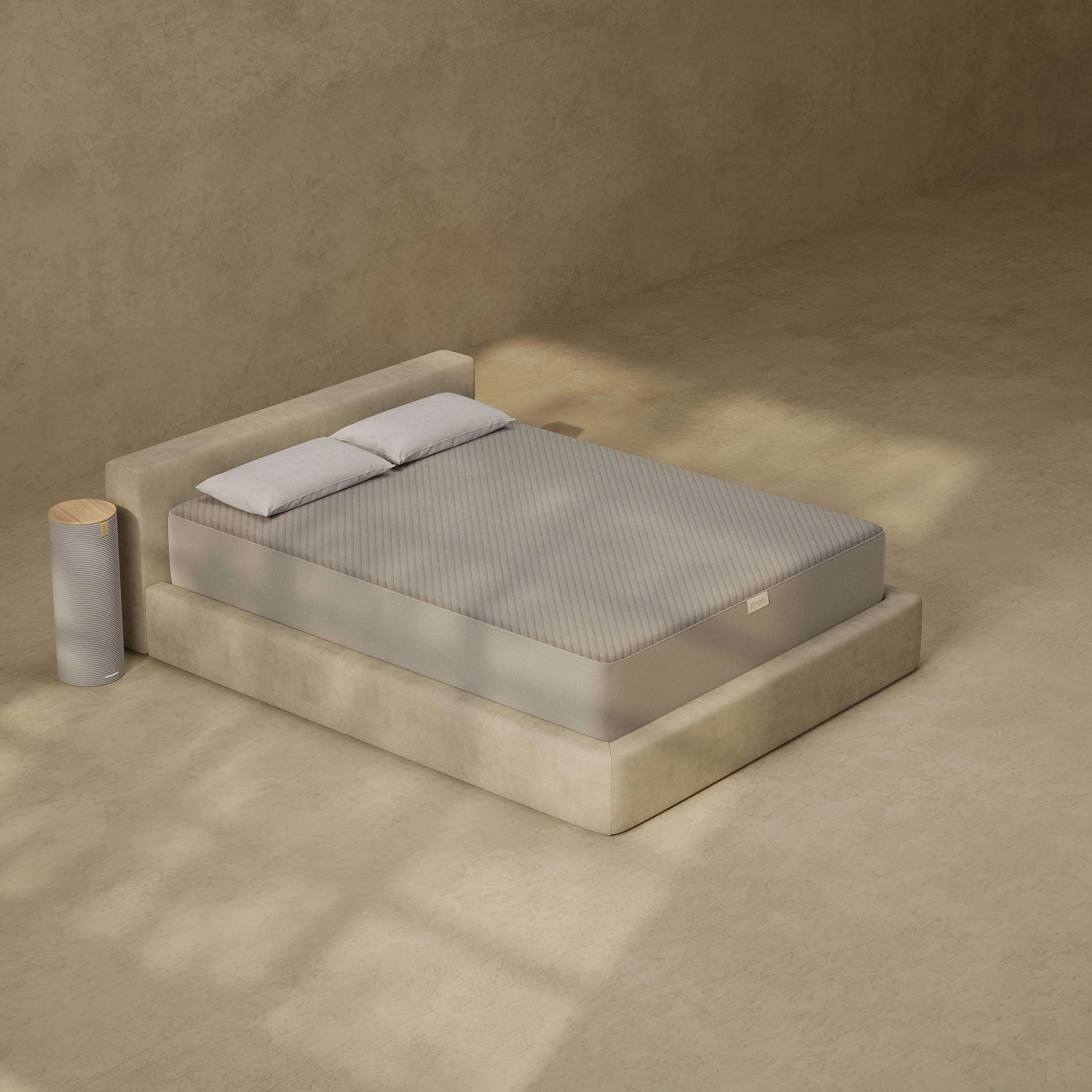
Orion is selling a $2,195 phone-controlled mattress pad that adjusts bed temperature through the night to reduce wake-ups, according to a months-long test published Sept. 18. TechCrunch
It is not a mattress. It is a cover made to fit an existing mattress, paired with a separate control unit that provides heating and cooling. Setup took about 30 minutes in a separate hands-on test. New York Magazine's Strategist
Orion lists dual-zone cooling and heating, meaning each side can be set separately, with a range of 50°F to 113°F. That lets two sleepers use different temperature settings on the same bed. The hardware includes built-in sleep tracking and access to the Orion Intelligence app, according to product documentation. Orion Sleep
The default behavior is schedule based. The pad starts cooling around a manually entered bedtime, gets colder as the user falls asleep, then returns toward room temperature at wake time. TechCrunch Orion says its AI learns from sleep data to adjust those temperatures for better sleep. In practice, the phone app collects tracking data night after night and shifts the cooling curve instead of running a fixed program.
The price is steep. The reviewer described sleeping on the pad as feeling like the whole bed is the cool side of the pillow, and reported sleeping like a baby across a few months of testing. That personal result is the core of the pitch: fewer heat-driven wake-ups and longer continuous sleep.
Orion also lists $250 per year pricing connected with the Sleep System. Orion Sleep The company was founded by Harry Gestetner, 26. He previously sold creator monetization platform Fanfix for an estimated $65 million when he was 22. TechCrunch The official product site is hosted at orionsleep.com.
The broader context for engineers here is that the cooling hardware is not new. Water-circulating pads and bedside thermal units are established products. The change is toward a closed loop, where the system reads sleep signals and then adjusts temperature, more like a thermostat for the bed than a fixed heater, with control per side, app-based scheduling, and tuning over weeks.
In my view, that approach brings familiar tradeoffs. Temperature preference varies by person and by night, so personalization is useful. It also relies on steady sensor data, a correctly entered bedtime, and tolerance for another device collecting data in the bedroom. A system that runs every night has to be reliable, quiet, and easy to override when it gets it wrong.
Worth flagging for a tech-literate buyer is the number of layers involved. There is water plumbing, a control unit with fans or pumps, firmware that enforces heat and cold limits, Bluetooth or Wi-Fi pairing, an app account, sleep estimation, and ongoing software updates. Each part is simple on its own. Together they decide whether the device fades into the bedroom or becomes another gadget to fix at 2 a.m.
The broader context here is sleep treated as something you can adjust, not just something that happens. If precise temperature control can reduce broken sleep without morning grogginess from overcooling, that is a practical gain. For many poor sleepers, unbroken sleep matters more than total hours, and heat is a common and measurable cause of waking.
In my view, products like this will stand or fall less on the AI label than on calibration. Learning from sleep data only works if tracking can tell a hot room apart from restlessness, and if temperature shifts stay small enough that they do not cause new wake-ups. Orion's default of cooling to help you fall asleep and warming before wake fits known body-temperature patterns, which makes the approach plausible even without long-term proof.
In my view, if the execution holds, what this enables is simple: a bed that stays thermally neutral without freezing out a partner or running home cooling all night.