Police Break Up Violent Anti-Immigration Protest in The Hague
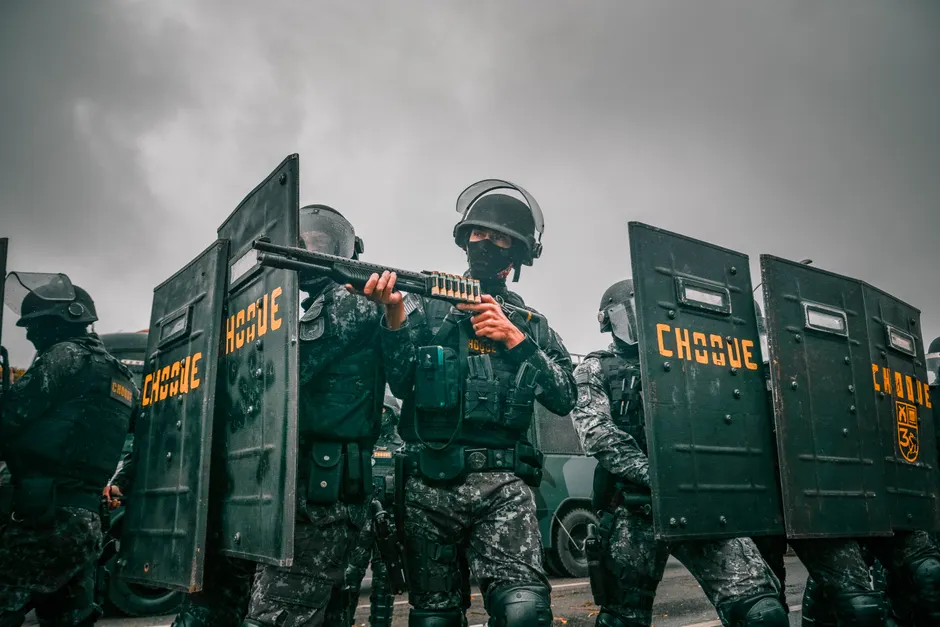
Dutch riot police broke up a violent far-right anti-immigration protest in The Hague on September 19, 2026, after demonstrators threw projectiles and fireworks at officers. About 500 people had gathered at Malieveld park in the city centre for a rally called 'Wij zijn het volk' ('We are the people') to oppose Dutch government immigration policies, according to Al Jazeera.
Demonstrators threw stones, bottles and heavy fireworks at police lines. Officers responded with baton charges and deployed dogs to disperse the crowd. A truck used as a stage for speakers displayed a screen reading 'The Netherlands is for the Dutch.'
Local authorities first banned a planned march through the city after the clashes began. They then ordered the demonstration itself to end because of continued violence. Police escorted protesters away from Malieveld to enforce the order. The sequence moved from containing movement, to ending the assembly, to clearing the site.
Justice Minister David van Weel condemned the conduct of participants. He cited Hitler salutes, antisemitic slogans and violence against police. His statement linked the physical attacks on officers to the use of Nazi-era symbolism at a rally framed around national belonging.
A year earlier, The Hague saw a similar breakdown around an anti-immigration protest. That violence was attributed to hooligans, the A12 was blocked, and politicians across the spectrum condemned the disorder, according to NOS.
For public-order planners, the parallel here is cautionary. A declared political protest can become a venue for organized street violence with different actors and tactics.
The broader context here is how Dutch authorities manage protest in the seat of government. Municipal authorities, meaning city-level officials, can set conditions on time, place and route, and can end a demonstration when public safety requires it. The steps on September 19, first prohibiting the march and then terminating the assembly, reflect that graduated toolkit, which tries restriction before dispersal by force.
Looking at what this means for Dutch politics, the size of the gathering is less important than the methods used. Five hundred is a modest turnout. Projectiles and fireworks aimed at police raise the legal and political stakes beyond peaceful assembly. Antisemitic slogans and Hitler salutes do the same. They shift the official response from facilitation of protest toward investigation and prosecution, and they make cross-party condemnation more likely than engagement with the stated policy grievance.
For observers of far-right mobilization, the staging also matters. A central park, a truck stage, a slogan that translates easily into English, and a name that claims popular sovereignty are built for visibility and circulation, like a set designed for cameras. That visibility cuts both ways. It guarantees media attention. It also guarantees scrutiny of violent tactics, which tends to isolate organizers from institutional allies they would need to translate street pressure into policy change.


