Hague Police Break Up Violent Far-Right Protest at Malieveld

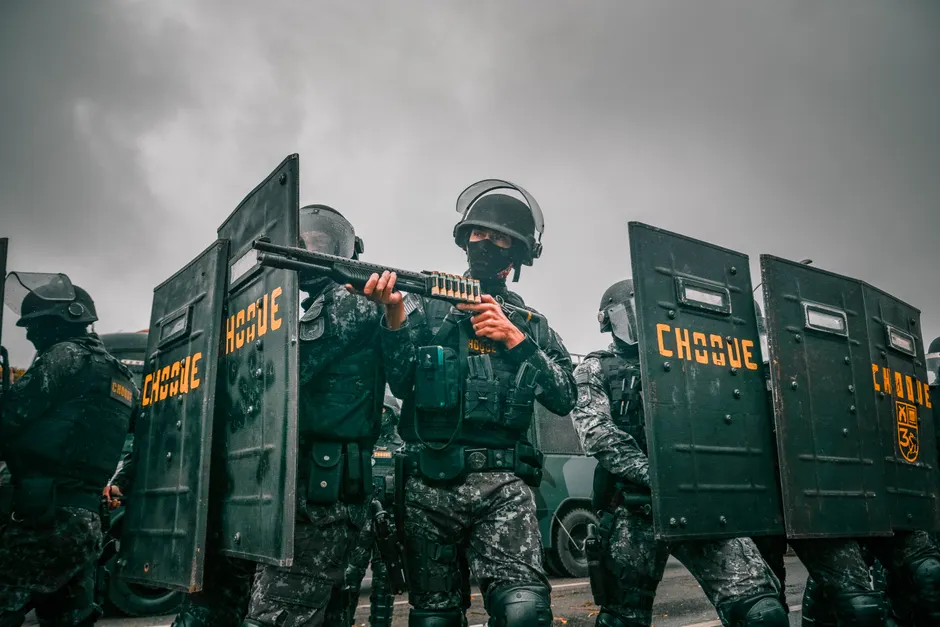
Dutch riot police dispersed several hundred far-right protesters in The Hague on 19 September 2026 after violence erupted at Malieveld park. The city had banned a planned march against immigration and asylum policies and ordered the crowd to leave. The Guardian
The demonstration was organized by We Are the People, a far-right group protesting Dutch immigration and asylum policies. The crowd gathered at Malieveld, a large public park next to the central railway station that is routinely used for rallies. City officials first banned the march after fighting broke out among demonstrators. They then issued an order for everyone to leave the park itself. That type of dispersal order gives police a clear legal basis to make arrests.
Violence escalated quickly. Some protesters threw fireworks and other projectiles at police. Protesters dressed in black clashed with officers and set a police car on fire. Police responded with pepper spray and a water cannon. AFP reported that officers also used baton charges and dogs to break up the crowd. Al Jazeera Reuters photographer Nicolas Economou photographed riot police detaining a participant during the operation.
Police arrested 24 people. Those detained were held for offences including ignoring the dispersal order and illegally possessing weapons. In its official account, Dutch police titled its report 'Geweld tegen politie en 24 aanhoudingen bij demonstratie Malieveld'. Politie
Ministers responded quickly. Justice Minister David van Weel called for an extremely firm response to what he described as disgusting scenes. He said demonstrators made Nazi salutes, chanted antisemitic slogans, and threw fireworks at police. Prime Minister Rob Jetten, leader of D66, said the demonstrators deliberately sought confrontation with police and chanted abhorrent far-right and antisemitic slogans. During the unrest, the headquarters of the centrist D66 party was attacked.
The broader context here is about control over public order and the line between protest and political violence. Dutch municipalities, similar to city councils, have wide power to ban or reroute protests for public safety. At Malieveld the full sequence was used: ban, order to leave, police intervention. The questions to watch are operational and legal. How quickly a permitted rally can become an unlawful assembly that police can clear. How police choose riot-control tools, from water cannon to dogs, in a dense city area. And how the attack on a party office, plus the Nazi salutes and antisemitic slogans alleged by ministers, will shape prosecution decisions and the political handling of asylum-related protests in the months ahead.