Merz Vows to Stay After Bruising State Election Losses

German Chancellor Friedrich Merz said on September 21, 2026, in Berlin that he intends to stay on as chancellor and as leader of his party after a string of state election defeats. Voters in Berlin and Mecklenburg-Western Pomerania had gone to the polls on Sunday, September 20, 2026. ABC News
Late on September 20, Merz gathered the CDU leadership at party headquarters in Berlin to watch the exit polls together. He held another meeting with the CDU leadership early on September 21 to shore up support. He vowed to push ahead with reforms despite the losses. DW
In Mecklenburg-Western Pomerania, the Alternative for Germany (AfD) won the state election with 38% of the vote. It was the party's third victory in a German state election. The SPD under Manuela Schwesig is expected to lead a three-party coalition government, in which several parties join to govern together. The Guardian
For the CDU, the party failed to reach the 5% threshold in Mecklenburg-Western Pomerania, the minimum share needed to enter the state parliament, and was ejected from the state parliament. It was the first time the party had been ousted from a state parliament. Reuters described the outcome as the CDU's worst regional election defeat in postwar Germany. Reuters
Voter movement in the northeast favored Die Linke as well as the AfD. In Mecklenburg-Western Pomerania, Die Linke drew 45,000 voters from the SPD and 28,000 voters from the CDU. Reuters
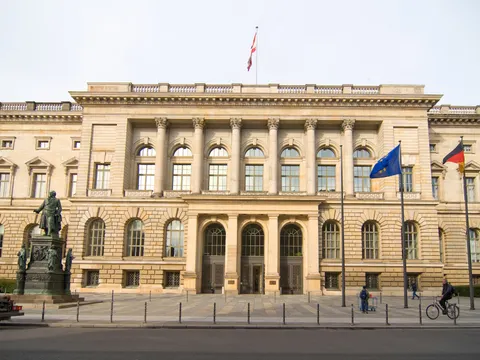
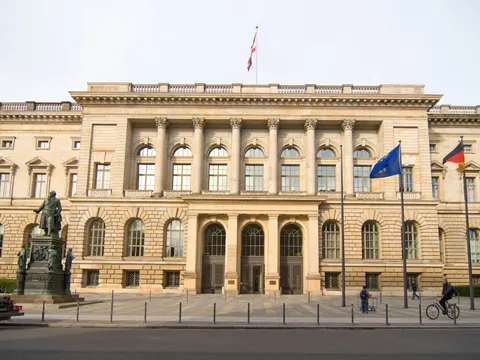
In Berlin, the CDU finished second behind the far-left Linke party. The Linke is on track to lead the next government in Berlin. Its lead candidate, Elif Eralp, could become Berlin's first Turkish-born mayor.
Merz described the September 20 results as a "disaster." Alice Weidel said Friedrich Merz 'can no longer stay in office'. DW Leif-Erik Holm, the AfD's top candidate in Mecklenburg-Western Pomerania, said the chancellor "certainly won't make it to the end of the year."
Merz holds the office of Federal Chancellor of Germany (Bundeskanzler). He was elected Federal Chancellor and sworn in on the same day. He presented the CDU's challenges and goals at the party's 38th congress.
The SPD is Merz's coalition partner in the federal government. Germany's next federal election is scheduled for 2029. In the week before September 21, CDU regional leaders governing in eight states gave their backing to Merz. Two weeks before September 21, the CDU suffered a defeat to the AfD in Saxony-Anhalt.
The broader context here is fragmentation that cuts in both directions. The CDU is losing to the AfD on the right in the east and to Die Linke on the left in the capital and, on voter flows, in the northeast. That pattern complicates any single corrective strategy, whether policy, personnel or messaging. Like midterm report cards, these state votes do not change the federal government but shape how voters judge Berlin.
In my view, the immediate test is endurance rather than legislation. Merz has secured public backing from CDU state premiers and retains the chancellery and party leadership. State results do not trigger a federal confidence vote, a parliament vote on whether the government stays. The risk for him is cumulative, as each Land election becomes a referendum on Berlin, opposition parties treat each win as a mandate to demand his departure, and coalition management with the SPD grows harder when both parties are bleeding to challengers. His unusually blunt language left little room for competing interpretation inside the CDU.
Looking at what this means for governing, Mecklenburg-Western Pomerania points toward complex coalition building without the CDU and without the AfD, while Berlin points toward a Linke-led arrangement with a potentially symbolic mayoral first. Neither outcome directly alters the Bundestag majority, the seat count that keeps the federal government in place. Both shape the climate in which Merz must pursue reforms through 2029.