Starship Reaches Orbit for the First Time on Flight 14

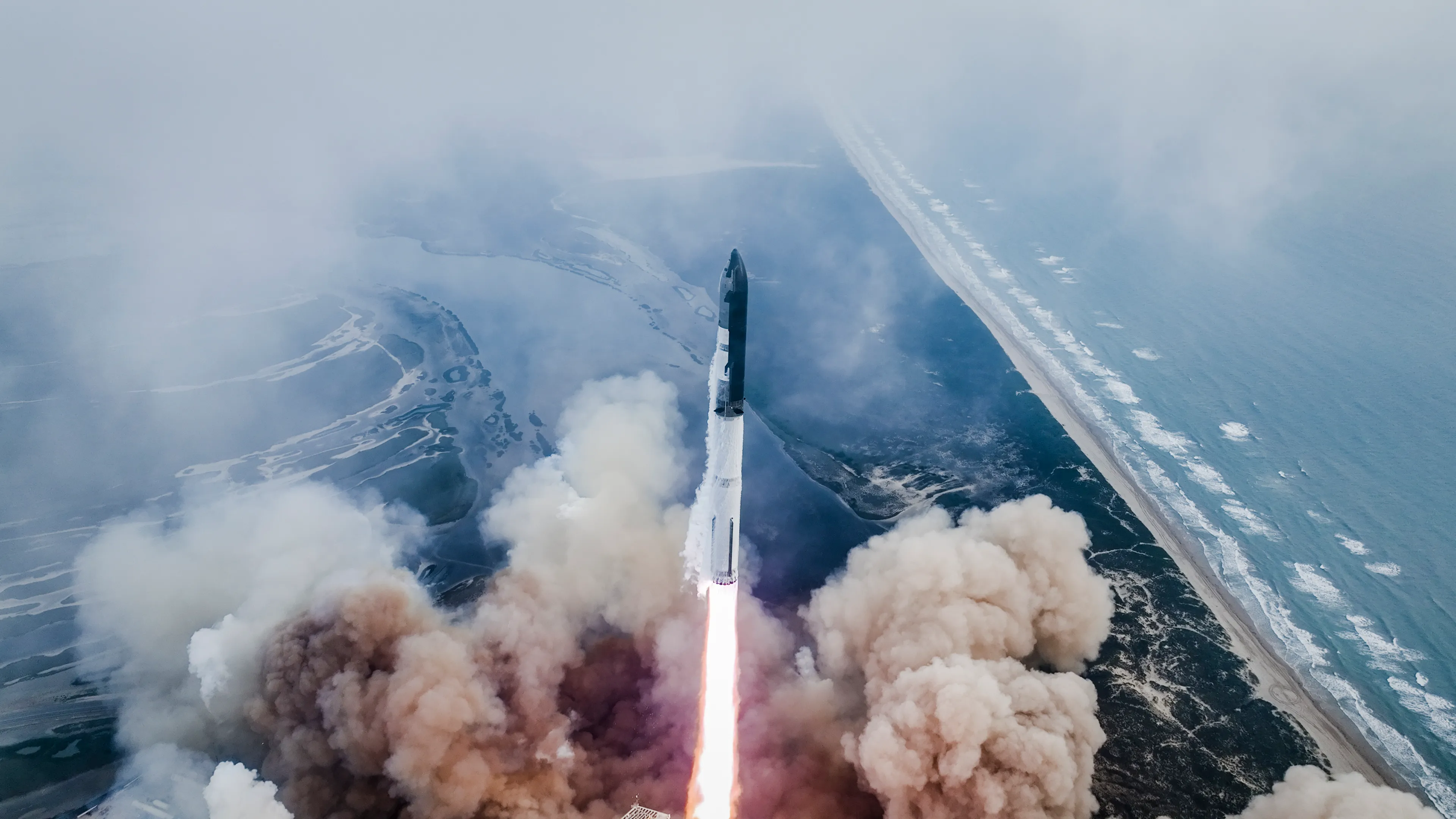
SpaceX placed its Starship vehicle into Earth orbit for the first time on September 28, 2026. The mission was Starship's 14th test flight and its first attempt to circle the planet before falling back to Earth The Guardian.
Starship is the largest and most powerful rocket ever built. The stack stands more than 120 metres tall, with the Starship upper stage on the Super Heavy booster. SpaceX lists the system as a Starship spacecraft and Super Heavy rocket, collectively called Starship, built as a fully reusable transport system to carry crew and cargo to Earth orbit and the Moon.
Liftoff came from Starbase in Texas at 7:48am local time, 1:48pm BST. SpaceX listed Flight 14 as launching from Starship Pad 2 at Starbase, with a 75-minute launch window opening at 7:15 SpaceX. The vehicle reached about 171 miles (275km). Staying in orbit means moving at about 28,000 km/h (17,400 mph), fast enough to keep falling around Earth instead of back toward it. SpaceX has flown Starship in its full form since 2023. Earlier flights used only suborbital paths, which go high but not fast enough to circle the planet.
Starship suffered an engine failure on ascent. Controllers continued with a burn onto the planned orbital path. The original plan called for six loops of Earth over nearly 10 hours before splashdown in the Pacific Ocean west of Chile. SpaceX revised the mission to return early, landing about three hours after launch.
The booster did not come back to the tower. The plan called for the booster to return to an offshore landing point in the Gulf of Mexico rather than being caught by giant mechanical arms. SpaceX had caught the booster with those arms after a test flight in 2024. SpaceX lists Flight 14 as expended on September 28, 2026 SpaceX.
The recent test cadence has been rapid. Flight 12 lifted off from Starbase on May 22, 2026 at 5:30 p.m. CT. Flight 13 lifted off from Starbase on July 24, 2026 at 5:51 p.m. CT. Development, manufacturing, testing and launch of Starship take place at Starbase in Texas. Starbase holds SpaceX headquarters and is described as one of the world's first commercial spaceports designed for orbital missions. SpaceX had listed Flight 14 as preparing to launch as soon as Monday, September 28, pending regulatory approval.
Starting with Flight 14, Starship will begin flying orbital missions, according to SpaceX. Those missions will enable delivery of Starlink V3 satellites and other payloads to space SpaceX.
The broader context here is that Flight 14 connects three threads. The first is trajectory, moving from suborbital profiles flown since 2023 to sustained orbital velocity. The second is operations, with an expended listing, an offshore booster return instead of a tower catch, and a three-hour return instead of the planned nearly 10-hour, six-loop flight. The third is utility, with a direct link from Flight 14 onward to Starlink V3 and other payload delivery. In my view, the questions to track next are whether the ascent engine issue repeats, how quickly tower catches and long-duration flights return, and how payload work develops on later orbital flights.