Train Collision in Bedford Kills One; Investigators Focus on Missed Red Signal
Train Collision in Bedford Kills One; Investigators Focus on Missed Red Signal
Two passenger trains collided near Bedford on June 20, 2026, killing one person. Investigators believe a train passed through a red signal without stopping, likely a key factor in the crash, according to The Guardian.
The Rail Accident Investigation Branch (RAIB) is leading a full investigation and plans to release an interim report by June 26 — just two days after writing. This quick turnaround is standard practice. The interim report is not a final judgment on what caused the crash. Instead, it flags any urgent safety steps the rail industry must take immediately, while the full inquiry continues. That final investigation typically takes twelve to eighteen months.
What We Know So Far
One death is confirmed. The number of serious injuries and details about the trains themselves — which company operated them, what type of rolling stock, how many cars — have not yet been verified in public sources. The RAIB interim report, if published on schedule, should clarify the sequence of events, which signals were involved, what safety systems were in place, and any emergency instructions operators received.
The Red Signal Question
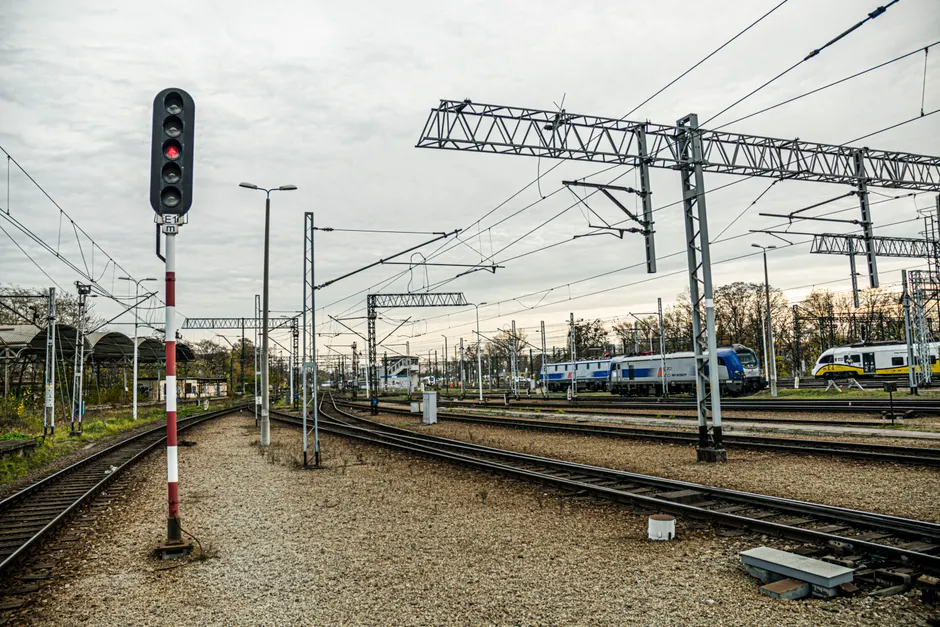
When a train passes a red signal without stopping, that failure is called a SPAD — signals passed at danger. It ranks among the most closely watched hazards in UK rail safety. Over the past thirty years, the industry has added layer upon layer of automatic protections. The most important is the Train Protection and Warning System (TPWS), which was made mandatory across the entire network after the Ladbroke Grove disaster in 1999, which killed 31 people. TPWS automatically applies the brakes if a train runs past a red signal or approaches one too fast.
A key question for investigators: Was TPWS active and working on the specific trains and signals involved in the Bedford collision? And is the Midland Main Line — where this crash occurred — equipped with the newer European Train Control System (ETCS)? ETCS replaces the traditional lineside signals with continuous in-cab signalling on upgraded routes. The state of digital signalling on the section where the collision happened will shape what the investigators reconstruct.
Who Watches the Watchers
The Office of Rail and Road (ORR) holds the legal power to enforce safety rules. It will review the RAIB findings to decide whether the train operator or Network Rail — the company that manages the infrastructure — faces a formal investigation under health and safety law. Both are legally required to cooperate fully. Sorting out responsibility between the company that owns the tracks and the company that runs the trains has been contentious after previous major UK rail disasters, and the RAIB will need to map it carefully before the interim report goes public.
What Happens Next
The interim report's safety actions carry real weight with operators. If the RAIB instructs the industry to re-examine red signal hazards at certain locations, or to check for gaps in TPWS coverage, rail companies must respond fast. That is the point of the interim report: not to assign blame, but to stop the same crash from happening elsewhere while the full investigation unfolds.
For now, the focus is on the document due in two days. Everything that follows flows from what it says.