Two trains collided near Bedford. What happens next—and why it matters for London's rail network

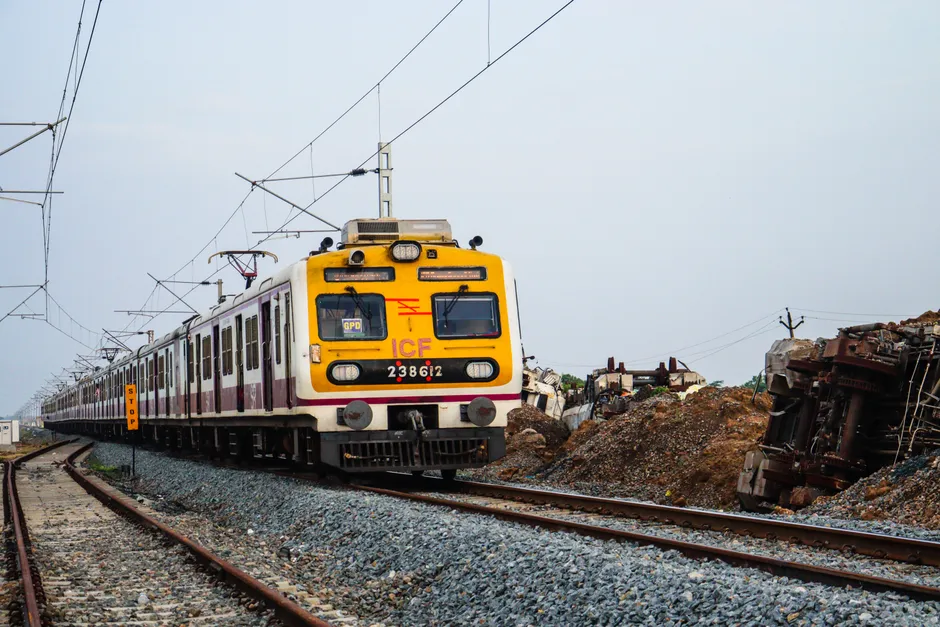
Two trains collided near Bedford on 19 June 2026, killing at least one person and injuring several others, according to The Guardian. Rail operator Thameslink confirmed that all lines through the corridor were blocked immediately after the crash.
Bedford is a critical junction on the Thameslink route—a cross-London rail line that connects destinations from Bedford in the north, through central London stops like St Pancras and Farringdon, all the way to Brighton and Gatwick in the south. When the line is completely blocked at Bedford, it effectively cuts off the northern half of the network, leaving passengers across Bedfordshire, Hertfordshire, and north London without direct services through to central London.
The cause of the collision remains unknown. When a rail accident in the UK results in a fatality, two separate investigations take place in parallel. The Rail Accident Investigation Branch (RAIB), an independent government body, focuses on understanding what went wrong and how to prevent similar accidents in future. British Transport Police runs a separate criminal investigation. These are distinct processes by law: RAIB's job is safety improvement; police look into potential criminal responsibility.
The operating conditions here provide important context. Thameslink is one of the busiest commuter rail franchises in the UK, with trains scheduled to depart every few minutes during rush hour. That frequency is good for passengers but carries a hidden risk: when trains run so close together, there's little margin for error. If a signal fails, a driver makes a mistake, or there's a track problem, trains can close on each other very quickly. We don't yet know if any of these factors played a role in this collision.
Rail safety in Britain has improved markedly since two major crashes at Ladbroke Grove and Potters Bar in the early 2000s led to major overhauls. One key upgrade was the Train Protection and Warning System (TPWS)—a safety device that applies the brakes automatically if a train is about to pass a red signal. A newer system called the European Train Control System (ETCS) does something similar but electronically controls both speed and when trains are allowed to move, preventing the kind of crash that happens when a train runs through a red signal. Investigators will quickly check whether these systems were in use on this stretch of track and, if so, whether they functioned as designed.
The disruption to passengers will likely last longer than the initial blockage. Even once the line reopens, trains and crew members displaced from their normal routes take hours to get back on schedule—a ripple effect that cascades across the entire network. Bus replacement services can help for local trips, but they're not practical for long-distance routes like Bedford to London.
The death toll and injury figures reported now are provisional. Emergency services are still accounting for everyone involved, and these numbers often change as the situation becomes clearer. Network Rail and Thameslink will release more details about damage to the track and infrastructure in the coming hours. RAIB will publish an initial summary relatively soon, followed by a full investigation report—typically completed within twelve to eighteen months.
The focus now is on establishing what happened and whether this was a one-off incident or symptomatic of a broader safety issue. Early findings should give us that picture; the full investigation will say whether existing safety systems worked as intended, and what, if anything, needs to change.