Two Major Earthquakes Strike Venezuela, Killing at Least 32 and Raising Fears of Higher Death Toll

Two Major Earthquakes Strike Venezuela, Killing at Least 32 and Raising Fears of Higher Death Toll
Two powerful earthquakes — magnitude 7.2 followed less than a minute later by a magnitude 7.5 — struck north-central Venezuela on June 24, 2026, killing at least 32 people and triggering a state of emergency, according to Reuters. Reuters also reports that higher casualties are likely as damage assessments continue.
The earthquakes centered near San Felipe, roughly 160 km west of Caracas. The larger quake's epicenter was 28 km southeast of Yumare, per USGS. What made this sequence unusual from a geological standpoint: two magnitude 7+ events struck within seconds of each other on the same fault system. This rapid-fire rupture compounded the damage far beyond what either earthquake alone would have caused.
What Happened on the Ground
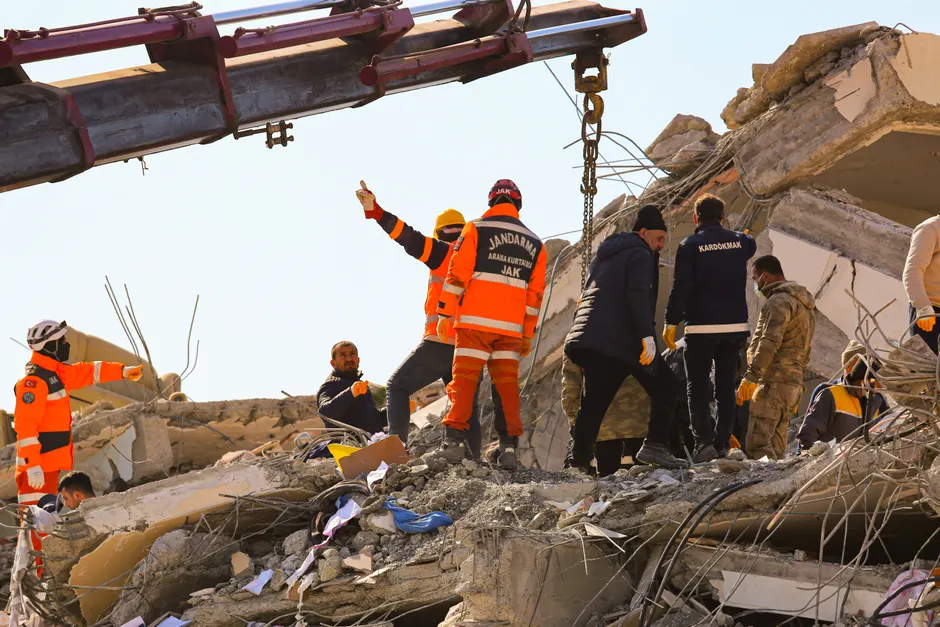
Buildings partially collapsed in multiple towns. CNN reported structural failures in Catia La Mar and La Guaira, densely populated coastal towns that serve as Caracas's main seaport. Power and telecommunications networks went down across the affected region, according to ReliefWeb, making it harder for emergency responders to coordinate and for information about casualties to flow out.
Tsunami alerts were briefly issued following the quakes, Reuters reported — a standard step when undersea or coastal earthquakes of this size occur in the Caribbean. The alerts were soon lifted, but the initial warnings likely sent people evacuating from low-lying coastal areas, adding to the chaos in those early hours.
Search and rescue operations started immediately across the affected zone, per ReliefWeb, after the Venezuelan government declared a state of emergency, according to LogCluster.
Why the Death Toll Will Likely Rise
The 32 confirmed deaths reported by Reuters as of June 24 almost certainly undercount the real toll. When earthquakes of this size strike, the initial count only includes people whose bodies have been recovered — not those still trapped under collapsed buildings in areas where communications are out. The combination of back-to-back major quakes, collapsed buildings in a crowded coastal urban area, and widespread power outages means the real death toll will probably climb sharply over the next two to three days.
Venezuela's condition makes this worse. Years of economic hardship and underinvestment mean much of the country's buildings — especially older concrete apartment buildings — aren't built to withstand strong earthquakes. La Guaira and Catia La Mar are among the most densely packed areas near the capital, and they sit on terrain that can amplify earthquake shaking. Both factors increase the risk of widespread collapse.
The state of emergency declaration is significant procedurally. It gives the Maduro government legal authority to deploy military resources, control movement, and accept outside help quickly, bypassing normal bureaucratic steps. In the first hours after a disaster, that matters. Yet whether the government can actually coordinate an effective response depends on whether its civil protection agency has the resources and personnel to manage the scale of this crisis — and those agencies have been stretched thin by years of budget cuts.
The fact that LogCluster — the UN's humanitarian coordination system — has been activated suggests that international aid organizations believe Venezuela's own response capacity will be overwhelmed. LogCluster doesn't usually step in unless outside help will be needed.
International rescue teams and supplies will likely be offered, but Venezuela's politics could slow things down. The Maduro government has had tense relations with the United States and tends to be cautious about accepting help from Western nations. Historical experience shows these political obstacles have delayed aid delivery in the past. Allies like Cuba, Russia, and China face fewer political hurdles in sending help, but they have smaller rescue and disaster-relief capabilities than U.S. or European agencies.
The Geological Context
The earthquakes aren't a freak event. This part of Venezuela sits where two large plates of Earth's crust — the Caribbean Plate and the South American Plate — grind past each other. Two major fault lines, the El Pilar and Boconó systems, run through north-central Venezuela along this plate boundary. A sequence as large as this one near San Felipe is consistent with how stress builds and then releases along the Boconó fault system.
For Venezuela's government and economy, the critical question now is whether the La Guaira coastal zone — where most seagoing cargo enters and leaves the country — suffered major damage. Significant harm to that infrastructure would squeeze Venezuela's already strained ability to import goods it depends on.