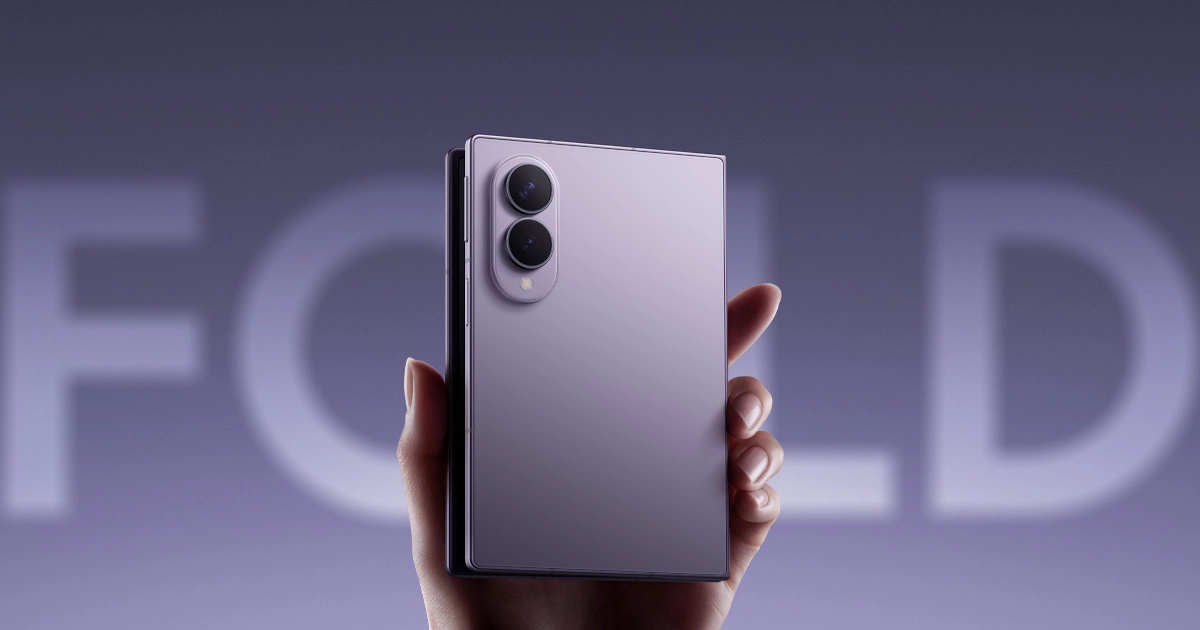
Vivo X Fold 6 Goes Global: Specs, Cameras and Price

Vivo is bringing the X Fold 6 outside China. The foldable launched in China in June and is now headed for global release. The Verge
Size stays close to Vivo's previous foldables. The cover display is 6.51 inches with a tall 20:9 shape. It opens to an almost square 8.02-inch inner panel.
Both screens are AMOLED, the display type widely used on flagships. The folding display is listed at 2504x2312 resolution in a European retail listing, with 120Hz refresh rate reported for the series for smoother scrolling and motion. GSMArena GSMArena
Processing comes from a custom Super Edition of the MediaTek Dimensity 9500. It is octa-core, meaning eight cores, with clocks up to 4.21GHz as detailed in the European listing. Memory is LPDDR5X Ultra with UFS 4.1 storage, fast memory and storage standards carried over from the June China announcement.
Global memory choices are narrower than the full China range. Retail listings point to 12GB of RAM with 256GB or 512GB of storage, while the China announcement included options up to 16GB of RAM and 1TB of internal storage. Gadgets360 The global variant has appeared on Geekbench running Android 17. Gizmochina
Camera hardware centers on a 200-megapixel main camera with a 1/1.4-inch-type sensor. It is paired with a 50-megapixel telephoto camera and a 50-megapixel ultrawide camera.
Power comes from a 6,900mAh battery. The phone carries an IP59 rating for protection against dust and water jets.
Commercial details are emerging through retailers. A 12GB RAM and 512GB storage version is expected to be priced at €2,199 in Europe. AndroidHeadlines A separate retailer listing points to an India launch on October 6.
The broader context here is consolidation rather than a new form factor bet. Cover size, inner size, refresh rate, silicon class and battery capacity all iterate within the established book-fold template. For engineers and product teams, that stability is practical because display targets, continuity behavior between screens and thermal envelopes are largely known quantities.
In my view, the trade-offs worth watching are imaging and sustained performance. A 200-megapixel sensor in a large 1/1.4-inch-type format keeps readout, image-processor load and storage throughput high inside a chassis split across two halves. A custom Super Edition Dimensity 9500 implies Vivo asked for selected or tuned silicon beyond stock, likely for steady clock speeds under foldable heat limits. For developers, wider availability of an Android 17 foldable with a standard 20:9 cover and large square inner display adds another mainstream target for multi-window, drag-and-drop and posture-aware layouts. Foldables work best as everyday phones first, and familiar dimensions, a large battery, dust and water resistance and a full camera setup address the objections that have kept foldables as second devices for many users. Wider distribution gives that combination a chance to be tested in daily use.