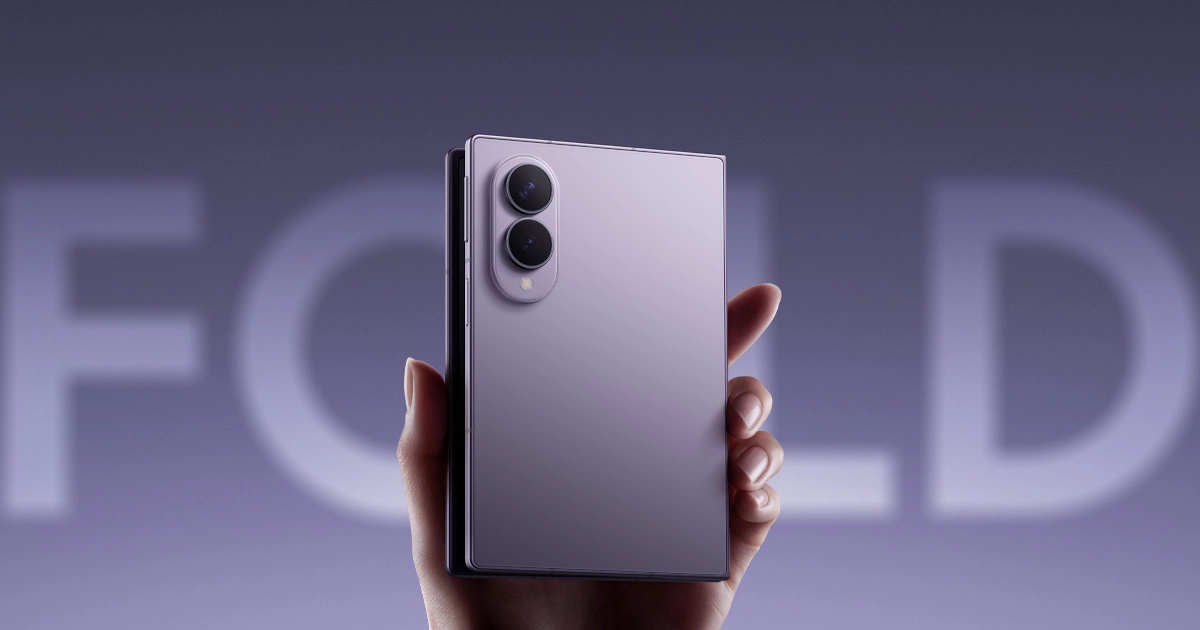
Vivo X500 Pro Max Debuts With Sony LOFIC Sensor and 2nm MediaTek Chip

Vivo launched its X500 flagship series in China on September 21, adding a Pro Max model built around new camera and chip hardware from Sony and MediaTek. The launch is China-only for now, with a global release planned but no date given.
The X500 Pro Max is the first phone to use Sony's Lytia L910 image sensor and MediaTek's Dimensity 9600 Pro, according to launch coverage. The Verge That puts two first-generation parts into one shipping phone.
The L910 is a 50-megapixel sensor in 1/1.28-inch type format, a standard way of describing sensor size. It is Sony's first phone sensor to use LOFIC, a pixel structure that can store more light signal and keep detail in bright highlights. Vivo claims true 17 EV ultra-high dynamic range for the X500 Pro Max, with EV as a measure of the span from shadows to highlights a photo can hold. The claim applies to straight-out-of-camera stills, in line with Vivo's focus on cinematic photos without heavy editing.
Vivo left the rest of the camera system largely unchanged. The X500 Pro Max keeps the 200-megapixel 3.7x telephoto camera used in the X300 Ultra. It also supports the 400mm teleconverter lens introduced for that earlier model. Long-range optics carry over while the main camera moves to the new sensor.
On processing, the X500 Pro and X500 Pro Max are the first phones with MediaTek's Dimensity 9600 Pro. The chip is built on a 2nm process, which refers to transistor size and is generally linked to speed and efficiency. The base X500 uses a separate Dimensity 9600M. Vivo positions the Pro chip as an imaging and video engine as much as a general processor.
Video shows the chip difference in practice. The Dimensity 9600 Pro enables 4K 240fps slow-motion recording. The X500 series also includes 10-bit Log recording, a flat format that keeps more brightness and color data for later adjustment, and new cinematic video styles. Earlier reporting pointed to extra Pro Max modes, including 4K Dolby Vision portrait video and 4K 120 fps recording in 10-bit Log. NotebookCheck That same pre-launch reporting described 60 fps autofocus tracking enabled by a faster NPU, the block of the chip built for AI tasks.
Displays and batteries differ by model. The X500 Pro has a 6.36-inch display and the X500 Pro Max has a 6.85-inch display, with the base X500 sized in between. All three models use OLED panels and run Vivo's OriginOS 7. All three use silicon-carbon batteries, a chemistry that packs more energy in the same space, ranging from 6,510mAh to 8,000mAh across the lineup. Pre-launch specifications listed 90W fast charging for the Pro Max. Android Headlines
Vivo listed X500 series products for sale through its official mall ahead of the announcement. The current launch covers China, with no date given for availability outside China.
The broader context here is a change in what sets flagship cameras apart. For several cycles, main-sensor upgrades meant larger optical format or higher pixel count. LOFIC shifts attention to full-well capacity, how much light signal each pixel can hold, and highlight retention at the pixel level. If the 17 EV figure holds in independent testing with acceptable noise and color stability, phones would have more room in harsh light than recent sensor generations allowed. For engineers, the open questions are readout behavior, power cost, and how much of that range carries into video and Log workflows.
In my view, the pairing with a 2nm MediaTek part is equally worth watching. High-frame-rate 4K, sustained Log encoding, and frame-by-frame autofocus tracking stress memory bandwidth, ISP throughput, the rate of the image processor, and inference latency, the delay in AI processing, at the same time. Vivo is asking one new chip to handle that combined load while one new sensor tests a new pixel design. It is a demanding way to launch, but it is also how practical headroom gets built. I have watched my own children ignore spec sheets entirely and judge a phone on whether video looks right immediately. One thing worth flagging is that LOFIC and on-device cinematic profiles aim at that expectation, less fixing after capture and more usable range at capture.