Why Russian Military Flights Near NATO Keep Climbing — and What That Means

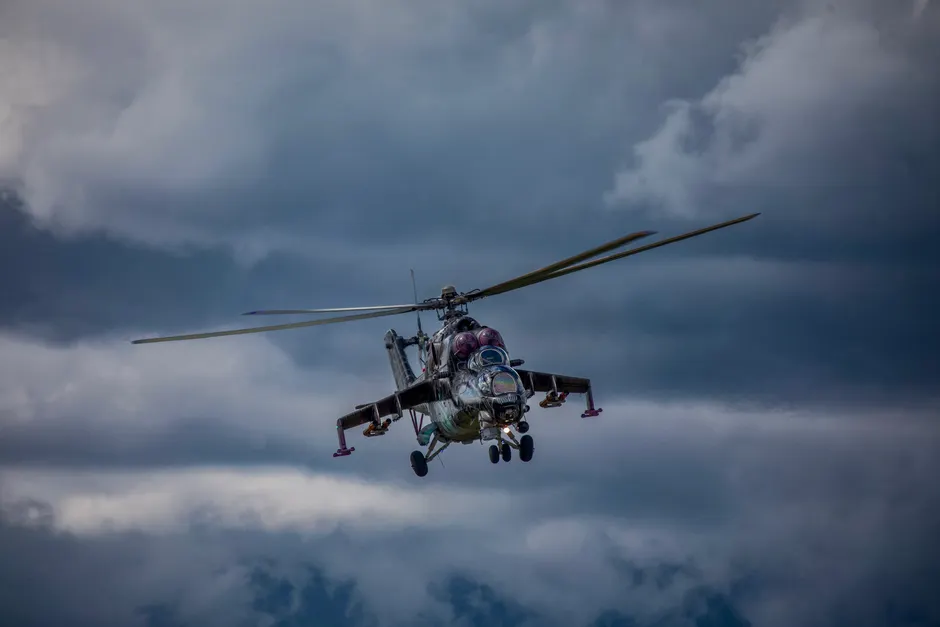
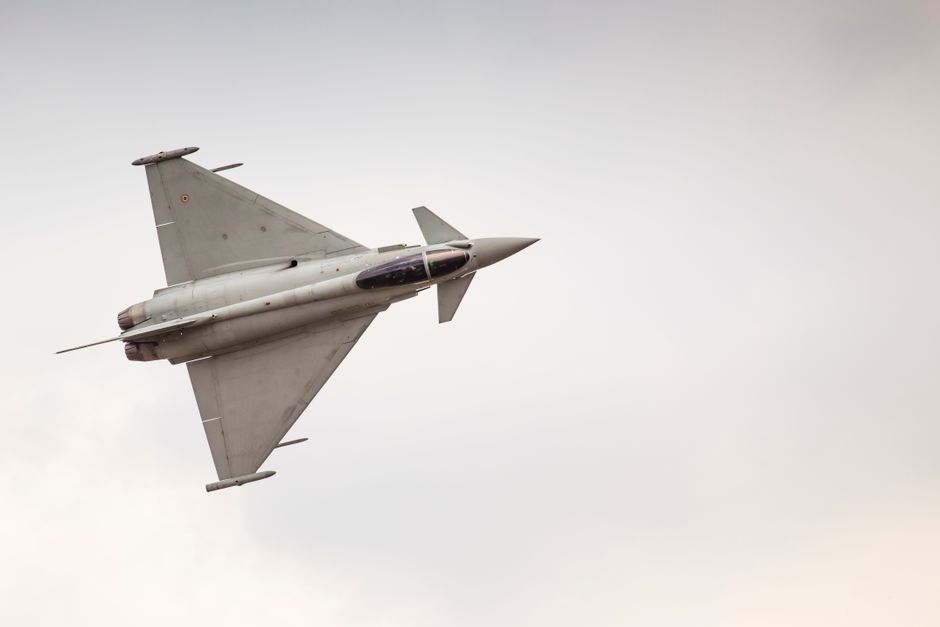
Russian military aircraft came within striking distance of NATO airspace more than 300 times in 2023, forcing alliance air forces across Europe to launch interceptor jets roughly six times per week. These aren't isolated incidents. According to NATO's official record, the pattern reflects sustained pressure concentrated along NATO's eastern flank — particularly over the Baltic states and Poland.
Think of these incursions as probing: Russia tests NATO's reaction times, radar coverage, and willingness to respond, all without crossing the line into outright military attack. Research from the Belfer Center describes Russia's strategy as "gray zone" activity — actions that sit below open warfare but well above normal peacetime behavior. The logic is practical: Moscow can impose costs and signal strength while avoiding the consequences that would come from a direct Article 5 trigger (the NATO clause that treats an attack on one member as an attack on all).
The Baltic region is uniquely exposed. Estonia, Latvia, and Lithuania border Russia directly, and the Suwalki Gap — a 100-kilometer stretch of Polish and Lithuanian territory separating Kaliningrad from Belarus — is one of NATO's most critical vulnerabilities. If Russia could sever that corridor, the Baltic states would lose their land-based link to the wider alliance. Every intercept near this zone is a reminder of that risk, and likely a test of how quickly NATO can respond.
The Diplomatic Channel Problem
NATO formally calls on Russia to stop what it terms deliberate provocations, a position last updated in August 2024. But this language is institutional routine at this point — maintained for the record but without real expectation of near-term change. The NATO-Russia Council, which once served as the direct military communication channel, has not functioned meaningfully since Russia's 2022 invasion of Ukraine.
Without that formal line, military-to-military contact runs through less reliable channels. In an environment where interceptor jets are scrambling multiple times per week, miscalculation becomes a genuine risk rather than a theoretical one.
What This Pattern Actually Signals
The Belfer Center's analysis identifies two parallel aims in Russian pressure on the Baltics: coerce the frontline states directly, and fracture NATO unity by forcing member governments to weigh defense promises against economic costs and escalation risks. That dual strategy explains why Russia maintains the pressure even when it brings no immediate territorial reward.
NATO's counter has been to deepen forward presence. Enhanced Forward Presence battlegroups have expanded since their 2017 deployment, upgraded to brigade-level strength after 2022. The problem: the 2023 intercept rate suggests this posture has not discouraged Russian probing — it may have made it more volatile, because each intercept now occurs with Alliance forces more densely packed and command rules under constant political review.
The trajectory matters. If the intercept rate stays high or climbs through 2025 and 2026, NATO's air operations over the Baltics will drift from a reassurance mission — showing allies you're there for them — into something operationally closer to active air defense. That shift between presence for signaling and presence for potential combat has real consequences: different force requirements, different risk management decisions, and different domestic political costs in the countries rotating troops through the region.
Russia's gray zone approach works because it maintains deniability and friction. But it cannot, by itself, resolve the core contest over where NATO's boundary ends. For the Baltic states and Poland, the 2023 intercept numbers are not a data point to analyze — they are a baseline, one these countries are determined to prevent from becoming a permanent floor.