U.S. Carrier Buildup Near Iran and Hormuz Tanker Strike Explained

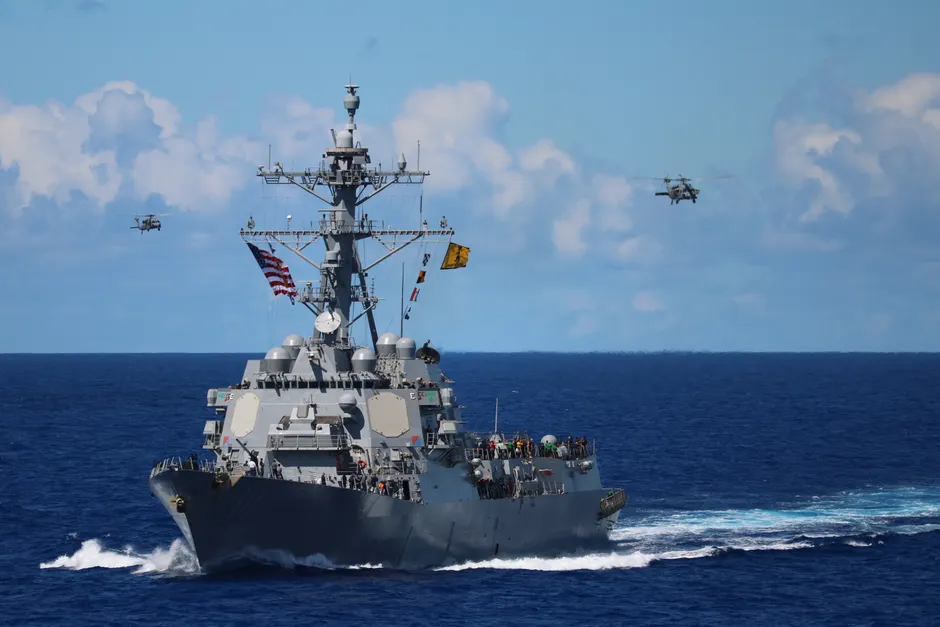
Three U.S. aircraft carriers and two landing groups are deploying around Iran, with the full buildup to be completed by November.
A U.S. official gave that timeline to Al Jazeera on October 2. The official described the move as a sustained presence, not a single transit. The Roosevelt strike group, a carrier sailing with escort ships, and the Makin Island group carrying 2,000 Marines left San Diego for the Middle East, according to Al Jazeera.
The broader context here is timing and tools. A November completion date creates a window to move ships, fuel and supplies into place and to send a political signal before the full force arrives. Carriers work like mobile airfields, providing warplanes, surveillance and command links. Landing groups carry Marines trained for missions such as seizing small positions, reinforcing partners or evacuating civilians around narrow passages and offshore energy sites.
UK Maritime Trade Operations reported a separate incident the same day. A supertanker carrying 2.5 million barrels of oil was hit by an unknown projectile and caught fire while passing through the Strait of Hormuz. The initial report gave no attribution for the attack.
In Tehran, President Masoud Pezeshkian said Iran had never avoided dialogue with the United States, even though it was attacked three times during negotiations. He gave no terms, venue or timetable.
These steps follow reinforcements reported in March. Three U.S. officials told Reuters the military was deploying thousands of additional Marines and sailors to the Middle East, according to Reuters. A separate report described sending Marines and an amphibious assault ship to the region. Options under review at that time included securing the Strait of Hormuz and Kharg Island, according to Reuters.
Strikes at sea have recurred for months. One tanker was hit by drones in the Strait of Hormuz in what was described as the second such strike in 12 hours, according to Seatrade Maritime. In September, the IRGC said it attacked 10 ships, including two U.S. vessels, according to Reuters. Those claims were made by the IRGC.
What this sequence suggests for diplomacy is a parallel track. The November date lets Washington negotiate while military pressure builds, and lets Tehran calibrate its response. Pezeshkian's language keeps a political option open without offering details. The variables to watch are rules for protecting commercial vessels, coordination with Gulf partners on escort and air defense, whether new incidents remain unattributed or become claimed, and how civilian trade lanes where military risk now overlaps stay open, along with events that have not yet happened.
No verified account has defined an end state for either side. The confirmed facts are the deployments, the November date, a burning tanker and an open offer to talk.