Why Buildings Keep Collapsing in Lagos—and Why the Problem Runs Deeper Than Construction

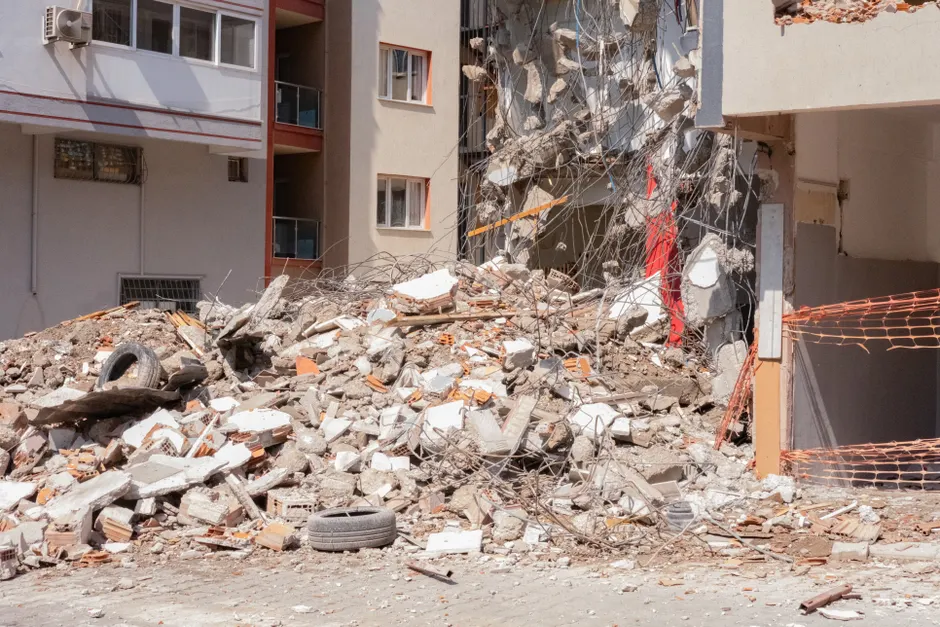
A building collapsed on Lagos Island on June 26, 2026, killing at least nine people. It was the latest collapse in what amounts to a documented pattern across Nigeria's largest cities, and it struck the same neighbourhood where another structure had failed less than two years before.
On July 3, 2024, a three-storey residential building at 2/4 Asesi Lane, off Adeniji Adele Road on Lagos Island came down in nearly the same location. The National Emergency Management Agency (NEMA) documented that collapse as part of a wider tally of structural failures the agency logs with regularity.
The location matters more than it might appear. Lagos Island consists largely of older buildings—many dating from the colonial period or early independence—that have been modified over decades. Developers have added floors and extensions without strengthening the underlying structure to handle the weight. The reason is economic: land values on Lagos Island are among the highest in West Africa, which creates relentless pressure to fit more space into existing buildings. Those structures, however, were never designed to carry that load.
A Broader Pattern
The problem extends beyond Lagos Island. In February 2024, a building under construction at Ochanja Market in Anambra State collapsed around 6:30 pm, according to NEMA, damaging over 120 shops. That collapse occurred during construction rather than in everyday use, pointing to different failures—poor site supervision, substandard materials, or building permits that exist on paper but are not enforced in practice.
A May 2024 collapse of a residential building in Lagos documented by NEMA caused no deaths because the structure was empty. The absence of casualties in that case was luck, not structural soundness. A building that collapses at 3 am on a Tuesday kills fewer people than one that fails during market hours or on a Friday evening when families gather. Timing is a variable, not a safeguard.
Why This Keeps Happening
The causes are documented and systemic. Building regulatory agencies at state and local government levels lack sufficient funding and staff. The Lagos State Building Control Agency (LASBCA) holds authority to enforce standards, but operates in a city of over twenty million people where unapproved construction is routine. Engineers report that concrete is often adulterated—bad aggregates mixed in or cement ratios cut to save money—to reduce costs. Lagos Island sits on challenging soil: some of the land is reclaimed, some is low-lying, creating underground conditions that demand careful geotechnical assessment. Many developers skip that assessment entirely.
The response cycle that follows a high-casualty collapse is predictable: emergency rescue operations, government statements, promises of investigation, and periodic demolitions of flagged distressed buildings. Lagos State has conducted these sweeps, and they attract media attention. The question researchers and professional bodies like the Nigerian Institute of Architects and the Council for the Regulation of Engineering in Nigeria (COREN) continue to ask is whether enforcement holds steady or fades once news coverage ends. Evidence suggests the latter.
What Comes Next
In the short term, rescue operations, casualty confirmation, and structural assessments of nearby buildings will dominate response efforts. The harder task—one that requires sustained attention after headlines fade—is understanding why the same stretch of Lagos Island continues to produce fatal collapses. That answer requires building control agencies to have adequate resources, regulatory enforcement to be consistent, and courts to pursue cases against negligent developers. None of these conditions currently operate at the scale the problem demands.
The Ochanja collapse illustrates another dimension: market districts in smaller cities face even weaker oversight than Lagos, where institutional safeguards at least nominally exist. That suggests the failure is not specific to one city or region. It is national.