Greece and Bulgaria Exchange Wartime Relics and Tsar Samuel's Remains

Greece and Bulgaria have exchanged church relics and human remains in Thessaloniki.
The ceremony formalized an accord covering religious objects taken from Greece during World War I and remains believed to belong to Tsar Samuel, Bulgaria's medieval ruler. The Guardian
The agreement was signed on September 29, 2026, when Athens agreed to hand over the remains identified as the Bulgarian ruler. Reuters Officials described the deal as the result of 50 years of cultural diplomacy, the long negotiation between countries over history and heritage.
Under its terms, 48 relics including icons, crosses and ecclesiastical vessels taken by Bulgarian troops from churches and monasteries in northern Greece during World War I will be returned to Athens. Icons are religious paintings, and ecclesiastical vessels are cups and containers used in church services. The objects had been kept at Bulgaria's National History Museum for more than 100 years.
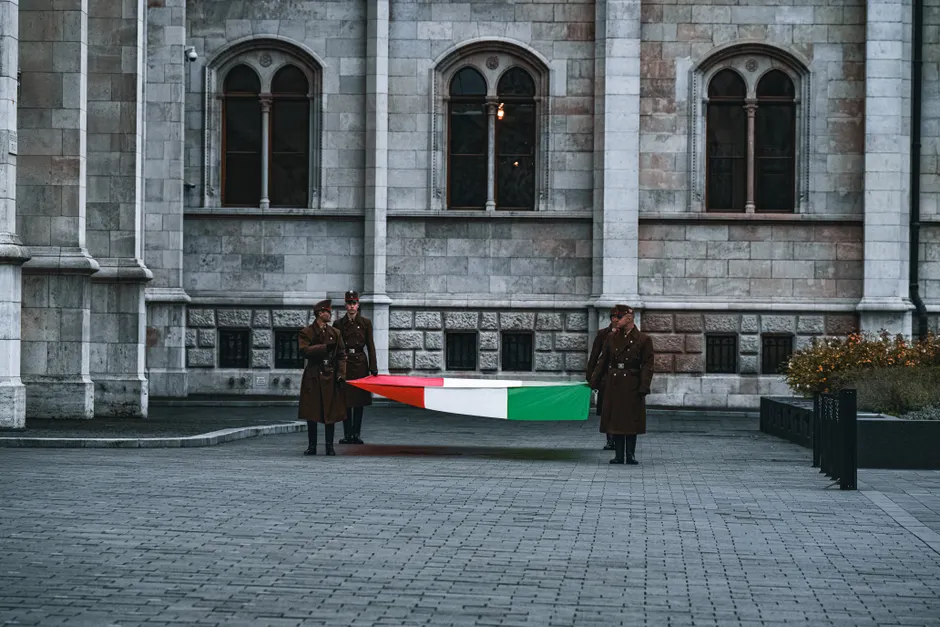
The remains attributed to Samuel were found by archaeologists more than 60 years ago in a border area of Greece. They were flown to Sofia aboard a military aircraft escorted by jet fighters, with a 21-gun salute on arrival.
Greek Prime Minister Kyriakos Mitsotakis said the accord would strengthen Athens' campaign to retrieve the Parthenon sculptures. He linked the Greek-Bulgarian accord to sending a clear message to Britain over the Parthenon sculptures.
The broader context here is reciprocity as method. Each side gives up something held long enough to develop institutional inertia. Each side receives something it can present at home as restoration. Like a trade where both sides need to show a win, that structure lowers the political cost of return, because neither government looks like it conceded alone.
Looking at what this means for cultural diplomacy, duration matters. Fifty years of negotiation points to continuity across governments and a bureaucratic track sheltered from election cycles. For specialists who manage such files, that is familiar. Returns of wartime removals and human remains rarely turn on a single meeting. They require provenance work, meaning research into origin and ownership, plus church and museum stakeholders, and a formula that lets both capitals claim stewardship rather than loss.
In my view, the protocol around the transfer deserves attention. Military transport, fighter escort and artillery salute are normally reserved for state honors. Applied to medieval remains, they give contemporary weight to historical identity. They also tell a domestic audience that the receiving state treats the return as national recovery, not routine paperwork. That symbolism helps explain why such exchanges can unlock files stalled for decades.
Looking at what this signals for Athens' wider claims, the linkage to the Parthenon sculptures is deliberate and separate from the legal mechanics. Athens is arguing by example. If objects taken from churches and monasteries in wartime can be identified, safeguarded and eventually returned, then long-held cultural claims elsewhere should also be negotiable. Whether that analogy holds in other places will depend on different ownership structures and legal frameworks, which a bilateral exchange cannot settle. It can, however, change the diplomatic language around return.