Bosnia Votes on October 4: A Guide to the 14-Government Election

Bosnia and Herzegovina votes in general elections on Sunday, October 4, 2026.
More than 3.4 million people are eligible to vote. They will choose representatives for 14 governments and members of the country's three-member Presidency Al Jazeera. The ballot also includes the House of Representatives of the Parliamentary Assembly of Bosnia and Herzegovina.
A layered system
The country is divided into two entities, the Federation of Bosnia and Herzegovina and Republika Srpska, plus Brcko District. The Federation is further divided into 10 cantons, each with its own government. Think of it as several layers of government stacked together, which is why one election day fills seats at so many levels.
Bosnia's Central Election Commission (CIK) said 75 political parties and four independent candidates registered for the general elections. A separate count put the number of competing coalitions at 29. Competition covers entity, cantonal and state levels.
How voting will work
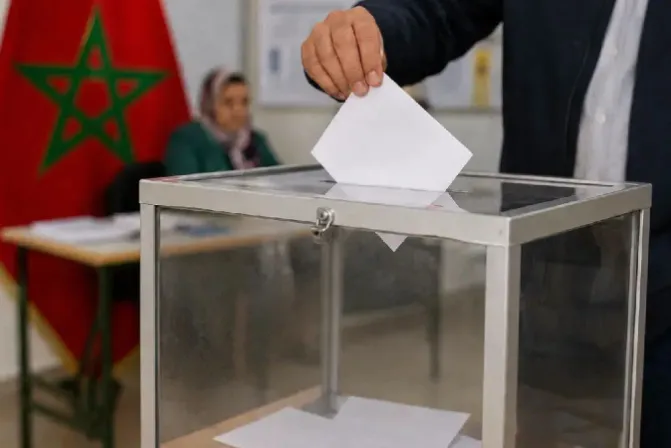
The 2026 election pairs new technology with paper. Voters will be checked with biometric devices, which confirm identity through physical traits, and paper ballots will be read with scanners. Votes will still be cast and recorded on paper.
Election silence began at 07:00 on October 3, 2026 and lasts until polling stations close on October 4, 2026, according to the CIK Central Election Commission. Election silence means a ban on campaigning before the vote. Campaigns ended with final rallies on Thursday and Friday ahead of Sunday.
Who is running for the Presidency
The Presidency has three members, one seat for Bosniaks, one for Croats and one for Serbs. Voters elect one member of this collective head of state, which shares leadership among the three.
For the Bosniak seat, four candidates are running. Denis Becirovic of the Social Democratic Party (SDP) is running. Bakir Izetbegovic of the Party of Democratic Action (SDA) is running for a third term after losing to Becirovic in 2022. Semir Efendic of the Party for Bosnia and Herzegovina (Stranka za BiH) is running. Fahrudin Radoncic of the Union for a Better Future of BiH (SBB) is running.
For the Croat seat, three candidates are listed. Darijana Filipovic of HDZ BiH is running. Slaven Kovacevic of the Democratic Front (DF) is running. Zdenko Lucic, backed by a coalition of five Croat parties, is running.
For the Serb seat, the incumbent faces two challengers. Zeljka Cvijanovic of SNSD is running for a second term as the Serb member. Her term began in November 2022. Marinko Bozovic of the Serb Democratic Party (SDS) is running. Nebojsa Vukanovic of the List for Justice and Order is running. SNSD is led by Milorad Dodik, the former president of Republika Srpska. Both Dodik and Savo Minic are listed as candidates of the Alliance of Independent Social Democrats (SNSD) in the 2026 elections Reuters.
The broader context here is what happens after election day. Fourteen governments each need majorities and coalition deals. With so many parties and coalitions, talks to form governments could take time, especially in the Federation with its cantonal layer and in the state-level House of Representatives.
Looking at what this means for practitioners, three points deserve close attention. First, continuity or turnover in the Presidency, where a second Cvijanovic term would keep the Serb seat with the incumbent while the Bosniak race pits the current holder against a former officeholder seeking return. Second, whether biometric checks and ballot scanners cut disputes over identity and counting without creating new problems when paper records are reconciled. Third, how the Croat vote divides among an established-party nominee, a rival civic-party challenger, and a five-party coalition-backed candidate, since that split will affect claims to legitimacy inside the collective head of state.