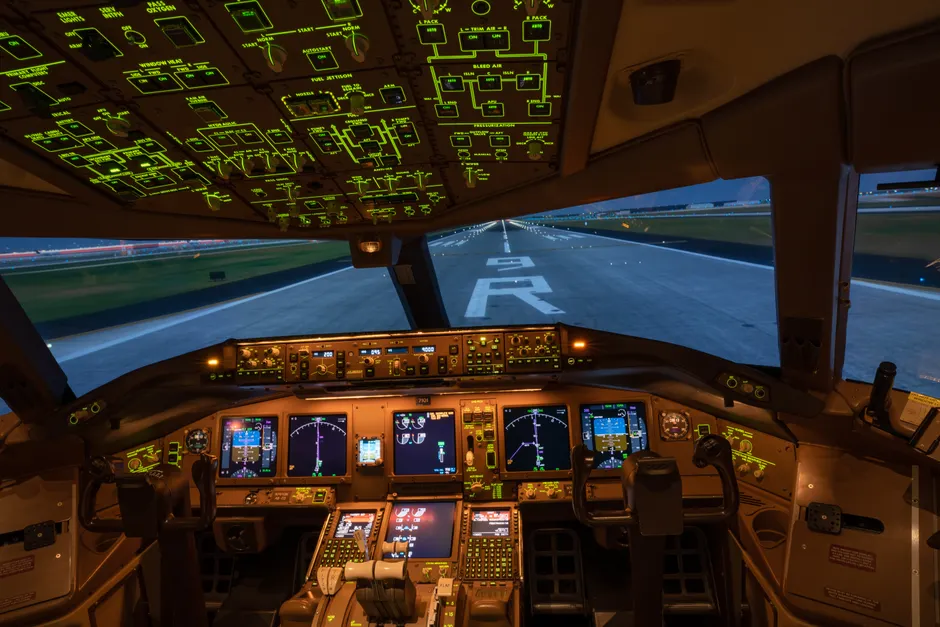
FlyDubai FZ1073 Cockpit Attack: Why an Insider Attempt Changes the Story

The United Arab Emirates says the first officer of FlyDubai Flight FZ1073 attempted a terrorist attack during the scheduled Dubai to Tel Aviv service on 30 September 2026. Reuters The determination, reported on 3 October, recasts what was first described as a cockpit assault as an attempted takeover of a passenger aircraft in flight.
The crew involved were Capt. Smit Machchhar, an Indian citizen in command, and First Officer Hamam al-Hamami, an Omani national. New York Times Machchhar was stabbed in the cockpit. Both pilots required hospital treatment after landing.
Investigators say al-Hamami used an emergency crash ax in an effort to take control. New York Times The ax is standard emergency equipment, carried to cut through panels or force an exit in an emergency.
For aviation security, the detail that stands out here is the weapon. It was not a prohibited item smuggled aboard, but an authorized tool kept within reach in the cockpit. That shifts the focus from passenger screening to insider access.
Control was regained by two pilots who were seated in the cabin. After the captain was stabbed, they took over the cockpit and landed the Boeing 737 Max 8 in Saudi Arabia. New York Times The emergency landing took place in Tabuk. CNN
What changed the outcome here is clear from that sequence. Without two qualified pilots outside the flight deck, the struggle for control could have ended differently.
FlyDubai identified the service as FZ1073, DXB-TLV, operated on 30 September. In its operational update, the carrier thanked its captain, the pilots who secured the aircraft and landed it safely, and the cabin crew.
The captain and the co-pilot were taken to hospital after the emergency landing. Saudi authorities later said the injured pilot and co-pilot were taken to the UAE. Passengers on the Dubai to Tel Aviv flight reached Israel safely on Wednesday after crew and passengers foiled the attempt to crash the aircraft. Reuters
Three processes are now in motion. The UAE launched an investigation into the attack. FlyDubai said a full investigation into Flight 1073 was underway. Israel's initial assessment found the Omani co-pilot likely acted alone. Israeli officials were expected to question the co-pilot who allegedly attempted to crash the passenger flight. Reuters
The broader context here is insider threat and divided jurisdiction. Standard defenses, from locked flight-deck doors to passenger screening, assume danger comes from the cabin, like a locked door keeping outsiders out. An attack by a credentialed pilot inverts that model. It raises questions about continuous vetting, or regular background checks over a career, cockpit occupancy practice, and control of emergency tools that must stay within reach. The airline's wording also points to a coordinated response across flight deck and cabin, not only the cockpit intervention. Jurisdiction is split, as often happens in international aviation. The UAE as state of registry is investigating, Saudi Arabia as state of emergency landing held initial custody and medical evidence, and Israel as state of destination has direct interest in passengers and intent.
Looking at what this means for operators and regulators, the next signals will be procedural rather than rhetorical. Expect close attention to how the extra pilots gained access, how cabin crew managed passengers during the struggle, and how medical, custodial and interview access was sequenced among the UAE, Saudi Arabia and Israel. For carriers with multinational crews on politically exposed routes, the case will test crew pairing, reporting channels for behavioral concern, and contingency planning for loss of command in flight.