Oil Holds Flat as Exports Offset Gulf Supply Fears

Oil prices ended almost flat on Tuesday, Oct. 6, after recovering early losses as traders weighed higher Middle Eastern crude exports against Gulf tensions. Reuters
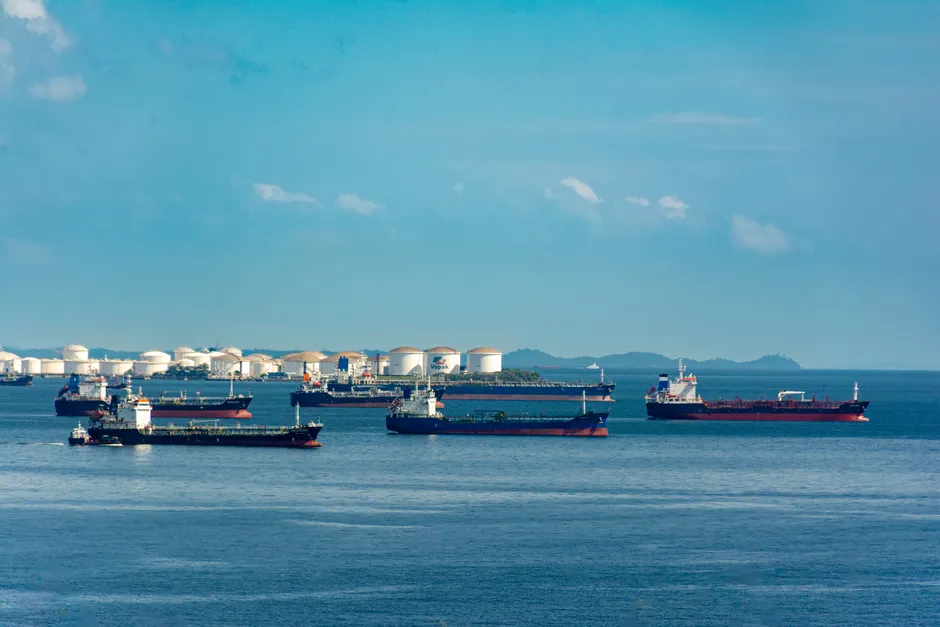
The session ended in balance. Physical barrels clearing the region pulled one way. The threat of disruption pulled the other. Intraday weakness did not hold into settlement, the official end-of-day price.
That two-way action caps two months of headline-driven volatility. On Monday, Sept. 7, oil rose to a six-week high after Iran vowed to strike energy infrastructure across the Middle East. Reuters
Supply risk has been the throughline. The Wall Street Journal described worries about tight supply lifting oil as Middle East conflict heated up in early September. WSJ A month earlier, prices rose in Asian trade on growing doubts that the Strait of Hormuz, the narrow waterway that carries much of the world's oil, could reopen soon. WSJ
Moves have been sharp when airstrikes return to the news. On Wednesday, July 29, oil climbed about 7%, with Brent futures, the global benchmark contract, settling up $6.65, or 7.91%, to $90.74 as airstrikes resumed in the Middle East. Reuters
Politics has at times added to buying pressure. Crude futures settled higher after President Trump rejected Iran's counterproposal to end the war as unacceptable, as reported May 11. WSJ Earlier, on March 17, light crude futures settled up 2.9% to $96.21 a barrel and Brent finished up 3.2% to $103.42 a barrel on ongoing supply-disruption concerns. WSJ
In separate coverage without a firm publication date, the Journal also reported WTI, the main U.S. oil benchmark, settling up 6.3% at $71.23 a barrel and Brent rising 6.7% on heightened supply-disruption concerns. WSJ
The broader context here is a market pricing two states of the world at once. Export loadings are observable. They clear, they set prices, and they weigh on prompt differentials, the price gaps between near-term deliveries. Disruption is probabilistic. It lives in the risk premium, the extra charge for danger, in wide intraday ranges and in the willingness to buy dips when infrastructure threats grow.
In my view, that split explains the pattern since July. Spikes line up with threats to hit energy assets, doubts around Hormuz transit and rejections of diplomatic exits. Fades line up with evidence barrels are still moving. The Oct. 6 session fits. Losses recovered. Settlement held flat. Neither the physical signal nor the geopolitical signal cleared the other.
Looking at what this means for positioning, flat settlements after volatile intraday trade often reflect short-horizon hedging rather than conviction. Longs hold protection against overnight headline risk. Shorts lean on visible export flows. For professionals watching forward cover, refinery margins and freight, the question is duration. A transient premium decays quickly if loadings persist. A sustained closure or infrastructure hit reprices differently. The facts so far show oscillation between those poles, not resolution.