How a Venezuela Earthquake Exposed Gaps in U.S. Deportation Operations

More than 100 people recently deported from the United States survived the twin earthquakes that struck Venezuela's La Guaira coast in late June 2026, having been held in a hotel at the time the tremors hit, AP News reported on June 29. The detail connects two of the region's most significant ongoing crises: Venezuela's deteriorating humanitarian situation under the Maduro government and the Trump administration's expanded mass deportation program.
The Earthquake and Its Scale
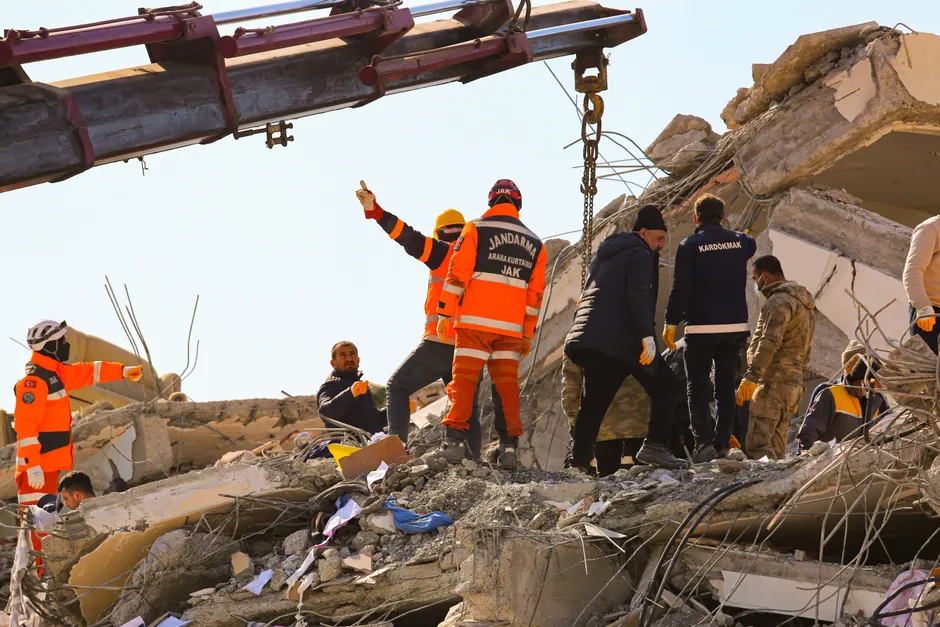
The earthquakes—a series of powerful back-to-back shocks centered on La Guaira, Venezuela's primary port and coastal city—caused extensive structural failures. Hotel Eduard collapsed entirely during a 7.1-magnitude event, according to video documentation from the scene. Dozens of large residential and commercial buildings in La Guaira were also destroyed. Death tolls, based on available reporting, exceed 1,700, with more than 5,000 people affected across the region—figures that may change as rescue operations continue.
Why the Deportee Survivors Matter
The survival of these deportees adds a layer of accountability to an already severe mass-casualty event. U.S. Immigration and Customs Enforcement ramped up removals significantly in 2026: in March alone, ICE conducted 225 removal flights to 46 countries, a 23% increase over comparable prior periods, according to the ICE Flight Monitor, a data-tracking initiative run by Human Rights First. Venezuela has been a consistent destination, despite the absence of formal diplomatic relations between Washington and Caracas and no functioning bilateral repatriation agreement.
That missing agreement is the key detail. Without an established reception protocol, the Venezuelan government typically holds deportees in state-controlled facilities—hotels, transit centers, or detention spaces—rather than releasing them to families. The group of over 100 was in precisely such a setting when the earthquakes struck on June 27. Their survival depended on which building housed them; across La Guaira, survival correlated directly with construction quality and distance from collapse zones.
The Underlying Vulnerability
Venezuela's buildings, particularly in La Guaira—a city sitting at the base of steep coastal mountains along an active seismic fault—were already compromised. More than a decade of economic contraction, deferred maintenance, and reduced government regulatory capacity under Maduro have weakened the built environment. The 7.1-magnitude earthquake encountered a fragile infrastructure system.
This episode raises structural questions for U.S. immigration operations that existed long before the earthquakes. The absence of a functioning U.S. consular presence in Caracas means American officials have limited real-time information about the welfare of nationals or recently deported individuals once they arrive. The ICE Flight Monitor was designed to create external oversight of removal operations that otherwise lack public scrutiny—but flight data doesn't track what happens after people land.
The Maduro government now faces a compounded crisis: coordinating earthquake response with severely limited fiscal resources while managing an influx of deportees whose return was not formally negotiated and whose welfare is now under international scrutiny. Caracas has historically used deportee flows as a bargaining chip with Washington; this disaster complicates that strategy substantially.
What Comes Next
The immediate future for surviving deportees remains uncertain. Return to the United States is not legally possible under current policy—their removal orders remain active. NGO access to La Guaira is restricted by both infrastructure damage and the Maduro government's history of limiting independent humanitarian monitoring. For now, these survivors face the same circumstances as hundreds of thousands of Venezuelans: awaiting rescue in a city where large sections of infrastructure no longer stand.