Trump Awards Science Medals to Musk, Huang, Brin and Su; Tech Medals to Dell and Nadella

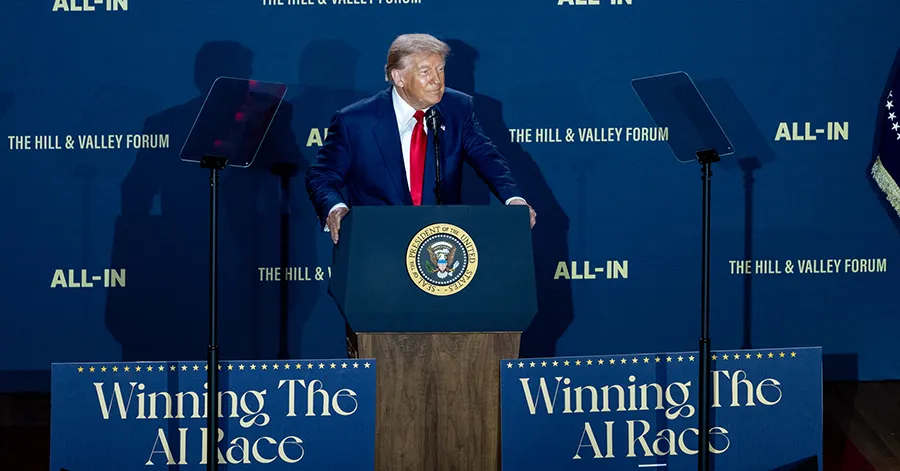
President Trump presented the National Medal of Science to Elon Musk, Jensen Huang, Sergey Brin and Lisa Su, and the National Medal of Technology and Innovation to Michael Dell and Satya Nadella. The presentations took place at the Golden Age of American Innovation Summit on October 8, 2026. TechCrunch
The White House published a release titled 'President Trump Presents National Medals of Science and National Medals of Technology and Innovation'. White House The White House Briefing Room lists that release as dated October 8, 2026. It also lists a fact sheet titled 'Trump Administration Announces the Most Ambitious Set of Science Initiatives This Century' with the same date. White House Briefing Room
Musk is CEO of SpaceX and Tesla. Al Jazeera Huang is CEO of Nvidia and Brin is a co-founder of Google. PBS Su is CEO of Advanced Micro Devices Inc. (AMD). Forbes Nadella was honored alongside Dell in the Technology and Innovation category. TechCrunch
The White House citation for Musk recognizes 'engineering achievements of extraordinary ambition and scale'. That wording comes from the official release. The public record in these sources does not provide equivalent citation language for the other five recipients.
The broader context here is the shape of the list. Four recipients for Science. Two for Technology and Innovation. All six names come from operating companies. The two medals are kept separate for a reason. Science centers on discovery and understanding. Technology and Innovation centers on implementation at scale, moving an idea from prototype to a system many people can depend on.
In my view, scale is the idea to examine. The only citation language disclosed here invokes ambition and scale. That is a different test from a paper, a prototype or a demonstration. It rewards carrying complex engineering through production, operations and sustained use. Integration matters. Reliability matters. Supply chains, tooling and teams matter.
Looking at what this means for working technologists, the effect is indirect but tangible. Medals do not change system designs, budgets or timelines. They do shape attention. Students notice which careers receive national recognition. If honors point toward building systems that work reliably for large numbers of people, more engineers may choose that difficult path. Over the long arc, that kind of durable building has improved everyday life.