Columbia Maps the Circuit That Links Thought to Sight

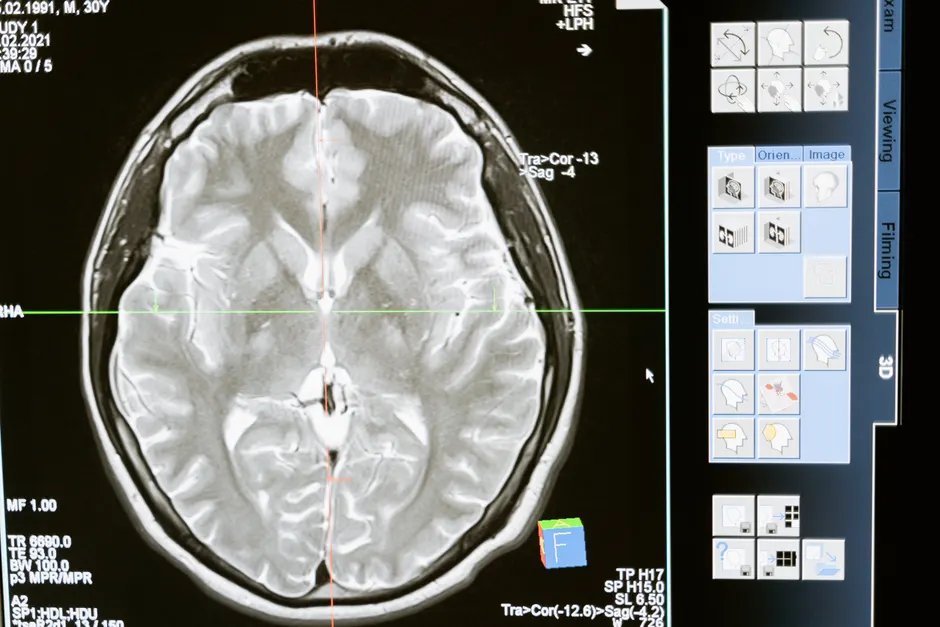
Columbia Engineering researchers identified a specific neural circuit responsible for how thinking shapes what we see. The work, published July 2, 2026, and led by Assistant Professor Nuttida Rungratsameetaweemana, pinpoints the mechanism by which top-down cognitive signals — attention, expectation, memory — actually alter what the visual cortex registers.
The question is not new. Neuroscience has long known that vision is not passive. Your eye does not simply feed raw image data upward through V1 (the primary visual cortex) and into higher brain regions like a camera uploading to a server. The brain sends far more signals downward through the visual hierarchy than it receives upward from the retina. That structural asymmetry has always implied the brain actively predicts and filters what it sees. The hard part has been identifying the specific circuit doing that work.
The Columbia team appears to have built toward this methodically. An earlier paper, published in April 2025 under the title "How Thoughts Influence What the Eyes See," appears to have established the phenomenon before this latest work pinpointed the circuit itself. That sequence — behavioral finding first, then mechanistic identification — is standard in systems neuroscience and suggests the July 2026 result flows from a sustained research program rather than an isolated finding.
For researchers working in neural engineering, computational neuroscience, and brain-computer interfaces, the value is practical. If you can specify a circuit at the neuronal level — discrete populations, their connections, the chemical signals between them — it becomes something you can work with. That opens doors in three areas: restoring or enhancing visual function through neuroprosthetics; treating psychiatric conditions like schizophrenia or anxiety disorders, where perception goes awry and top-down brain signaling appears corrupted; and designing artificial vision systems that more closely mirror how biology actually works.
There is a meaningful AI angle here as well. Most modern computer vision systems use convolutional networks, which are predominantly feedforward — data flows upward from input to output. Researchers have spent years bolting attention mechanisms and recurrent loops onto these architectures to approximate what the biological visual system does naturally, with modest success so far. A well-mapped biological circuit that implements cognitive modulation of perception could serve as a reference model — a blueprint for what to prioritize in the design. Whether that translates into concrete architectural improvements depends on researchers closer to implementation, but having a discrete, identifiable circuit is a more useful starting point than the prior state of "we know feedback exists but we cannot point to exactly what it is."
The institutional positioning is also worth noting. Columbia's biomedical engineering department gave the July 2 publication prominent coverage the same day, and the work sits at the intersection of the engineering school and BME — a positioning that reflects a broader shift in neuroscience toward producing engineerable findings rather than purely descriptive ones. Rungratsameetaweemana's lab appears positioned squarely in that translational space.
At this stage, the publicly available facts are limited. The publication date, institutional affiliation, the lead researcher, and the thematic connection to the April 2025 work are confirmed. What remains to be seen is the specific circuit anatomy, the experimental model (rodent, primate, human), and the technical methods. A circuit mapped in mice using optogenetics — where researchers use light to activate specific neurons — carries different implications than one traced in human subjects using electrode arrays, and those methodological details will shape how broadly the findings apply. The full picture will emerge once the primary paper is available.