Perseverance Takes the Off-World Driving Record, and Pace Is the Difference

NASA's Perseverance rover has set the record for the farthest drive on another world, reaching 28.10 miles (45.22 km) on Mars on October 11, 2026. Engadget
The prior benchmark was 28.06 miles (45.16 km), set by NASA's Opportunity rover. Perseverance covered that distance in five and a half years. Opportunity needed nearly 15 years.
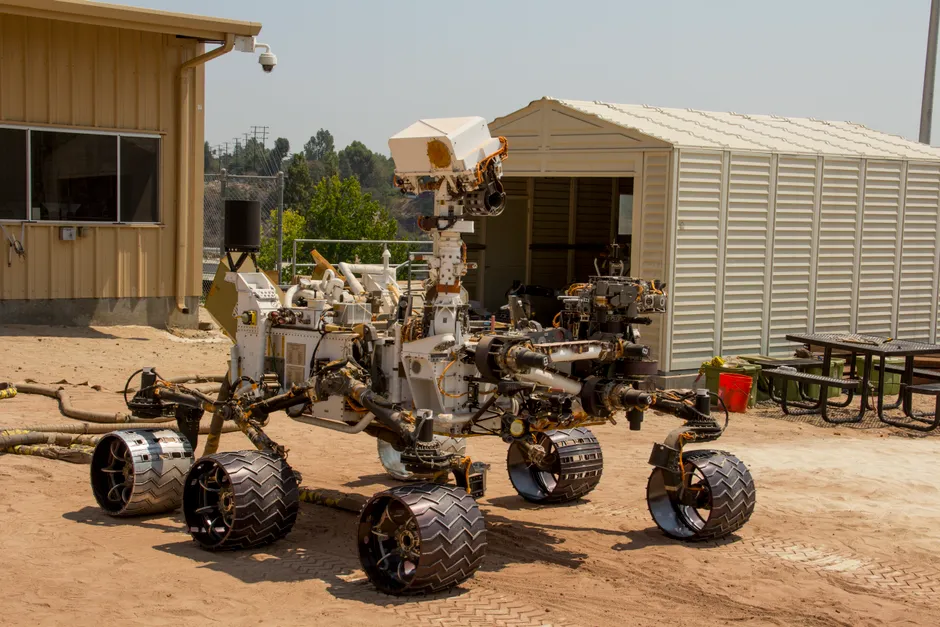
Perseverance is a six-wheeled, nuclear-powered vehicle that weighs 2,260 pounds. Its top speed is 0.1 mph.
The record fell while Perseverance was driving to a region called Idubi to study a feature called Lac de Charmes. Long drives of this kind are now treated as routine operations.
More than 90 percent of Perseverance's total distance has been driven without direct control, using its AutoNav self-driving system. With each scan, the system collects 600,000 measurement points to map terrain and find hazards. That onboard sensing lets the rover choose paths and keep moving without waiting for detailed drive commands from Earth.
The rover had already passed the crewed benchmark. Apollo 17 astronauts Gene Cernan and Harrison Schmitt drove 22.2 miles (35.7 kilometers) on the Moon in 1972. NASA Science By mid-November 2013, Opportunity had traveled more than 24 miles (38.6 kilometers) on Mars.
Daily pace has increased as well. On June 19, 2025, Perseverance drove northbound 1,350.7 feet (411.7 meters) in about 4 hours and 24 minutes, its own record for one sol, or Martian day. JPL Opportunity's longest drive in one Martian day was 702 feet (214 meters). Perseverance landed in 2021 with newer mobility hardware and a newer onboard computer, and daily distances reflect that change.
The broader context here is throughput made possible by trusted autonomy. A rover that can map terrain, judge hazards, and drive hundreds of meters per sol changes how trips are planned. Science teams can string together several stops across kilometers of ground, instead of closely supervising each short drive. The pattern is familiar in computing. Processing moves onto the vehicle when the radio link is slow, intermittent, and costly.
In my view, the Opportunity comparison should not be read as criticism of the earlier rover. Opportunity flew with far less onboard processing and used a different operations approach, and it still worked on the surface for nearly 15 years. What has changed is confidence in autonomous hazard checks on Mars. Once teams trust the rover with routine driving, human time goes to route strategy, wheel slip, and choosing science targets.
Looking at what this means for future surface missions, distance is a proxy for access. A mobile lab that can reliably cover tens of kilometers can visit varied geology, compare rock units in place, and revisit strong sites. The number itself matters less than the wider area each mission can study, with less waiting between drives. Over the long arc, that is how surface exploration becomes more systematic and more productive, without faster wheels.