Iran Threatens Gulf Data Centres and Internet Cables Explained
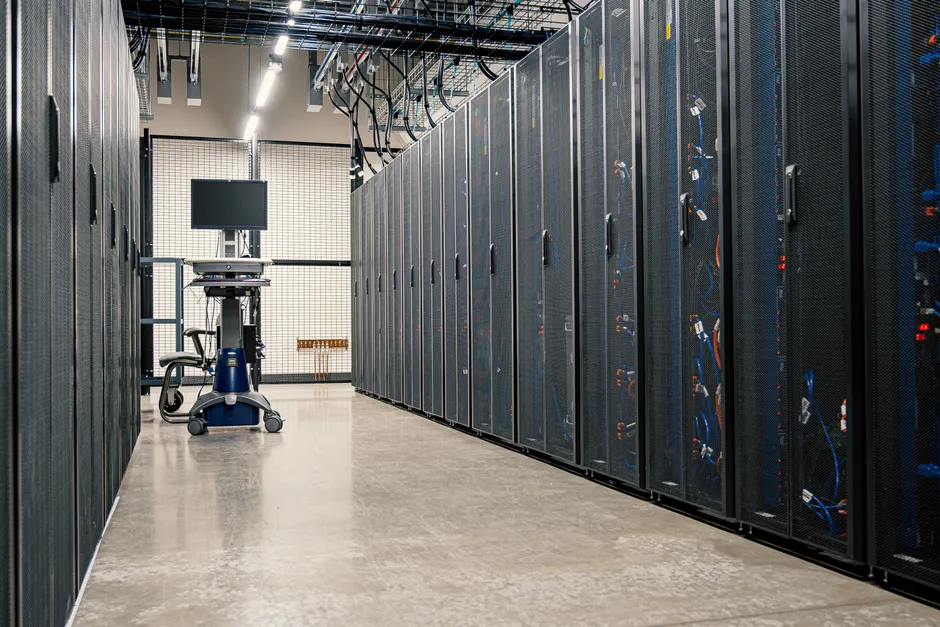
Iran's security chief Mohsen Rezaei warned that cables, data centres and AI facilities across the region could be attacked if war with the United States erupts again, according to reporting on October 13. Al Jazeera
Active hostilities between the US, Israel and Iran have largely ended since the June memorandum of understanding between Iran and the US. A memorandum of understanding is a formal but limited agreement to pause fighting. Data centres and US business interests were hit in Bahrain and the United Arab Emirates during the US-Israel war on Iran. Iranian hardliners backed Rezaei's threat, Iran International reported, while Iranian officials hinted that Iranian forces could conduct land incursions into neighboring Gulf states if the United States launches new strikes. i24NEWS reported that hint on October 13.
Rezaei's language follows earlier, more specific Iranian targeting signals. On March 11, Tasnim news agency reported Iran's IRGC published a list of "Iran's new targets" including cloud infrastructure belonging to Google, Microsoft and Oracle in Israel and some Gulf states. Cloud infrastructure means the rented servers and storage that run websites and apps. In March, the IRGC named 17 US firms in a Telegram post, including Google, Meta and Apple, as well as Emirati AI company G42, as potential targets.
The physical risk is concentrated in two narrow sea passages. Nearly one-fifth of global internet traffic passes through Bab al-Mandeb. More than 90 percent of data capacity between Europe and Asia passes through cables under the Red Sea, according to TeleGeography estimates cited by Al Jazeera. The Bab al-Mandeb strait is about 26km (16 miles) wide at its narrowest. Like a highway forced through a tunnel, it is a Red Sea choke point where any disruption to landing stations, repeaters or terrestrial backhaul can spread across intercontinental routes. Landing stations are where subsea cables come ashore. Repeaters boost the signal along the way. Terrestrial backhaul is the land cable that carries data inland.
Iran had already identified the other chokepoint. In the week before April 28, 2026, Iran warned that submarine cables in the Strait of Hormuz were a vulnerable point for the region's digital economy, Reuters reported. The precedent for physical damage exists. In 2024, a commercial vessel attacked by Iran-aligned Houthis drifted in the Red Sea and severed subsea cables. Houthi attacks have delayed all undersea cable construction since 2024, according to the Stimson Center.
Control of the Yemeni coastline shapes that risk. Fighting is under way between Yemen's internationally recognised government and the Houthis at locations including Bab al-Mandeb. In September 2026, Houthi forces pushed south toward Dhubab on the Red Sea coast, Reuters reported. As of September 13, 2026, the Houthis had captured Yemen's Red Sea coastline, Reuters reported. As of October 2, 2026, Saudi Arabia was planning an offensive against Iran-backed Houthi militants in Yemen, including a possible coastal push, Reuters reported.
The broader context here is a shift in coercive leverage from energy flows to data flows. Gulf states host US cloud regions, enterprise facilities and AI compute, while intercontinental traffic remains funneled through narrow, shallow waters. Threats to landing points and terrestrial extensions can create political effect without a complete cut, through repair delays, insurance costs, rerouting congestion and pressure on operators to diversify.
Looking at what this means for policymakers and operators, the linkage matters more than any single threat. A renewed US-Iran exchange would not stay bilateral in its effects. Previous strikes touched Bahrain and the UAE. Future threats name private infrastructure owned by US hyperscalers and a Gulf AI firm. Hyperscalers are the largest cloud providers. Maritime pressure around Bab al-Mandeb and Hormuz would interact with that targeting, because damage at sea and risk on land reinforce each other for insurers, cable ships and data centre tenants.
In my view, the next moves to watch are defensive and diplomatic rather than rhetorical. Expect Gulf governments to press for redundancy, distributed peering, and faster repair permissions, and Washington and Tehran to test whether the June memorandum can contain escalation that now explicitly includes civilian digital infrastructure. Deterrence in this domain is ambiguous. Both sides understand the costs would fall first on third parties whose cooperation they need.