Apple Opens $299 HomeView Preorders Ahead of November 13 Launch

Apple opened preorders for HomeView, its smart display, priced at $299 with launch set for Friday, November 13. The Verge
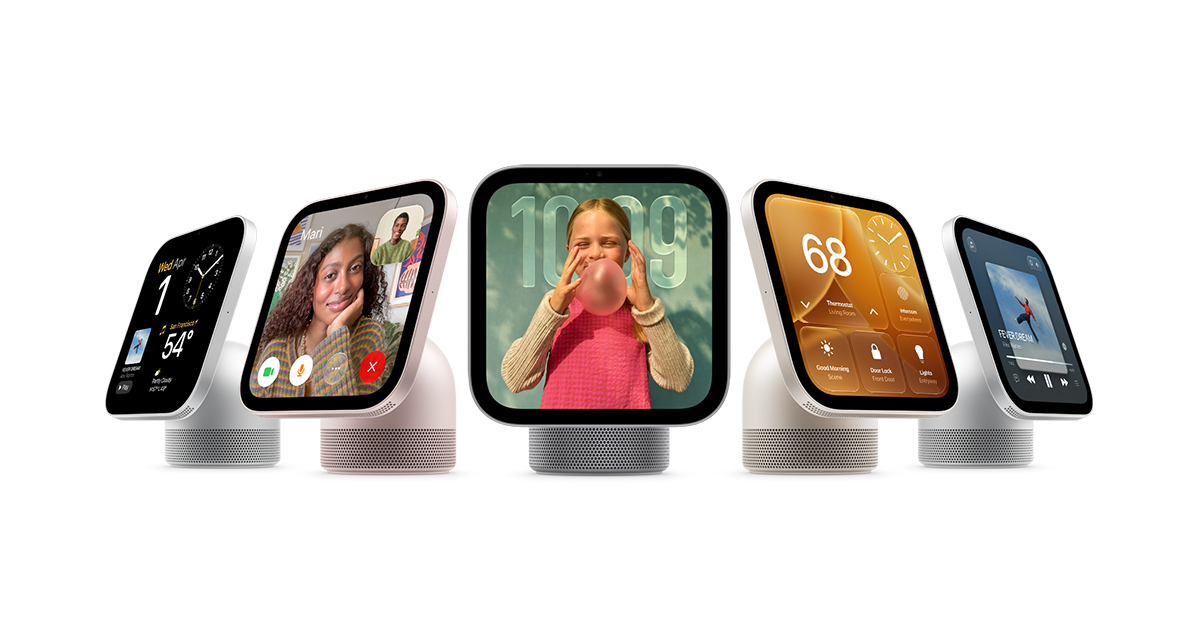
The device centers on a seven-inch squircle display, a square with soft rounded corners, listed by Apple as a 7-inch Liquid Retina display, its term for a sharp LCD screen. Apple Buyers can choose from multiple colors and from two physical versions, a speaker base or a wall-mounted version, at the same price. The Verge
The difference between the two versions is audio. The speaker-base version includes a custom down-firing woofer, a bass speaker pointed downward, and two passive radiators, diaphragms that use air pressure to add bass without extra power. The Verge Apple lists high-fidelity audio, or detailed low-distortion sound, for the line. Apple The display also supports FaceTime calls. The Verge
For smart-home control, HomeView supports Thread and Matter, two shared standards that let devices from different brands connect locally and work together. The Verge Voice control depends on pairing. When connected to an Apple Intelligence-enabled iPhone or iPad, a recent model able to run Apple's built-in AI, HomeView supports natural-language voice interactions, so you can speak in normal sentences. The Verge The shop listing also references Siri AI. Apple
For fulfillment, in-store pickup is offered for pre-orders. Apple HomeView is sold in the Apple Home shop alongside HomePod and Apple TV 4K, with the wall-mounted version listed in silver. Apple The company presents the product under the title 'Meet Apple HomeView, a new way to enjoy entertainment and manage the home.'
The timing matches earlier reporting. Apple had planned its smart-home push for October 13, 2026. Bloomberg The hub effort was code-named J490. Reuters October plans were reported to include a HomePod mini and a new Apple TV alongside HomeView. Bloomberg
The broader context here is architectural. Apple has kept heavyweight language processing, the demanding AI work, on the iPhone and iPad and given the stationary display a thinner voice role that lights up when paired. That keeps chip and heat needs in the display modest and ties replacement cycles to phones users already upgrade. It also means what technologists need to test is not a single device but a pair, with software versions and pairing state as variables.
Looking at what this means for placement, the pricing decision is practical. Offering speaker base and wall mount at parity removes cost from the choice of location. Kitchens, hallways and bedside tables have different sound and viewing needs. A down-firing woofer with passive radiators suits a countertop. A flush wall unit trades bass depth for clear sightlines and simpler cables. Households can use one management model while mixing mounts.
In my view, the Thread and Matter support matters more than the display size. Seven inches is enough for quick controls and video calls. Standards support determines whether those controls work across brands without fragile workarounds. For a mixed-device home, setup and local connection quality will decide day-to-day reliability more than screen specifications.
Worth flagging for early buyers is lineup fit. Slotting HomeView beside HomePod and Apple TV 4K keeps audio-only and TV-box roles intact while adding a visual control point. The open question for multi-room setups is handoff. FaceTime on a fixed screen, voice that depends on a nearby phone, and media that can move to other devices will need clear defaults. If Apple gets those defaults right, the benefit is straightforward, fewer app hops to run the home and more tasks finished from where people already stand.