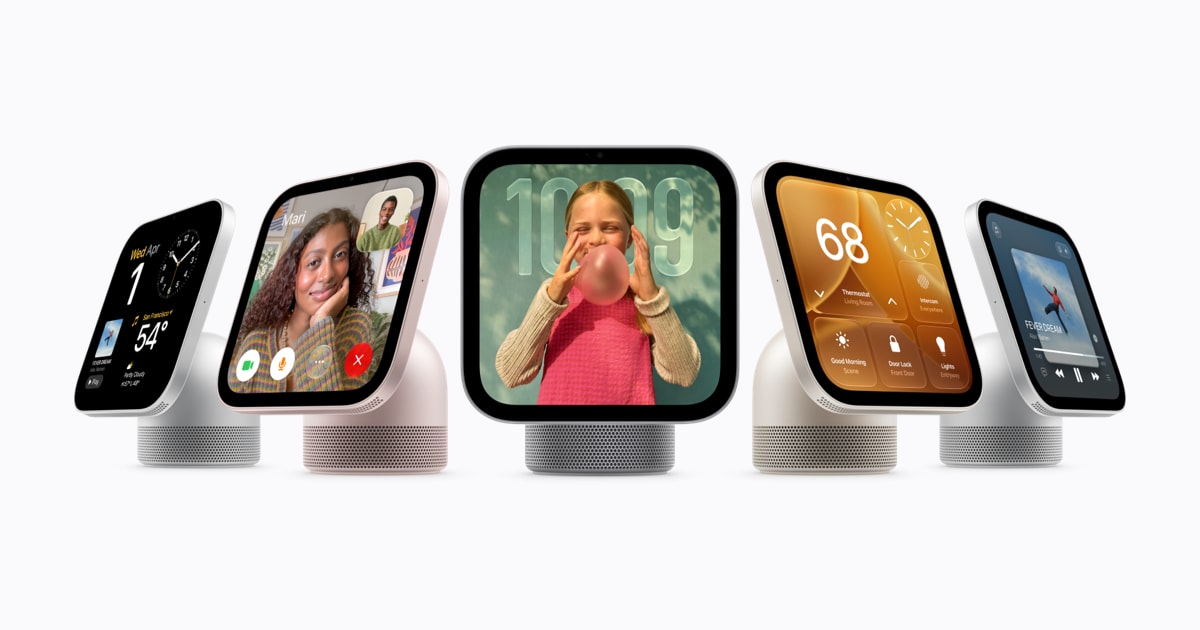
Apple HomeView Leaves Video and Four Apple Apps to the iPhone

Apple's HomeView will not run Apple TV, Apple Books audiobooks, Apple Music Classical, and Apple News Plus on its own. Using those four services on HomeView requires AirPlay from a paired and compatible iPhone nearby The Verge.
Apple states this directly in its HomeView announcement materials, which note that select apps require a paired and compatible iPhone nearby. That wording covers the four services detailed on Oct. 14. In practice, the phone does the work while HomeView acts as the playback endpoint.
There is no App Store on HomeView. The device uses the Apple A18 chip, the same processor found in the iPhone 16 The Verge.
Looking at the hardware, the message is plain. There is plenty of processing power. Apple simply did not open up native software distribution.
HomeView also does not run video apps natively, a term meaning software installed and run directly on the device. Playing video apps on HomeView requires an iPhone or iPad AppleInsider. That wider rule sits alongside the narrower AirPlay rule for the four Apple services, which specifically calls for a paired and compatible iPhone.
What runs locally is centered on music. Apple states HomeView plays Apple Music with animated album art and lyrics Apple. Apple describes HomeView as the perfect way to enjoy Apple Music with multiroom audio throughout the home. No third-party native video path was described in the verified materials.
The hardware context is a three-product introduction. Apple unveiled the HomeView Hub priced at $299 Bloomberg. It introduced a new Apple TV 4K streaming box alongside the HomeView Hub, as well as the HomePod mini 2 speaker. Apple had planned to launch its new smart-home hub on Oct. 13 Reuters. Apple's Newsroom features a press release titled "Meet Apple HomeView, a new way to enjoy entertainment and manage the home." It also features a press release titled "Apple unveils the new Apple TV 4K, supercharged by Siri AI."
Looking at what this means for system design, HomeView works more like a connected endpoint than a standalone platform. Native operation is limited to music and home-management functions. Anything needing full app logic, protected video playback, or personal libraries is handled by a nearby iPhone or iPad and sent over AirPlay, Apple's wireless streaming system. That keeps logins, setup, and app updates on the phone. It also leaves HomeView free of a separate store, separate third-party updates, and separate login states.
In my view, the tradeoff will feel familiar to anyone who has shipped companion hardware. One AirPlay path can support several otherwise distinct apps without rebuilding them for a new device, which reduces fragmentation and support work. The cost is friction. Users must keep a compatible phone in range, charged, and paired. Developers get no native install target in these categories. Wi-Fi quality, format handling, and background rules on the source phone become part of living-room reliability.
Worth flagging for anyone planning a smart home is the split between the hub and the streamer. HomeView covers always-on music and home control across rooms. The new Apple TV 4K remains the device for video without a phone in the loop. If you want ambient music with lyrics and album art in several rooms, that is the workload Apple kept native.
The broader context here is households that already run on iPhones. I watched my own two kids grow up just trying to cast, mirror, and hand off audio until something played, with no manual. HomeView leans into that habit. It assumes the phone is present and makes the speaker the easy target. Over time, simple multiroom audio plus central home control tends to get used more than a more capable but more complex device. The question to watch is whether AirPlay from a nearby phone stays invisible enough that people stop thinking about it.