Apple Prices HomeView at $299, With Wall Mounts Costing Extra
Apple will sell both versions of its HomeView smart home display for $299, with the hardware to mount the wall version sold separately. The pricing was confirmed on Oct. 13. The Verge
The lineup is two fixed SKUs, the industry term for separate store models. One ships with a speaker base for desktop or shelf placement. The other is designated HomeView (Wall Mounted). They are not convertible. A buyer cannot turn the desktop unit into a wall unit later, or vice versa.
The wall variant requires a mount and power solution to operate. Apple lists three purpose-built mounts from Schneider Home. Entry starts at $59.95 in the US. The Verge
The three options map to different wiring setups. The Power Mount USB-C Wall Connector for HomeView starts at $59.95 in the US. The Power Mount AC Wired for HomeView, which connects directly to household mains power, starts at $79.95 in the US. The Power Mount PoE Wired for HomeView, which uses Power over Ethernet, or power and data over one network cable, will be available in early 2027 for $129.95 in the US. Apple
That puts the installed cost of the wall configuration above the headline $299 price. USB-C adds $59.95. Hardwired AC adds $79.95. PoE adds $129.95 and a wait until next year.
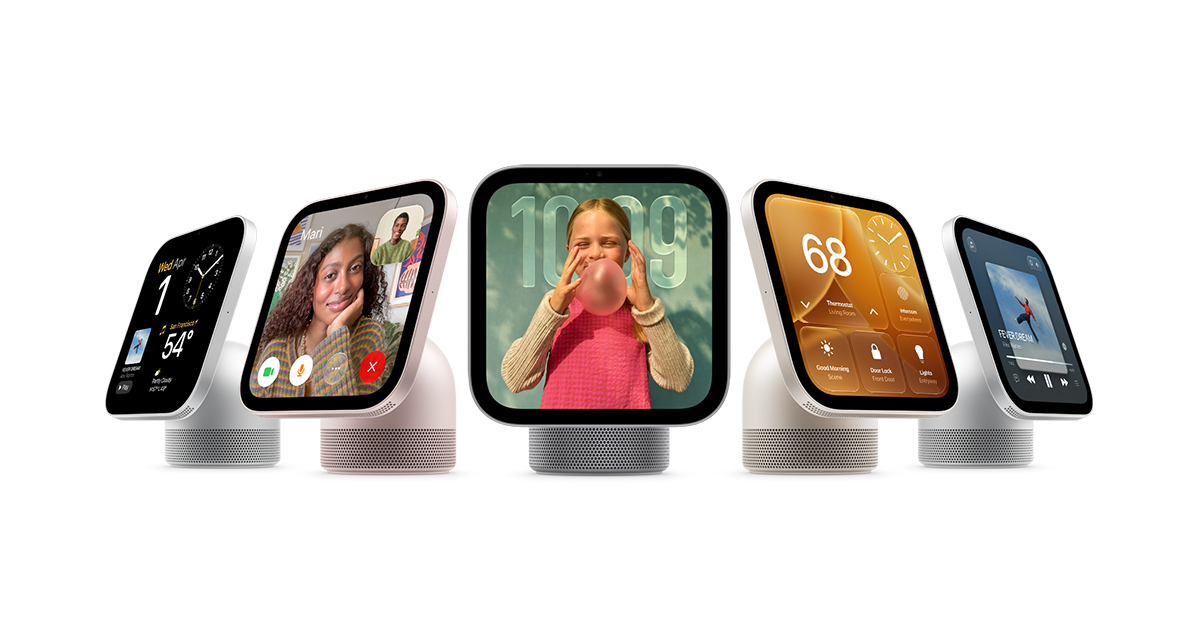
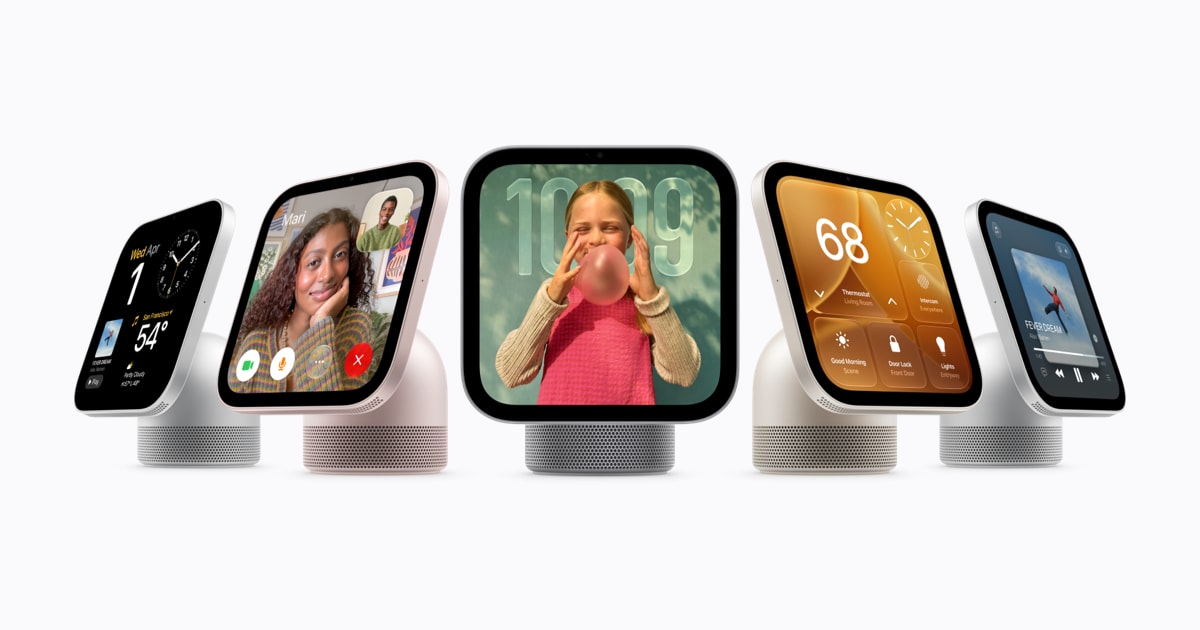
On hardware, Apple describes an aluminum design with a 7-inch Liquid Retina display, Apple's name for its high-resolution LCD. In the desktop configuration the display joins a domed speaker base with a stainless steel hinge. Apple The wall-mounted version uses a flat, square base instead. CNET The line will be offered in four colors.
Apple detailed the product as "Meet Apple HomeView, a new way to enjoy entertainment and manage the home." Ship is scheduled for mid-November 2026. Bloomberg The Oct. 13 smart-home launch plans covered HomeView alongside HomePod mini and a new Apple TV.
The broader context here is installation, not just industrial design. A countertop hub with an integrated speaker is a retail purchase. A wall hub is a power project, closer to a thermostat than a speaker. USB-C lowers friction for retrofit in drywall where an outlet or low-voltage run already exists. AC wired and PoE point to new construction, remodels, and managed installs where the cable path can be planned before paint.
In my view, the non-convertible split and the Schneider Home dependency are the details to watch. Separate SKUs simplify thermal, antenna, and power design, but they push inventory and merchandising complexity onto Apple and its channel. A $299 sticker with a $59.95 to $129.95 mount adder also changes total cost of ownership math for multi-room deployments. Three or four wall nodes cost substantially more than three or four times $299 once electrician time is included.
Worth flagging for installers is PoE availability in early 2027, which creates a split timeline. Early adopters will deploy on USB-C or AC. Sites standardized on centralized PoE switching will wait. That is a rational segmentation. It still means firmware behavior, power budgeting, and mounting templates will need to stay consistent across staggered power options if Apple wants uniform management at scale.
Looking ahead, if the execution holds, the payoff is a wall control surface that does not look like an afterthought. A 7-inch panel with a clean power story can live in a hallway, kitchen, or office without a visible cable or a countertop footprint. That is a small change in any single room. Across a house with consistent power and mounting, it is what makes ambient control practical.