SpaceX Cargo Launch Lights Up the East Coast Sky Before Sunrise

SpaceX launched a Falcon 9 carrying cargo to the International Space Station at 6:33 a.m. ET on Tuesday, Oct. 13, from Cape Canaveral Space Force Station in Florida. The Guardian Liftoff came 48 minutes before sunrise.
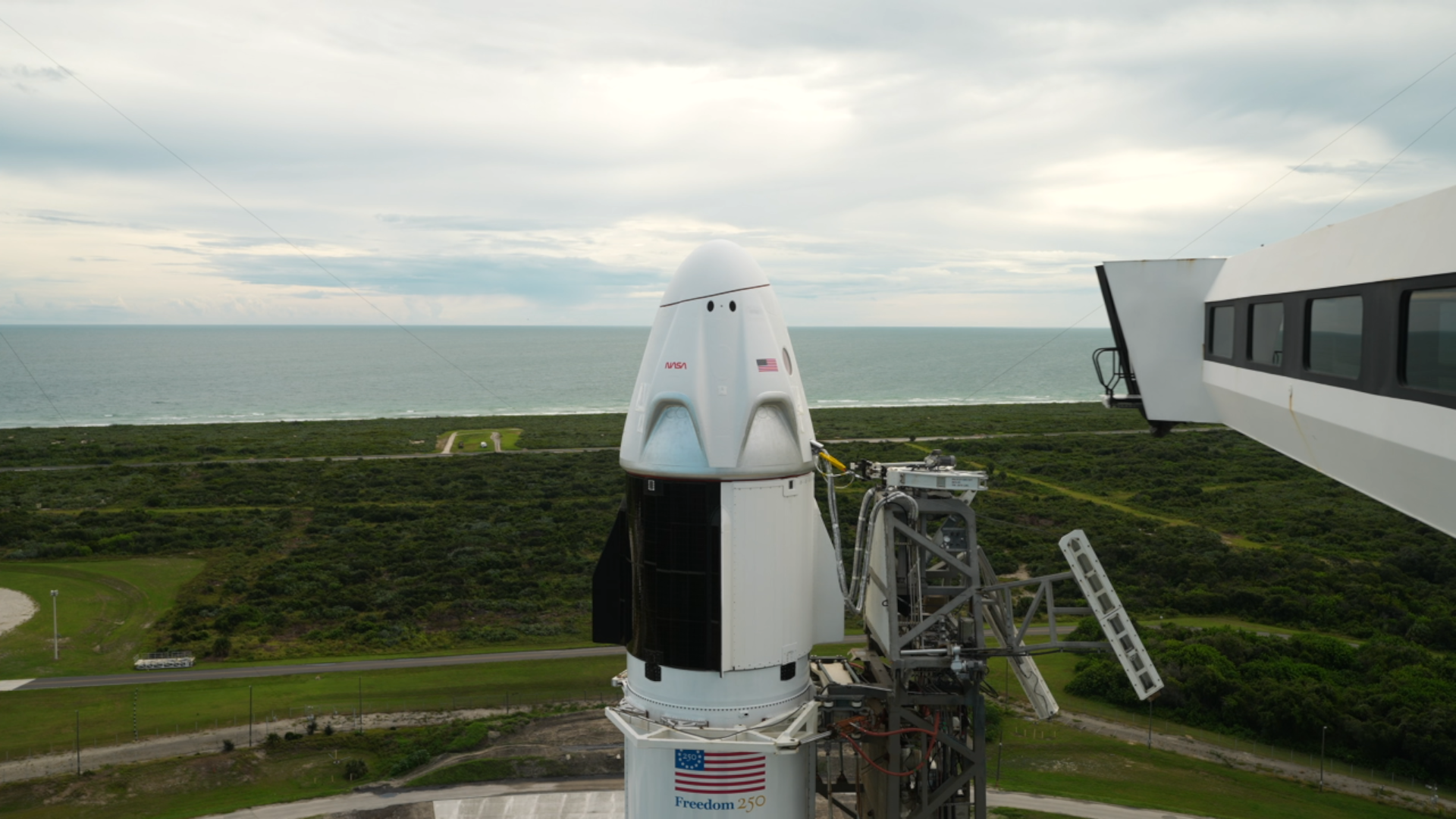
The flight was NASA's 35th SpaceX commercial resupply mission, called CRS-35. It lifted off at 6:33:44 a.m. EDT from Space Launch Complex 40, the launch pad known as SLC-40. News4JAX The cargo flew inside a SpaceX Dragon spacecraft, the capsule that carries supplies to the station, atop the Falcon 9. NASA More than 6,300 pounds of science experiments and cargo were aboard. SpaceX lists the CRS-35 liftoff as Oct. 13 at 3:33 a.m. PT, the same moment in Pacific time.
The climb created a glowing jellyfish cloud. The shape formed when the rocket's exhaust plume spread high in the air, froze into tiny crystals, and caught sunlight. The Guardian The Falcon 9 flew northeast over the Atlantic, so people from Georgia to New York could see it. Observers reported the jellyfish shape over northeast Florida and southeast Georgia, and a similar cloud lingered over Port Orange on Oct. 13. NASA shared photos of the cloud on X.
Another Falcon 9, this one carrying satellites, is set to launch from the same Cape Canaveral pad on Monday, Oct. 19. It has a one-hour launch window, the period when it can lift off, opening at 6:30 a.m. ET, about a half-hour before sunrise at 7:01 a.m.
The broader context here is what fast repeat launches demand from one pad. SLC-40 will shift from a cargo flight to a satellite flight within six days. That compresses pad turnaround, rocket assignment, and morning range time into a short span. The Oct. 19 window has similar pre-sunrise light with an hour of flexibility. That does not guarantee the same sky display, since the glow depends on altitude, orientation, venting, and sun angle along the path. It does put the next climb in the window when high exhaust can be sunlit while the ground is still dark.
In my view, these twilight trails are useful as well as striking. They offer a wide, public view of the flight path and how exhaust interacts with the upper atmosphere. The Georgia-to-New York visibility came from the northeast track over the ocean combined with clear dark skies below. For the resupply program, the sight is secondary. The job was delivering research and supplies by Dragon under NASA's commercial contract. Still, images shared by the agency extend the mission beyond its cargo list, recording launch weather in a way both experts and the public can read quickly.