Nvidia's RTX Spark N1X Arrives in Windows Laptops

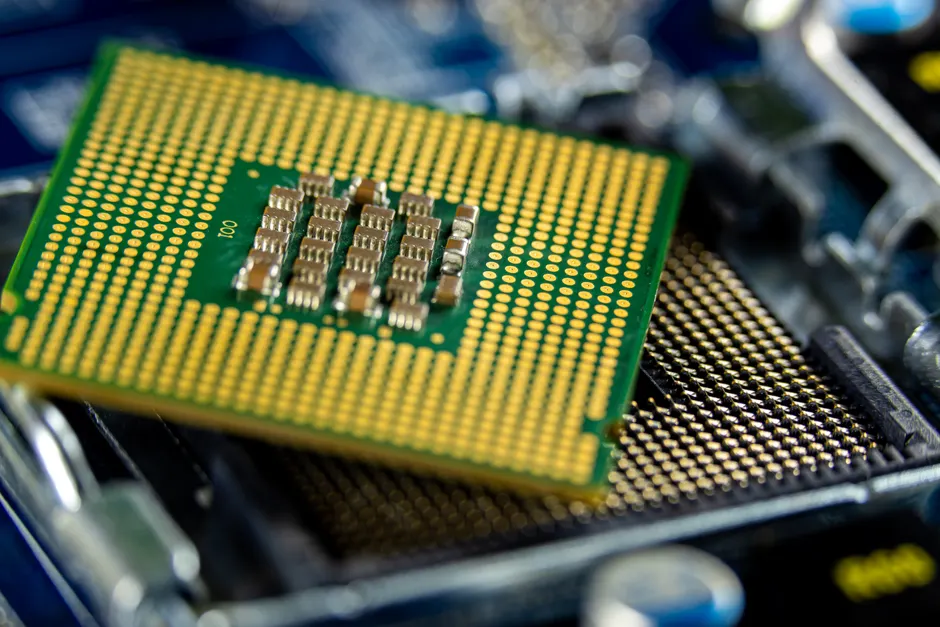
Nvidia's RTX Spark N1X is now available in Windows systems from Asus, HP, Lenovo and Microsoft. The chip is an Arm-based SoC with RTX Blackwell graphics, designed for laptops and small desktop computers. The Verge
Three writers used five N1X laptops for a week, with impressions published Oct. 16, 2026. Systems named include the Asus ProArt P16, Lenovo Yoga 9n 2-in-1 and HP OmniBook Ultra. The piece is presented as week-long impressions, not an exhaustive scored review.
The tested laptops pair 20 CPU cores with 6,144 GPU CUDA cores. CUDA cores are Nvidia's parallel processors for graphics and AI work. A lower-cost N1X variant pairs 18 CPU cores with 5,120 CUDA cores. Nvidia lists the N1X as using a Grace CPU.
Memory capacity differs across the lineup. Nvidia's specifications list support for 128GB of LPDDR5X unified memory, a single pool shared by processor and graphics. Microsoft's Surface Laptop Ultra flagship configuration pairs the N1X chip with 128GB of unified memory. Nvidia
On AI throughput, Nvidia's specification page lists up to 980 AI TOPS. TOPS counts trillions of AI operations per second. In its May announcement, Nvidia said RTX Spark-based Windows PCs feature 1 petaflop of AI performance. Nvidia
Nvidia listed Asus, Dell, HP, Lenovo and Microsoft as manufacturers of RTX Spark laptops and compact desktops. Nvidia said RTX Spark laptops and compact desktops will be available this fall. That May statement describes compact desktops as built to run personal AI agents 24/7. Nvidia says RTX Spark powers the world's first Windows PCs purpose-built for personal agents.
Entry pricing for 18-core configurations is $2,599.99 for the Surface Laptop Ultra or Asus ProArt P14 with 24GB of RAM. Higher in the stack, the HP OmniBook Ultra with N1X is priced at $3,199.99 and the top-spec Asus ProArt P16 is priced at $6,999.99.
Nvidia CEO Jensen Huang unveiled the Arm-based PC chip in late May. CNBC described the event as the company's first entry into PCs. Bloomberg described the effort as entering the Windows laptop market with its AI chip to compete with Intel and AMD.
Silicon and system footprint
The broader context here for hardware engineers is the combination rather than any single number. Grace CPU cores plus Blackwell graphics plus large unified LPDDR5X sit in one SoC, or system on a chip. That puts CUDA, video, display and local model work on the same memory pool within a laptop power and heat budget. That is a different trade from a discrete RTX GPU paired with a separate x86 CPU and partitioned VRAM.
The broader pattern here is two buyer groups inside one chip family. The top bin offers 20 cores and 6,144 CUDA cores, while the lower bin offers 18 cores and 5,120 CUDA cores to reach the $2,599.99 entry. The spread from 24GB at entry to 128GB at the Surface flagship is wide, which points to distinct uses rather than one typical buyer.
What the first systems test
The early pool covers clamshell, creator workstation and 2-in-1 form factors across five machines from four vendors.
Looking at what this means for Windows on Arm, shipping the same SoC through Asus, HP, Lenovo and Microsoft tests driver maturity, OEM thermal tuning and independent software vendor readiness in parallel. It does not rely on a single reference design.
In my view, price will focus attention from IT buyers. The $3,199.99 OmniBook Ultra and $6,999.99 top-spec ProArt P16 sit in mobile workstation territory. At those prices, decisions turn on toolchain support, sustained clocks under load and manageability, not launch-day throughput claims.
The broader context here is local agents as a full system workload, not a demo feature. Nvidia frames laptops and always-on compact desktops around personal agents with petaflop-class AI performance on device. For developers, that implies background retrieval, planning and tool use alongside normal desktop work, where memory capacity and memory bandwidth limit usable model size more directly than peak TOPS.
In my view, the 128GB unified-memory configurations are the configuration to watch. If large-context work and agent state can stay resident without paging to SSD storage, the daily difference for engineering work could be larger than the difference between the 18-core and 20-core bins. Smaller memory configurations will still run accelerated applications, but they will not test that hypothesis.
Worth flagging is what a week of impressions cannot settle. Sustained performance under extended compile, render or inference loops, behavior on battery versus wall power, fan acoustics in quiet offices and enterprise deployment behavior all need longer measurement. The early value in this round is breadth across vendors and form factors, not a final verdict on any one machine.
Looking at what this means for platform choice, CUDA on an Arm Windows laptop with unified memory lowers friction for developers who already target Nvidia GPUs on desktops and servers. The open question is how much of that existing software stack transfers without rework, and how OEMs support it through regular driver and firmware updates. Nvidia's first entry into PCs will be judged as much on that maintenance cadence as on silicon.
The optimistic case is straightforward. If compact, power-efficient systems can run useful personal agents locally and continuously, more experimentation moves on device, latency drops for interactive use and network dependence falls for sensitive work. That is a tangible gain for builders, even before the broader software ecosystem catches up.