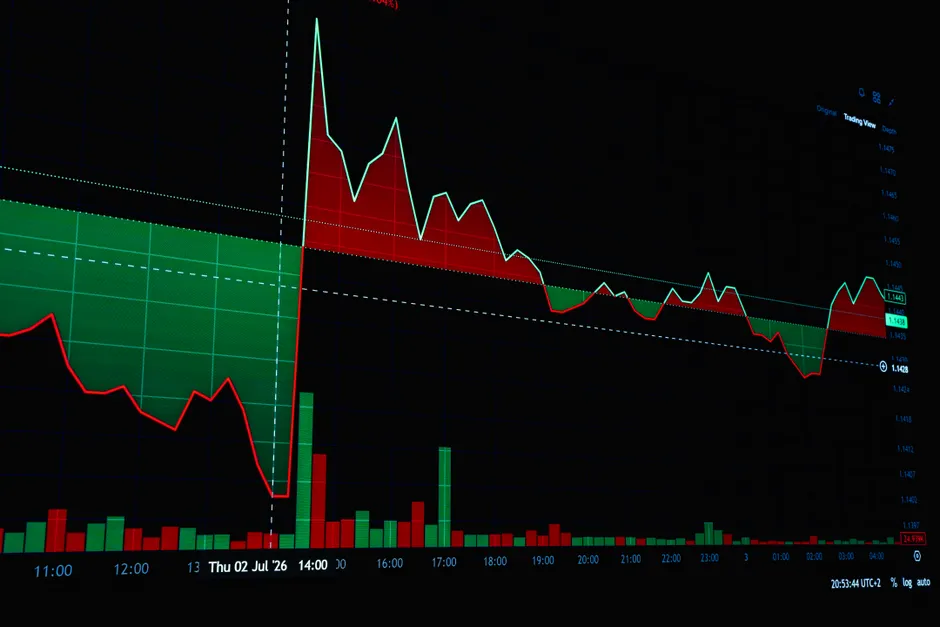
Nasdaq Falls 2.5% as AI Debt Fears Hit Tech Stocks

The Nasdaq Composite fell roughly 2.5% on Friday, October 16, 2026, putting its weekly loss at almost 5%, according to CNN. Tech and AI-linked shares led the drop. Money rotated into defensive sectors, the steadier industries like utilities and staples that tend to hold up better when investors turn cautious.
The drop extended a choppy stretch for U.S. stocks. The S&P 500, a broad index of 500 large U.S. companies, was headed for a down week even as bond yields fell, while major indexes edged up early except for the Nasdaq, according to Schwab. Yield here means the interest return on bonds, which falls when bond prices rise. AI debt worries weighed on tech in early trading. The Nasdaq 100, which tracks the 100 largest non-financial stocks on the Nasdaq, slipped 1.8%, according to Bloomberg.
CoreWeave Inc. sank 11%. The fall reflected concern that the huge buildout of AI data centers and chips has outrun companies' ability to pay for it, according to Bloomberg. Bloomberg's The Close on October 15, 2026 covered stocks rotating as tech and chip shares slid.
The pullback followed a record run. On October 5, 2026, the Nasdaq rose 1.05% to a record closing high, lifted by Nvidia and Microsoft, according to Reuters. On October 8, 2026, the Nasdaq closed down 1.25%, the steepest percentage loss among major U.S. stock indexes. On October 14, 2026, the Nasdaq ended down 1.88% as hot inflation data stirred rate concerns, according to Reuters. Hot inflation means consumer prices rose faster than expected, which can keep borrowing costs higher for households and businesses.
Gains have been concentrated in a few names. As of October 13, 2026 reporting, the S&P 500 had rallied 14% in 2026, lifted by AI-related technology stocks, while the median stock in the index was up less than 5%, according to Reuters. The median is the middle performer, so half did worse. As of October 14, 2026 reporting, the index remained up almost 13% while the median S&P 500 stock had gained 4%. As of October 15, 2026 reporting, the S&P 500 remained up about 13% in 2026 with most of that gain fueled by AI-related stocks, according to Reuters.
The broader context here is narrow breadth meeting balance-sheet risk. An index can be up double digits while the typical stock is up only a few percent. That leaves little cushion if the leaders fall. Capex is the money spent on data centers and equipment. When it is paid for with debt, equity multiples, what investors pay for each dollar of profit, and credit spreads, the extra interest risky borrowers pay, must agree on the return on that spending. They stopped agreeing this week.
When it comes to positioning, the tape looks like late-cycle rotation rather than outright de-risking. Defensives were bid, yields moved lower, equities were mixed, and growth sold off. That mix points to a preference for longer-term bonds and higher-quality companies, not a dash for cash. For desks, the question is whether AI spending is treated like building a utility with steady, regulated returns or like cyclical tech spending that swings up and down with profits. Credit is now voting for the second view.
In my view, the 2024 precedent is worth recalling without overstating it. In July 2024, Goldman strategist Rubner told clients in a note that he is not buying the dip and that the pain trade is no longer higher from here, according to MarketWatch. That call was about seasonal positioning and crowded longs, when too many investors own the same trade. The current setup is more fundamental. It ties equity concentration directly to how AI infrastructure is funded and to the path for inflation and rates after the hot October 14 data.