Airbnb Bans Chore Requests From House Rules for Bookings From 20 November
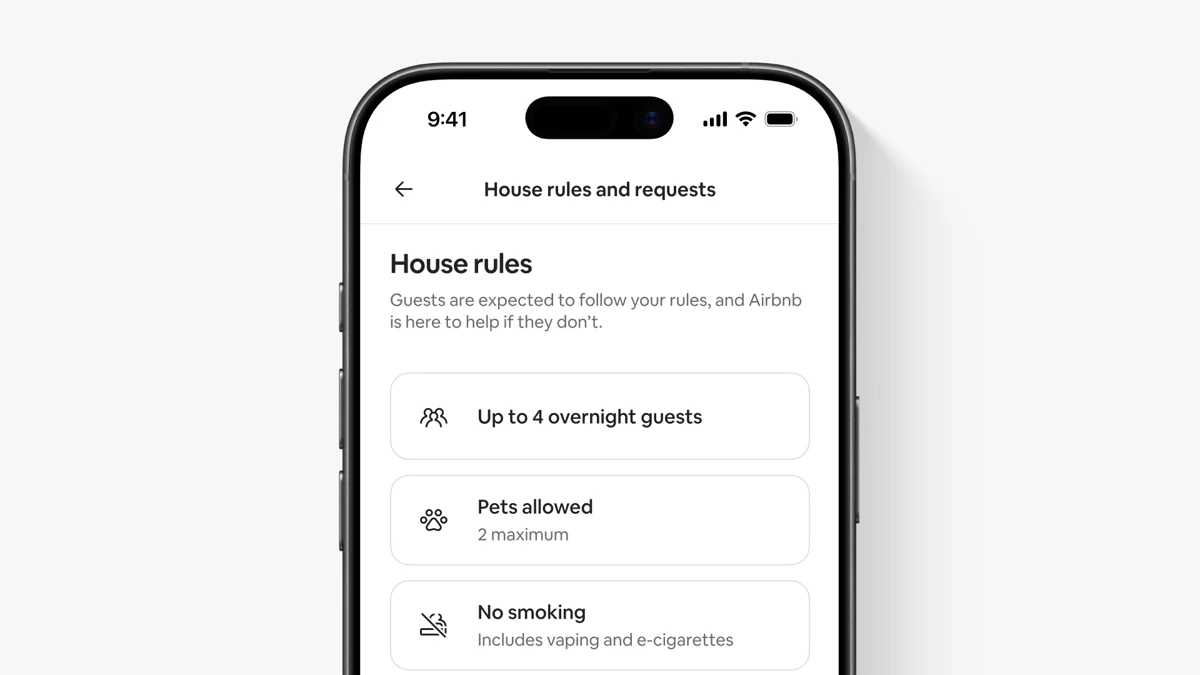
Airbnb is prohibiting hosts from including time-consuming chores in their house rules, a change that lightens the end-of-stay load on guests. The policy update, first reported by The Verge on October 21, 2026, applies to reservations booked on or after November 20.
Under the updated policy, hosts cannot ask guests to complete tasks that require significant effort or time, or tasks that would typically be performed by a cleaner. Hosts are also barred from adding extra rules in messages to guests or on signs around their property. The Verge reports that the restrictions apply to both channels, which closes off a workaround that had let hosts state chore expectations outside the formal rules field.
Airbnb's Resource Center guidance on the changes says guests should not be asked to wash and put away dishes, though hosts can ask guests to place used dishes in the sink. The Help Center article “Ground rules for home guests” asks guests to leave a listing in a state that does not require excessive or deep cleaning, and cites moldy dishes, soiled carpets and pet stains as examples. Airbnb's Help Center frames these expectations as baseline conduct. That is a narrower standard than a full turnover clean, the professional clean a property receives between stays.
The change also affects how requests appear on listings, the public pages guests browse before booking. Airbnb is displaying hosts' requests more prominently in a new “rules and requests” section. Listings where hosts leave chore requests after the new policy takes effect may carry an “includes cleaning requests” warning. Prospective guests will therefore see a host's expectations before booking, and a flagged listing will be visible as such.
Airbnb says exceptions to the checkout chore limits are possible. Its example is asking guests to dispose of trash in an animal-proof container in bear country. The carve-out shows that the rule targets effort and time, not every end-of-stay action. The boundary between a reasonable request and a prohibited chore will be judged case by case.
Some hosts have objected in Airbnb's community forums, arguing that the chore limits pose health risks.
The broader context here is a platform trying to define a stay with more precision than its listing text has allowed. Hosts have always written their own house rules, and those rules ranged from reasonable to idiosyncratic. A standard that separates “guest tidies up after themselves” from “guest performs cleaning labor” is easier to state than to enforce. The warning label and the forum complaints will show where Airbnb draws that line in practice.
Airbnb's UK news site also cites a 2024 EY study, which found little to no significant impact from Airbnb on the price and availability of housing in the UK.
In my view, the most useful outcome for both sides is clarity. Guests get a defined end-of-stay expectation, and hosts get a written standard they can point to when a checkout goes wrong. Whether that clarity reduces disputes will depend on how consistently the new rules and the “includes cleaning requests” label are applied to bookings made from November 20 onward.