Airbnb Tests AI-Powered Search as Engineering Speed Surges
Airbnb is testing an AI-powered search feature that lets users switch from the company's familiar filter-and-listing grid into a natural-language interface — you type a conversational query, and results come back in a visual format. CEO Brian Chesky disclosed the test on Airbnb's second-quarter earnings call on August 6, 2026, alongside financial results showing revenue up 17% year-over-year to $3.6 billion and adjusted EBITDA up 21% to $1.3 billion for the quarter ended June 30. (TechCrunch)
The search toggle is a departure from Airbnb's traditional keyword-and-filter setup. Chesky described the AI-generated titles in search answers as conversational, like a chatbot, but more visual. On individual listing pages, highlights would be generated in real time and personalized to each user. The feature is still in testing; Airbnb has not announced a general availability date. (TechCrunch)
Behind the search experiment sits a broader AI-driven push on Airbnb's engineering cadence. Chesky told analysts that AI has cut the company's time from concept to launch by as much as 60%. The number of features and improvements shipped rose nearly 80% compared to the same six-month period in the prior year. Airbnb previously disclosed that AI now writes 60% of its new code, a figure first reported in May 2026 and reiterated on the Q2 call. (TechCrunch)
That shipping velocity feeds into the company's 2026 Summer Release, an app upgrade announced in May that added AI-powered tools to help users find places to stay, plan trips, and get help. (Airbnb Newsroom) Airbnb is also rolling out AI-assisted tools for hosts, including listing creation and pricing and earnings insights. (Airbnb Q2 2026 Financial Results)
On the support side, Airbnb launched its AI-powered customer support bot in North America in 2025 and expanded it to more than 50 languages in 2026, with plans to extend it to voice calls later in the year. Nearly 45% of customer issues that begin with the AI agent are resolved without any human involvement. Support cost per booking was down 16% year-over-year, partly attributable to the AI agent. (TechCrunch)
Airbnb's use of AI extends beyond search and support into fraud prevention and reducing friction across the platform, areas the company has invested in for years. (Airbnb Newsroom, 2018) The company's Help Center publishes a guide explaining how it uses AI to power certain features and how users can control the use of their data. (Airbnb Help Center)
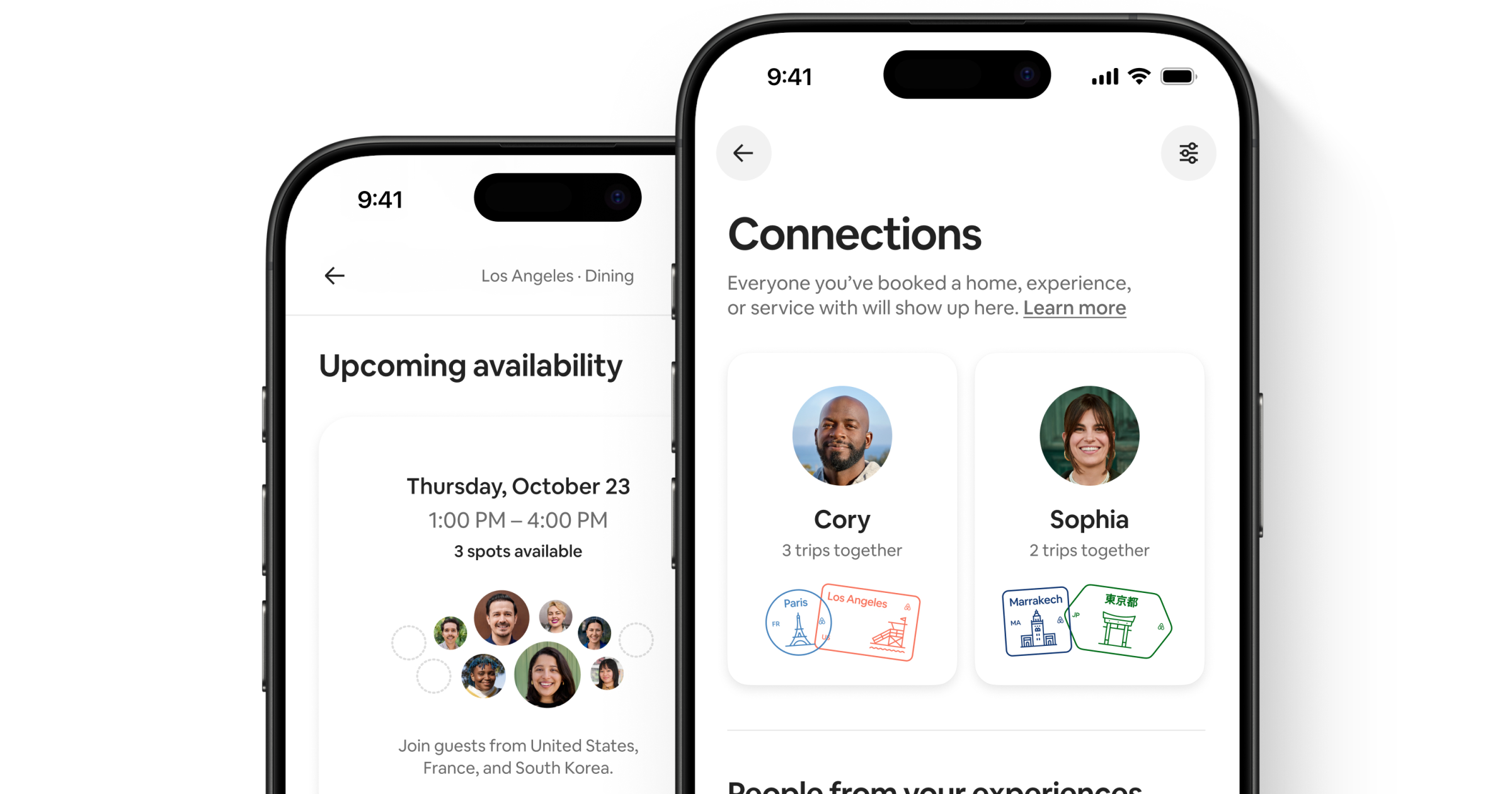
The Q2 results and AI disclosures arrive alongside product changes from recent quarters. In April 2025, Airbnb made total price display — including fees — standard globally in search results, two years after introducing an optional price display toggle. (Airbnb Newsroom) In October 2025, the company introduced social features for Airbnb Experiences, alongside smarter search features and expanded AI-powered customer support. (Airbnb Newsroom)
The broader context here is what the numbers signal about competitive dynamics. A 60% reduction in concept-to-launch cycle time and an 80% increase in shipped features, if sustained, compress the window for any rival marketplace trying to iterate at human-pair speed. The 45% no-human-touch support resolution rate, combined with a 16% cost-per-booking reduction, begins to quantify what AI agents deliver operationally rather than aspirationally. And the move from keyword search to natural-language, visual, personalized results is the same architectural shift that e-commerce and travel platforms broadly are testing.
The open question is retention and trust. Personalized, AI-generated highlights on listing pages mean two users could see materially different presentations of the same property. That is a design choice with real implications for host-guest expectations, and it is one Airbnb will need to navigate carefully if the feature moves from test to general release.