Iran's Strikes Signal the Iran-US Ceasefire Has Broken Down

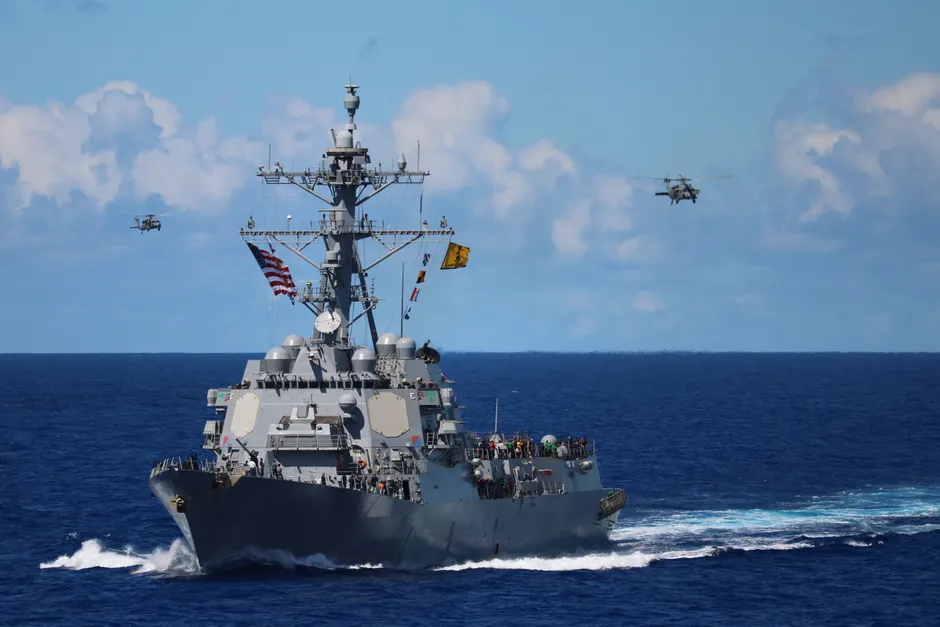
Iran's Islamic Revolutionary Guard Corps claimed on July 8 that it struck 85 US military targets across Bahrain and Kuwait, describing the action as an "initial" retaliatory response to what Tehran said was a US violation of an April ceasefire Press TV. The IRGC also claimed to have shot down a US MQ-9 Reaper drone during the operation, with a separate dispatch describing drone launches against US bases in Bahrain as part of the same sequence Press TV.
The scale of the July 8 claim far exceeds Iran's prior strike announcements. On June 11, the IRGC said it had hit 18 US targets across two missile waves and struck Fifth Fleet facilities in Bahrain Press TV. On June 6, an IRGC claim covered strikes on two Kuwaiti air bases and Fifth Fleet infrastructure Press TV. US Central Command has not independently verified any of these figures, and Press TV's reporting, as Iranian state media, reflects Tehran's account rather than confirmed battlefield assessments.
The ceasefire framework these strikes appear to have fractured originated in an April White House announcement that Iran had agreed to a truce and to reopening the Strait of Hormuz following what the administration called Operation Epic Fury White House. Trump had explicitly conditioned any ceasefire on the Strait being "open, free, and clear," warning on Truth Social that he would otherwise strike Iran "into oblivion" or "back to the Stone Age" Truth Social. In a second post, he framed the conflict against "47 years of extortion, corruption, and death," connecting the conflict to the 1979 Iranian revolution Truth Social.
Yet Trump's framing of the truce was conditional from the outset. In what appears to have been the ceasefire's founding post, he described it as "double sided," lasting for a fixed "period of two weeks," and mentioned receiving a "10 point proposal" on the Iran situation Truth Social. That deadline matters: when the two weeks neared their end, Trump announced the US would extend the ceasefire rather than allow it to expire, according to Britannica's account Britannica. If the July 8 IRGC strikes accurately reflect retaliation, they suggest that either the extension did not hold on Tehran's side or Iran read US actions in the interim as a breach.
Regional diplomacy adds context to the timing. CENTCOM convened military officials from 12 nations for a security dialogue in Manama on July 1, a week before the reported strikes, prompting Iranian officials including spokesman Esmaeil Baghaei to express concern about what Tehran viewed as war preparation tied to the Strait of Hormuz and the positions of Kuwait, Qatar, and Oman Press TV. That gathering, occurring days before the alleged retaliation, fits a pattern Tehran has historically cited as evidence of coordinated containment rather than routine defense coordination.
The structural weakness of this arrangement is apparent. A ceasefire bounded at two weeks and announced unilaterally on a social media platform rather than through a signed agreement or UN framework was always vulnerable at the edges. Trump's language — "double sided," contingent on Strait access, backed by threats of extreme retaliation — resembles a tactical pause tied to specific, verifiable conditions rather than the foundation of a durable peace. When one side pegs a truce to a maritime chokepoint's operational status, the truce becomes dependent on every subsequent naval event, real or claimed, in the Gulf.
US official channels have remained silent at a moment analysts require clarity. The White House's live briefing page for July 8, 2026 displayed only a holding message — "Stay tuned – we'll be live again shortly" — with no statement on the reported strikes White House. That silence allows Iranian state media to dominate the public narrative, a dynamic that typically widens rather than narrows the gap between competing casualty and damage claims until Washington responds.
What follows likely depends on whether the Strait of Hormuz condition Trump set earlier still functions as the operative red line, and whether the administration views the alleged July 8 strikes as a ceasefire violation meriting the "oblivion" response he threatened or as calibrated retaliation absorbable within a still-viable truce. The 10-point proposal Trump referenced remains undisclosed in detail — a gap that will carry considerable weight once negotiators or historians attempt to reconstruct what Tehran and Washington actually agreed to in April.