How a Shipping Dispute Triggered Escalating Military Strikes Across the Gulf
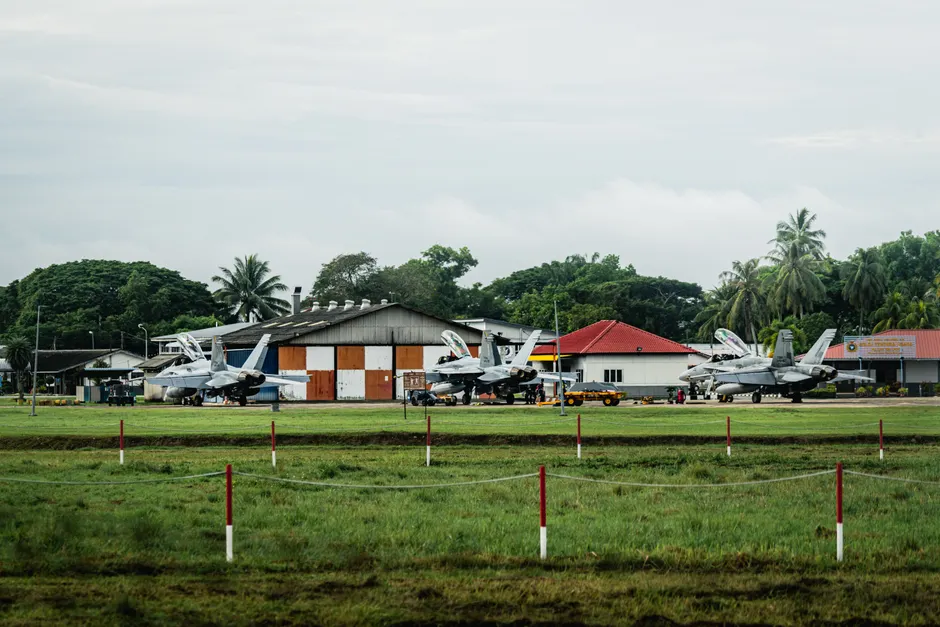
Iran's Islamic Revolutionary Guard Corps struck American military facilities in Bahrain and Kuwait on July 13, destroyed radar systems in Oman, and hit fuel tanks and ammunition depots at Prince Hassan air base in Jordan, according to state media cited by RTE. Jordan reported intercepting and downing four missiles fired from Iranian territory. Kuwait's military said it was engaging "hostile aerial targets" in its airspace, per the Guardian's live coverage.
This barrage followed overnight US strikes. CENTCOM, the US military command for the Middle East, said it hit at least 140 targets across Iran—air defence systems, radar sites, missile and drone equipment, and small boats. The US said it launched the operation after the IRGC fired on a Cyprus-registered container ship, accusing it of sailing an "unauthorised route" through the Strait of Hormuz; the IRGC claimed separately it had struck a second vessel for "violating regulations." In response, Iran announced the closure of the strait until further notice—a threat Tehran has made before but one now backed by active military operations rather than rhetoric alone.
CENTCOM rejected Iran's claim to control the waterway. "The Strait of Hormuz is a vital maritime corridor for global trade. Iran does not control it," the command said, according to the Guardian's live blog. The IRGC dismissed the statement, calling the strait "our territory." Donald Trump said US forces were keeping the strait open by force. The US-run Joint Maritime Information Center reported that commercial traffic through the corridor—which carries roughly a fifth of global oil and liquefied natural gas on a normal day—was moving at "reduced levels." That language stops short of confirming closure but signals real disruption to shipping companies and insurance firms.
This week's exchange is part of a wider pattern. CENTCOM has documented near-weekly rounds in press releases: "New Round of Retaliatory Strikes" on July 7, "Another Round of Strikes" on July 8, and "Latest Round of Strikes" on July 11. Reuters reported that Iran carried out attacks on Kuwait and Bahrain on July 8, both key hosts of US military bases, after the US resumed strikes following earlier attacks near Hormuz. AP News documented drone and missile attacks on the same two states on June 28, in response to earlier American airstrikes.
The strikes have spread geographically. Iran claimed operations against US sites in Qatar around July 9, the same period in which Tehran was preparing to bury Supreme Leader Khamenei, who was killed in a US strike on February 28 at the war's start, per Reuters. Kuwait has absorbed the heaviest civilian toll among Gulf states: an Iranian attack on Kuwait International Airport around June 3 killed one person and injured more than 60, according to Kuwaiti authorities. On July 9, Kuwait's military said it shot down three ballistic missiles, a cruise missile, and 10 drones, with falling debris wounding one person, per AP News.
US military and diplomatic teams have worked to align Gulf states behind their position. The State Department's Office of the Legal Adviser released "Operation Epic Fury and International Law" in April, framing US operations around Iranian attacks on American personnel and facilities, alongside Washington's concerns about Iran's nuclear and ballistic missile programs. A joint US-GCC statement after a June 25 ministerial meeting in Manama and a CENTCOM-led Regional Security Dialogue with 12 nations in Bahrain on July 1 further demonstrated this diplomatic effort. Yet this scaffolding has not prevented fighting from spreading to the very territories these partnerships were meant to protect.
What marks the current phase is the scope and simultaneity of Iranian retaliation—Bahrain, Kuwait, Jordan, and Oman all targeted in a single 24-hour cycle, with Qatar struck earlier this month. Host governments face an uncomfortable position: each hosts American forces under long-standing security agreements, yet each is now absorbing direct strikes for that role without being a party to the underlying US-Iran dispute. Whether Iran's closure of the Strait of Hormuz becomes a sustained blockade or remains largely a statement of intent, backed only by sporadic interdiction efforts, will shape how quickly oil markets and shipping insurers recalculate risk—and determine how much further the fighting spreads before either side seeks a way out.


