Vivo X500 Pro Max: 200MP Telephoto, Zeiss Partnership and a Pro Video Toolset
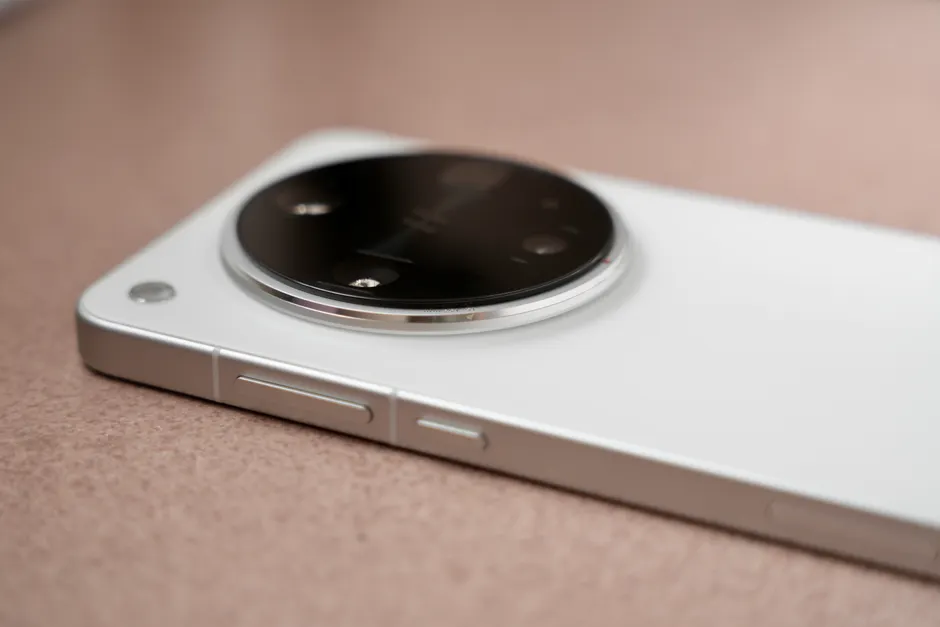
Vivo's X500 Pro Max pairs a 50-megapixel main camera with a 200-megapixel telephoto module and a partnership with the lens maker Zeiss, according to a hands-on report from Engadget published on 27 October 2026. The handset has a 6.85-inch display.
The main camera uses a 50MP Sony Lytia sensor measuring 1/1.28 inch, paired with an f/1.6 aperture. The sensor offers 17 stops of dynamic range, the span between the darkest and brightest tones it can hold in one frame. It achieves this through LOFIC (lateral overflow integrated capacitor) technology, which routes excess highlight charge into a secondary capacitor, a small reservoir, rather than clipping it at the photosite, the individual light-collecting cell. Stabilization on the main sensor is described as three-degree gimbal-grade.
The ultra-wide module is a 50MP unit on a 1/1.75-inch sensor. The telephoto camera uses a 200MP sensor measuring 1/1.4 inch and is credited with lossless zoom up to 10x magnification. Its optical stabilization is rated CIPA 7, the rating the camera and imaging industry uses for shake correction performance. Lossless zoom at this magnification generally means cropping within a high-resolution sensor rather than extending the focal length. Think of it as cutting a smaller frame out of a very large photograph, so the quality of that crop depends on the sensor's pixel count and the processing applied to it.
Beyond the fixed lenses, the phone supports attachable telephoto lenses. A camera grip case with a teleconverter attachment (an add-on optic that multiplies focal length) is also part of the accessory lineup. Both point toward a handset that users can extend optically, not only through software.
On video, the X500 Pro Max records 4K at up to 240 fps. Its Pro Video Mode accepts user-supplied custom LUTs (look-up tables, preset colour transforms) with real-time preview. Its log format supports an ACES (Academy Color Encoding System) workflow, a colour pipeline common in film post-production. The report notes one gap: the phone lacks an open-gate recording option.
In my view, the video feature set is the part of this announcement most likely to matter to working professionals. Log capture, ACES compatibility and LUT preview together describe a pipeline that a colorist or director of photography can slot into an existing grade, rather than a set of filters applied after capture. The missing open-gate mode is the item on that list a professional would notice first. Open-gate records the full sensor readout before the frame is cropped to a delivery aspect ratio, which preserves room for reframing and certain anamorphic-style workflows in post. Its absence limits how a shooter can re-compose footage later, and anyone planning around that constraint will need to weigh it against the rest of the spec.
The broader context here is the sensor spread itself. A 1/1.4-inch 200MP telephoto sensor, a 1/1.28-inch main sensor and a 1/1.75-inch ultra-wide are a deliberate range of sensor sizes across three focal lengths. How that range performs in real scenes, particularly in low light and across the handoff between modules, is something a hands-on can only partly establish.
The Zeiss partnership ties these pieces together on the brand side. Lens-maker co-branding has become a common way for Android OEMs to signal optical intent, and the X500 Pro Max places that partnership alongside the accessory ecosystem rather than as a standalone badge. For power users, the practical test will be whether the attachable telephoto and teleconverter options hold up as a repeatable workflow, not just a demonstration.
For readers weighing a camera-first phone, the X500 Pro Max sets out a clear set of priorities: wide dynamic range, long optical reach through a high-resolution sensor, shake control on the telephoto, and a professional video toolset with one notable omission. Whether those priorities translate into images and footage that justify the trade-offs will depend on the testing that follows the hands-on.