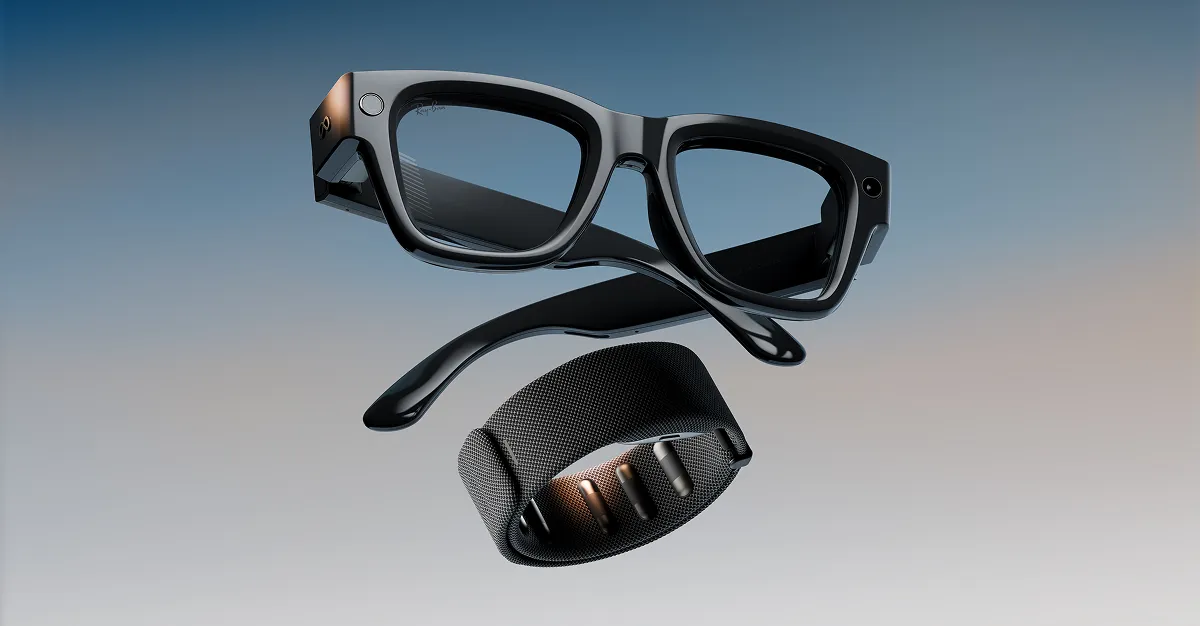
Senators Press Meta on Privacy and Safety Risks in AI Smart Glasses

Senators Ron Wyden (D-OR) and Edward Markey (D-MA) are investigating what they call "serious privacy and safety risks" around Meta's AI smart glasses. Their inquiry took the form of a letter to Meta CEO Mark Zuckerberg dated October 29, 2026, which Engadget reported on October 30.
The senators state that Meta launched the glasses after identifying risks to bystander privacy. The letter asks Meta to respond to questions about accidental camera activation and about tampering with the recording indicator, the small light that signals to people nearby that the device is capturing.
On image handling, the senators asked whether Meta's glasses blur faces and license plates for certain AI interactions, as Meta does on Facebook and Instagram. They also asked Meta to explain the circumstances in which captured imagery is made accessible to employees or contractors, or used to train AI models.
The letter goes further on pre-release process. Citing Meta's own documents, the senators asked whether the company conducted detailed human rights due diligence and safety testing on the glasses before release. Responses have been requested by November 26, 2026.
A companion press release from Markey's office, published October 30, frames the inquiry around privacy violations and the use of intimate images for AI training. That release states that offshore Meta contractors have reportedly reviewed footage of Meta AI glasses users in intimate settings.
Meta's public position is set out in its own posts. In a July 7, 2026 explainer, the company says no photos or videos can be taken on its AI glasses until the device detects that the indicator light is unblocked. A June 23, 2026 announcement of Meta's partnership with EssilorLuxottica, the eyewear group behind Ray-Ban, to launch Meta Glasses describes the product as privacy-first, with clear, easy settings that help users control their data.
The glasses have drawn restrictions elsewhere. Reuters reported that a UK pub chain restricted Ray-Ban smart glasses over concerns about covert recording, and that Meta faces a privacy lawsuit. A separate Reuters report states that courts in England and Wales have prohibited the use of Meta smart glasses because of restrictions on taking images and video in courtrooms. Reuters also reported on October 5, 2026 that Norway was set to propose a temporary ban on AI glasses in some public places.
The broader context here is the bystander. A smartphone camera is visible and raised deliberately. A head-mounted camera is worn, and the recording indicator is the only signal that a person in the room is being captured. That makes the indicator's reliability, and whether it can be defeated, a design question as much as a policy one. The senators' focus on accidental activation and tampering goes directly to that single signal, as does the question of how a person in frame would know what happens to the footage afterward.
In my view, the most useful part of the letter is its specificity. Each question names a mechanism: the indicator, the blurring pipeline, the contractor access path, the training data path, the pre-launch testing record. Those are the points where a written answer can be checked against product behavior, internal policy, and independent testing. Vague assurances about privacy-first design are harder to evaluate than a documented account of how the indicator is enforced and who can see the frames.
The answers, whenever they arrive, will matter most to the people who never agreed to be filmed. Wearable capture has real uses, and the category will likely keep growing. Whether it does so with bystanders treated as parties to the interaction rather than incidental subjects of it will depend on the kind of detailed, verifiable answers the senators have asked for.