US Restarts Iranian Port Blockade, Unraveling a Month-Old Peace Deal
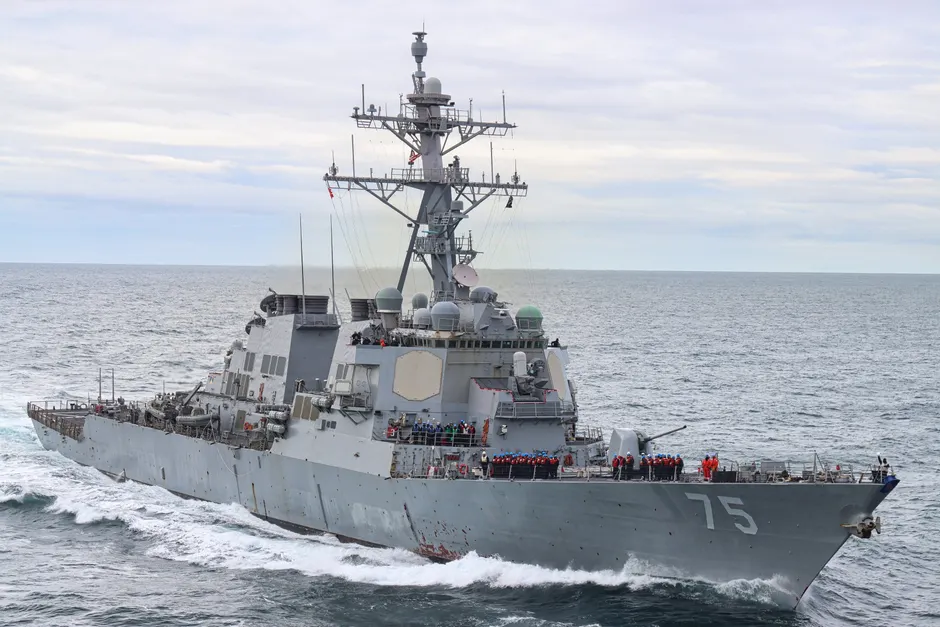
The United States has reimposed a naval blockade on Iranian ports less than four weeks after Washington and Tehran signed a memorandum of understanding intended to reduce tensions in the Persian Gulf. CENTCOM announced that blockade operations officially resumed at 4 p.m. EDT on July 14 CENTCOM, a timeline confirmed by reporting from Reuters and CNN Reuters, CNN. US forces are now preventing commercial and military ships from reaching Iranian ports and coastal waters.
CENTCOM linked the renewed blockade to what it describes as a recent wave of Iranian strikes on commercial vessels transiting the Strait of Hormuz — a crucial waterway connecting the Persian Gulf to global shipping routes Al Jazeera. The Associated Press reported that the blockade responds specifically to those Iranian attacks on ships in the strait AP.
One notable detail: CENTCOM announced this action through a military statement rather than through a White House executive order or presidential directive. In April, when Trump first imposed the blockade, the White House explicitly credited the President with directing the action to counter "Iranian aggression" and ensure safe passage through Hormuz White House, April 2026. This week, no such public presidential authorization has appeared, which represents a procedural shift worth noting.
The sequence of events matters here. On June 17, Trump and Iranian President Masoud Pezeshkian signed a 14-point memorandum of understanding, both framing it as a foundation for a broader settlement with negotiations to follow within 60 days BBC. Point 4 explicitly obligated the US to begin immediate blockade removal upon signing NPR. In a June 19 White House statement, the administration presented the agreement as reopening the Strait of Hormuz to unimpeded traffic and ensuring Iran would "never obtain a nuclear weapon" White House, June 2026. Within 30 days, that framework had collapsed.
On Tuesday, Iranian Deputy Foreign Minister Kazem Gharibabadi declared the MoU no longer valid Al Jazeera. Notably, his statement did not specify which breach he considered decisive — the blockade's reimposition, the US strikes that preceded it, or the underlying Iranian attacks on shipping. That ambiguity will matter when each side later argues about who violated the agreement first.
The Revolutionary Guards Corps (IRGC) responded to the blockade's return with a stark threat: all energy exports from the Middle East would be "either for everyone or for no one" Al Jazeera. This statement extends far beyond Iran's own oil exports. It implicitly targets the shared shipping lanes through Hormuz used by other Gulf oil producers, threatening global energy supplies at a critical chokepoint through which a large portion of the world's traded petroleum and natural gas flows.
This escalatory pattern did not emerge suddenly. In April, Trump threatened strikes on Iranian power plants and bridges alongside the original blockade Reuters. In June, Secretary of State Marco Rubio warned India's External Affairs Minister Jaishankar that blockade violations and illicit Iranian oil sales would not be tolerated State Department — a message aimed at major Iranian crude buyers, including India, who continued purchasing discounted Iranian oil despite US sanctions policy. On July 10, before the blockade's formal restart, US officials told Reuters that Washington was demanding Iran publicly commit to halting attacks on Hormuz shipping and maintaining open transit lanes Reuters. This suggests the blockade's return may have been readied as leverage before Tehran's alleged attacks were even fully documented.
The procedural absence of a new presidential directive is worth examining. Naval blockades function as tools of coercion precisely because they rest on explicit executive authority — the April action carried Trump's name, the June agreement bore his signature, and Rubio's warnings were delivered as official policy. A CENTCOM-issued resumption without visible presidential authorization raises a practical question: Is Washington treating this as a new policy decision requiring explicit approval, or as the automatic restart of existing operational rules once Iranian attacks on shipping resumed?
Regardless of the internal process, the outcome is clear. The MoU's core bargain — blockade removal in exchange for de-escalation — has been reversed within a month of signing. Both governments now accuse the other of breaching the deal first. The IRGC's threat to leverage regional energy flows broadly, rather than limit retaliation to US or Iranian shipping alone, signals that Tehran may view this dispute as one that Gulf states and their energy-dependent customers cannot sit out.