inMusic Plans an Open Developer Toolbox for Akai's MPC and Sample Hardware

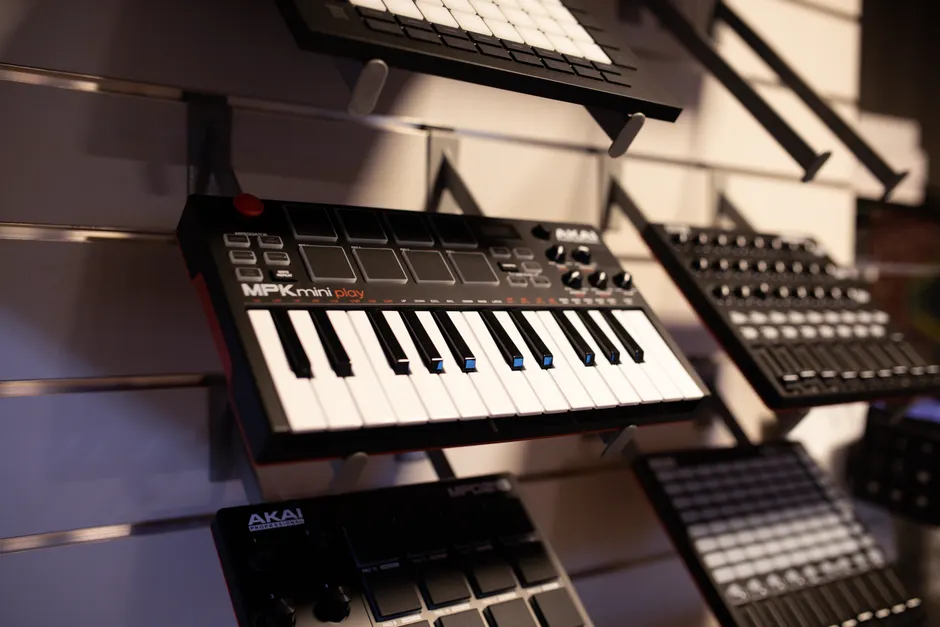
inMusic, the parent company of Akai, Moog and Native Instruments, plans to give developers a toolbox that exposes the inner workings of Akai's MPC and Sample hardware. CEO Jack O'Donnell described the plan in an interview with The Verge, published November 6, 2026. The stated goal is to let people do what they want with the devices.
According to O'Donnell, the toolbox would include code for hardware such as the MPC Sample Key, which inMusic intends to make open source. The company also plans an SDK (software development kit) meant to make modifications easier and to reduce the risk of bricking samplers. Bricking means leaving a unit unusable after a failed software change. O'Donnell said the company will try to provide a reset button, so users can experiment without losing what they already have on the device.
Akai has begun seeding Sample Key units to developers ahead of the official release. Seeding means handing out hardware so developers can build against it before general availability. That lets tooling and firmware work be tested on the real unit, not only on emulators or documentation. Those units are the practical starting point for the SDK, though the company has not described a schedule for the public toolbox.
inMusic also plans a Creator Lab at NAMM in Anaheim, where musicians can get hands-on with the hacking tools for 22 new products from across its brands. The Creator Lab is a plan, not a completed event, and the product list and format may still change before the show.
O'Donnell's timeline is one of the more notable details. He said that providing developers with tools for hacking inMusic products was not on the company's task list five weeks ago. The shift from no plan to a public toolbox, SDK, seeded hardware and a trade-show program in that span suggests the decision was made quickly.
Nick Williams is the CEO of Native Instruments, one of the brands in the inMusic group, according to AudioXpress, which reported the company's leadership in May 2026. The reported plans in this story concern Akai's hardware.
In my view, the technical problem O'Donnell describes is the central one for any open embedded platform. A sampler's firmware, the low-level software that runs the device, is a single point of failure. A bad flash, meaning a faulty write of new firmware, can turn an instrument into a paperweight, and a musician cannot easily recover it alone. An SDK that lowers that risk, combined with a reset path, addresses the failure mode that has kept hardware vendors from opening their code. Whether the reset works as described will matter more than the announcement itself, and that can only be judged once the tools ship.
The broader context here is the growing number of musicians who already modify, sequence and extend their gear through community firmware, scripts and third-party utilities. Opening official tooling does not create that activity. It changes the terms on which it happens, moving it from reverse engineering toward supported development. For developers, that means documented interfaces and seeded hardware. For inMusic, it means accepting that some of what users build will be unexpected, and that its support and warranty policies will be tested by that output.
If the toolbox arrives as described, a sampler could be extended without the fear of losing the instrument. That sounds like a modest outcome, but for a platform built around creative workflows, it is the kind of change that tends to produce surprising work.