Ocado's Profit Plunge and Boardroom Battle: What's Going On

Ocado shares fell nearly 15% on July 16, 2026, dropping to their lowest level in more than a decade. The online grocery and logistics technology company reported pre-tax profits of £17 million for the six months to 31 May 2026, a sharp fall from £607 million in the same period a year earlier The Guardian.
The profit collapse coincided with a boardroom dispute over who will replace CEO Tim Steiner. Ocado's chair Adam Warby, who took on the role in 2024, reportedly began searching for a new chief executive without consulting Steiner The Guardian. Steiner co-founded Ocado in 2000 with two other former Goldman Sachs bankers and has received nearly £100 million in pay since the company listed on the stock market in 2010. He pushed back against any suggestion he wanted to keep pulling strings after stepping down, saying he has "no intention of being a puppet master" and was "not standing in the way" of hiring a new chief executive The Guardian.
Steiner declined to comment on whether Warby should remain as chair or whether the two could continue working together The Guardian.
The timeline for Steiner's departure has shifted. On July 6, 2026, multiple outlets reported that Steiner would stay as CEO until early 2028 before moving to an advisory role Reuters; The Guardian; The Independent. The week before July 16, Ocado announced that Steiner would remain for an additional year after stepping down as CEO in a "founder role" offering strategic guidance through to 2029 The Guardian. Forbes described the move as an "end of era amid bid to revive US growth story" Forbes.
The profit drop, while dramatic in percentage terms, needs context. The previous year's £607 million figure was inflated by one-off gains, and the underlying business is still in a transition phase. eToro market analyst Adam Vettese noted that Ocado "remains loss-making, with cash burn still evident, albeit improving" The Guardian. In February 2026, Ocado announced plans to cut 1,000 jobs as part of a £150 million cost-saving programme and aimed to turn cash flow positive (meaning it would generate more cash than it spends) in the second half of 2026 Reuters. Shares fell 10% on that announcement. Ocado now expects to reach positive cash flow by its year-end in November 2026 The Guardian.
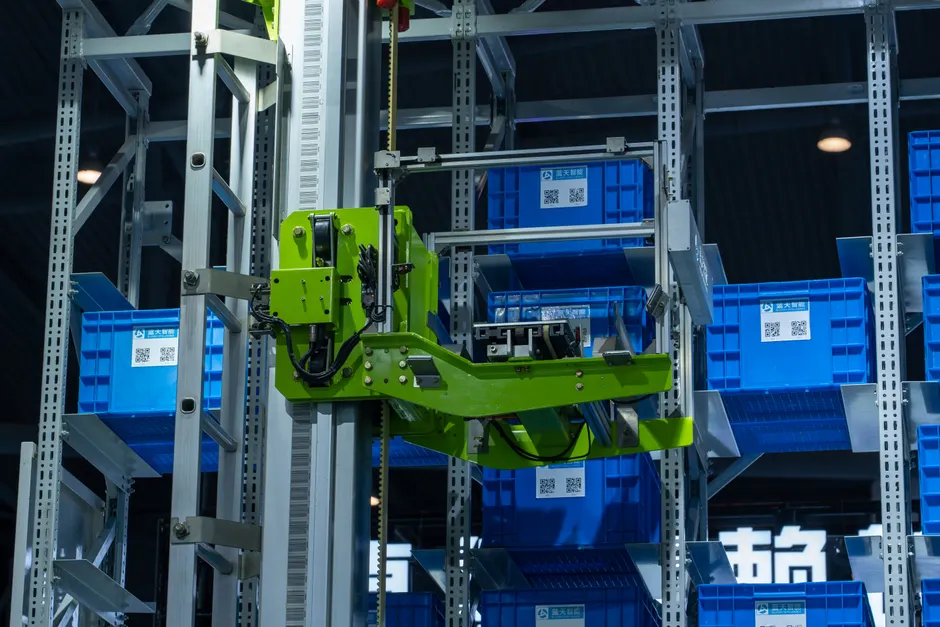
On the operational side, there are concrete signs of momentum. Ocado's retail joint venture with Marks & Spencer (a partnership where the two companies share ownership and profits) reported sales up 15% to £1.76 billion for the half year to 31 May 2026 The Guardian. The Ocado Smart Platform — the company's robotics-and-software technology that it licenses to grocery partners worldwide — went live in South Korea with Lotte in April 2025 Ocado Group Newsroom. A Customer Fulfilment Centre (CFC) in Poland with Auchan Polska followed in November 2025, and a new CFC in Catalonia with Bon Preu was announced in June 2025 Ocado Group Newsroom. Ocado and Asda announced an ecommerce partnership on May 29, 2026 Ocado Group Newsroom. Fortune and Statista also named Ocado one of the most innovative companies in Europe Ocado Group Newsroom.
Ocado is set to open robot-run distribution centres for clients in South Korea, Japan, and Phoenix, US in 2026, and expects to sign new clients in the US in the six to 12 months following July 2026 The Guardian. These are the commercial proof points that the Smart Platform has long promised investors; how well they are executed will weigh heavily on whether the cash flow target is met.
The half-year results were published on Ocado's investor relations website on July 16, 2026 Ocado Group Investors. Notably, the company's newsroom landing page did not feature a dedicated Half Year Results 2026 press release among its listed articles Ocado Group Newsroom, a departure from the visibility typically given to results announcements. Ocado had appointed a Chief Revenue Officer in October 2025 Ocado Group Newsroom, suggesting an effort to strengthen its commercial function ahead of the international expansion pipeline.
The broader context here is that tension between a board and its founder-CEO is not unusual in technology companies approaching a leadership transition, but it carries specific risks for Ocado. The company's valuation has long depended on investor confidence in the Smart Platform's global licensing potential rather than on the profitability of its UK retail operations alone. A visible fracture between the chair and the CEO at precisely the moment the company is trying to show commercial progress across multiple countries introduces execution risk that goes beyond the numbers in any single half-year result.
The market's verdict on July 16 was unambiguous. A 15% decline to a decade-low share price reflects investor concern spanning both the financial trajectory and the governance question. Whether Warby's parallel search for a successor ultimately accelerates or destabilises the transition will depend on whether the board and its founder can align on a process that all parties can publicly defend. Steiner's insistence that he will not obstruct a successor, combined with his refusal to comment on Warby's continued tenure, leaves the governance picture deliberately unresolved.