The US Has Quietly Redefined Its War in Iran Around One Waterway

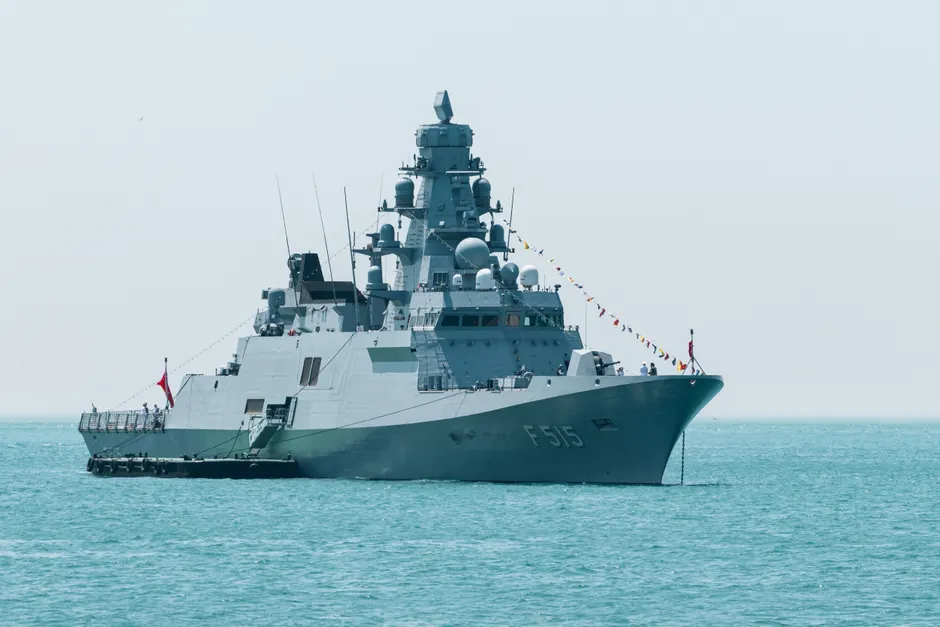
US Energy Secretary Chris Wright said on July 19, 2026 that the American military mission in Iran has shifted toward ensuring oil shipments can move through the Strait of Hormuz, a narrow shipping lane between Iran and Oman through which roughly a fifth of the world's daily oil supply passes. The statement reframes the war's goals nearly five months after fighting began. The Guardian
Wright, appearing on ABC's "This Week," said the US had tried a temporary pause to persuade Iran to let oil flow without attacks. Iran refused, he said, so the US pivoted to keeping oil moving "with or without Iranian cooperation." He was also pressed on the program about his earlier claims that the war, which began in February 2026, would be over by now.
The total number of American military members killed in the Iran conflict reached 16 after two more troops died in Jordan. The US launched retaliatory strikes against Iran's Revolutionary Guards (IRGC) — a branch of Iran's military that operates independently of the regular army — the same day in response to those deaths. Defense Secretary Pete Hegseth vowed the military campaign would continue.
This is not the first time the administration has publicly tied the war to the strait. On June 24, Wright stated that 20 million barrels of oil had exited the strait in the previous 24 hours and said "Iran will not have the ability to close the Strait of Hormuz going forward" Reuters. Nearly four weeks later, the administration is explicitly linking the continuation of hostilities to that same goal.
A memorandum of understanding between the US and Iran was reached in June 2026 aimed at resolving the conflict, including an agreement to end sanctions — economic penalties that restrict trade and financial activity — on Iran. That framework now appears overtaken by events. On July 19, Donald Trump urged Congress to include Iran in pending Russia sanctions legislation, signaling a turn back toward economic pressure after the June diplomatic track.
Senator Mark Warner, Democrat of Virginia, appeared on the same "This Week" program and described the Iran conflict as a "war of choice" launched without an imminent threat. Warner argued the administration failed to achieve regime change in Iran, secure enriched uranium stockpiles, or eliminate Iran's missile and drone capability.
The broader context here is the gap between the war's original justification and its current stated purpose. What began in February as a military campaign is now being defended on the basis of chokepoint security — that is, keeping a strategic shipping bottleneck open — rather than the elimination of Iran's nuclear or missile programs. Wright's attempted pause and Iran's refusal to cooperate without attacks provide the administration's narrative for that shift. But Warner's critique captures the central tension: none of the strategic objectives that presumably motivated the initial use of force have been achieved, and the mission has been redefined around a functional guarantee of maritime transit.
The death of Senator Lindsey Graham on July 11, 2026 adds a further complication for the administration's congressional position. Graham, a senior Republican on foreign policy and defense matters, would have been a natural voice in any Senate debate over the sanctions legislation Trump is now pressing for. His absence leaves a gap in the GOP's foreign policy caucus at a moment when Congress is weighing whether to fold Iran into the pending Russia sanctions package.
The current phase is defined by two opposing forces pulling at once. The June MOU offered a path to de-escalation through sanctions relief. Trump's July 19 call for Congress to include Iran in Russia sanctions legislation points in the opposite direction. Wright's language, "with or without Iranian cooperation," signals the administration has settled on a course that does not require Tehran's consent to achieve its stated objective of keeping oil flowing through Hormuz.
What remains unresolved is whether securing that chokepoint can substitute for the original war aims, or whether the US is now committed to an open-ended maritime security mission with no diplomatic resolution in sight.