Iran Declares 'Full-Scale War' With the US as Nightly Strikes Continue and Oil Prices Climb

Iranian President Masoud Pezeshkian stated on July 20, 2026 that Iran is in a "full-scale war" with the United States, speaking at a session of the Supreme Judicial Council. His remarks, published by IRNA at 16:42 local time, followed the ninth consecutive evening of US strikes against Iranian military targets carried out by US Central Command (CENTCOM). IRNA
Pezeshkian framed Iran's economy as the most important front in the conflict, saying Iran "must accept the repercussions of the conflict" with the US. Al Jazeera That he delivered this message to the judiciary, rather than to parliament or a military audience, suggests he was preparing domestic institutions for a long period of economic strain rather than calling for immediate military escalation.
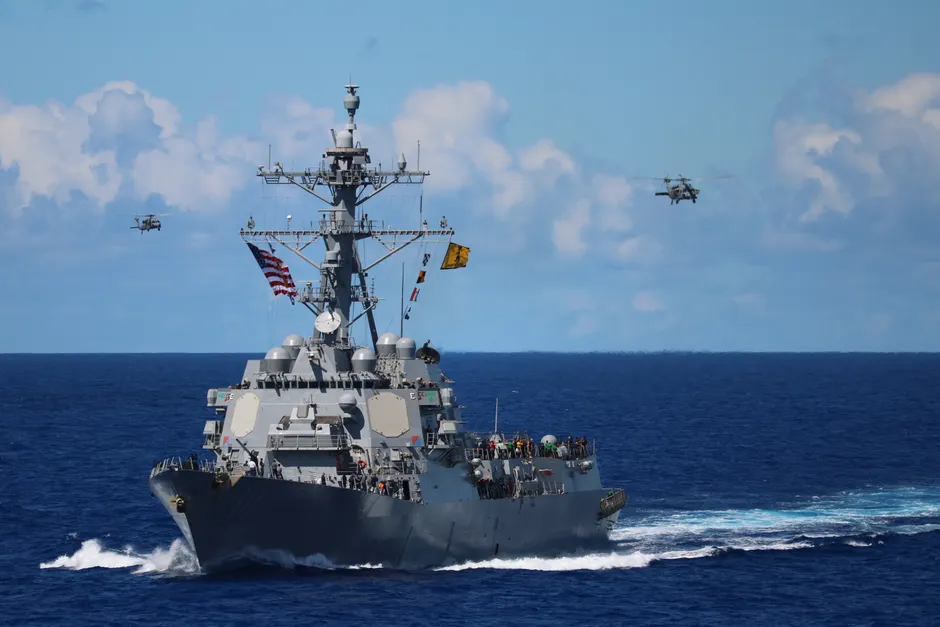
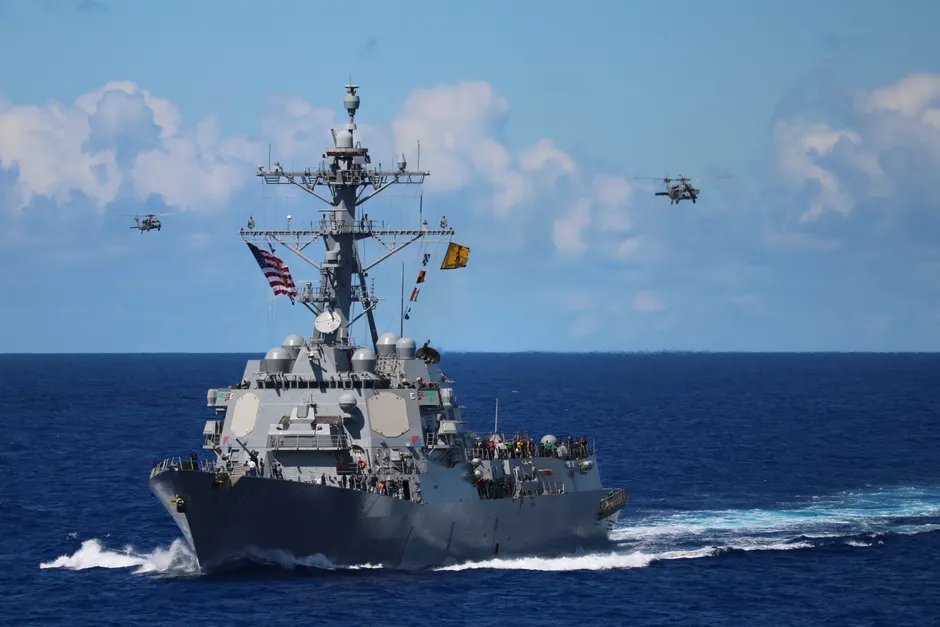
The US has steadily widened its aerial campaign, hitting military command centers, air defence systems, coastal surveillance sites, maritime capabilities, missile and drone launch sites, and communications networks. Iranian media reported strikes near Tabriz, a city believed to house underground missile bases, and Bushehr, home to Iran's only operational civilian nuclear power plant. A CENTCOM press release listed additional target sites including Chah Bahar, Jask, Konarak, Abu Musa, and Bandar Abbas. The Guardian CENTCOM
Iran has responded by launching retaliatory attacks against Bahrain, which hosts the US Navy's Fifth Fleet, and Kuwait. It has also struck commercial tankers in the Strait of Hormuz, a narrow shipping channel that before the war carried roughly a fifth of the world's oil and gas supplies. The Guardian
The Houthi movement in Yemen, an Iran ally, announced a blockade of Saudi ports on July 20, saying it was responding to Saudi-led targeting of Sana'a airport. The blockade threatens a key backup route: Saudi Arabia had been exporting millions of barrels of oil through the Red Sea, bypassing Iran's closure of the Strait of Hormuz. With both the Strait and Saudi ports now under pressure, the alternative routes that had partly cushioned global energy markets are narrowing. Oil prices passed $90 a barrel on July 20, their highest in a month. The Guardian
The escalation has effectively torn apart an interim US-Iran peace deal. A Memorandum of Understanding (MOU) reached in June 2026 was meant to halt attacks and reopen the Strait of Hormuz, with a 60-day implementation period to give diplomacy room to work. That window has not officially closed, but the intensity of the current exchange, now in its second week of consecutive nightly strikes, has overtaken the agreement's practical purpose.
Mediation efforts are still underway. Qatar and Pakistan have continued talking to both sides, and Iran's interior minister was expected to travel to Islamabad on July 20. Mediators have passed along a proposal for a 10-day ceasefire aimed at reviving the MOU, according to an Iranian official who spoke to Reuters. Iranian foreign ministry spokesperson Esmail Baghaei confirmed that diplomatic messages and ideas had been conveyed by mediators in recent days. US Secretary of State Marco Rubio said the US remained open to negotiations with Iran but that "it has to be real." The Guardian
The human cost of the widening conflict was highlighted on July 18, when a US service member was killed in northern Iraq during a controlled detonation of unexploded ordnance on a downed drone. The incident shows how the conflict has spread beyond Iran's borders, drawing in Iraq and the broader Gulf region.
The broader context here is that mediators face a structural problem: the June MOU was built on the assumption that both sides wanted a pause. Pezeshkian's framing of the economy as the primary front suggests Iran's leadership sees resilience under sanctions and maritime pressure as a longer contest than any 60-day window can hold. On the other side, the US strategy of systematically degrading Iran's coastal surveillance, air defence, and maritime strike capabilities suggests an operational goal that may be hard to stop midway. Whether a 10-day ceasefire can bridge that gap depends on whether either side sees a credible way off a path that Tehran has now formally described as full-scale war.