India's Cockroach Movement: How a Satirical Youth Protest Reached Parliament's Doorstep

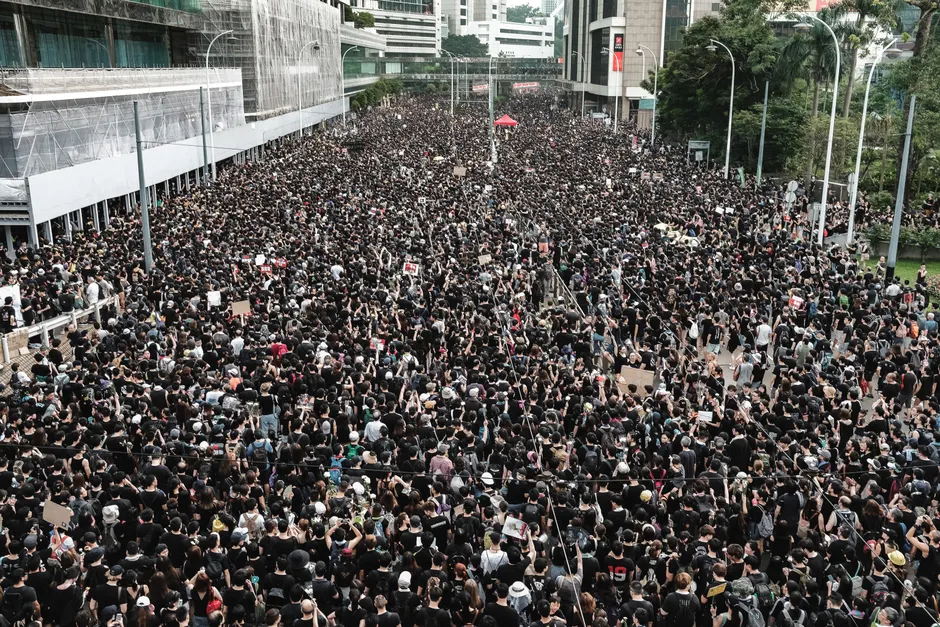
On July 20, 2026, thousands of mostly young Indians defied a Delhi lockdown and a police ban to march on parliament, demanding accountability for a scandal-plagued education system. Police responded with tear gas and batons at Jantar Mantar, the capital's designated protest site, leaving more than 100 students injured, according to Al Jazeera.
The march was organized by the Cockroach Janta Party (CJP), a movement founded on May 16, 2026, by Abhijeet Dipke, a political communications professional. What began as an online youth movement, as France 24 reported, had swelled to 22 million followers by June 2026, per Reuters. The CJP is described as a satirical political movement, but the demands it has laid out, and the state response those demands have provoked, are entirely serious.
The immediate trigger was the cancellation of India's National Eligibility cum Entrance Test (NEET), the undergraduate medical entrance exam, after widespread allegations of question-paper leaks and irregularities, Reuters reported. The cockroach metaphor, according to DW, started as a satirical protest against exam leaks before growing into a broader mobilization over jobs and education. The name carries a pointed message: like cockroaches, the movement's supporters intend to survive and persist no matter how hard authorities try to suppress them.
The BBC reported that the demonstrators demanded sweeping changes to how the education system is run. Al Jazeera described the protesters as demanding accountability and reforms following the exam scandal. Reuters separately reported that CJP protesters have called for the resignation of India's federal education minister.
The scale of the mobilization appeared to catch the ruling party off guard. The New York Times reported that the size and force of the protests suggested the government underestimated the raw anger among young Indians, a demographic that feels let down by the state and is struggling to find employment. Government data cited by Reuters shows India's overall unemployment rate stood at 3.1% for those aged 15 and above in 2025, but was substantially higher in the 15-to-29 age bracket, the core constituency of the CJP.
The Delhi authorities responded to the planned march with a lockdown on July 20 and a police ban on the gathering. Supporters of the Cockroach movement gathered anyway, Reuters reported. Police used tear gas and batons against protesters at Jantar Mantar, the NYT confirmed. Al Jazeera, in its July 21 reporting, documented more than 100 student injuries from police action during the march on parliament.
The movement's trajectory has been rapid. Reuters first reported on June 1, 2026, that the CJP was planning a street protest in New Delhi to challenge Prime Minister Narendra Modi. Dipke led the group's first street protest on or around June 6. By July 19, Al Jazeera reported, tens of thousands of protesters, most of them students, were expected to march on parliament over unemployment and education issues. The movement has also faced digital restrictions: its official X account was withheld in India, while its Instagram presence at @cockroachjantaparty remains active.
On July 20, a federal Indian minister promised the CJP that the government would weigh its demands, Reuters reported. Whether that promise translates into concrete policy action is an open question.
The broader context here is a collision between a demographic dividend, the economic boost a country expects when its working-age population grows, that has not delivered on its promise, and a political system that has so far treated youth discontent as a law-and-order problem rather than a structural one. India's working-age population is vast, and the gap between aspirations and outcomes is widening, at least as measured by youth unemployment figures. The NEET scandal crystallized a diffuse frustration: that the very mechanisms of meritocracy, the idea that hard work and talent should determine success, may themselves be compromised, and that institutional accountability is slow or absent.
A movement born in satire reaching parliament's doorstep within two months of its founding is itself a signal. The CJP's rapid growth, from online origin to millions of followers to street mobilization under a police ban, tracks a pattern where digital-native organizing compresses the timeline between grievance and confrontation. The state's response, a city lockdown and forceful dispersal, further inflamed the very demographic the government needs on its side.
The question for Indian politics is whether the CJP becomes a sustained pressure campaign that extracts policy concessions, or whether it fragments without institutional channels to absorb it. The movement's satirical framing gives it viral traction but also limits its formal entry into electoral politics. Its demands are specific: education reform, ministerial accountability, employment. Its leverage is crowd size and media attention. Its vulnerability is the same as any leaderless-feeling movement that depends on a single founder's visibility and a social media presence that can be throttled. India's opposition parties have not visibly co-opted the movement, which is either a sign of its independence or its political isolation.