Romania Shoots Down Russian-Origin Drones Three Days in a Row, Escalating Its Response

Romania shot down three drones on three consecutive days — Friday July 24, Saturday July 25, and Sunday July 26, 2026 — and summoned Russia's ambassador to Bucharest after the third interception. It was an unprecedented step in Romania's response to repeated airspace violations along its Black Sea border with Ukraine.
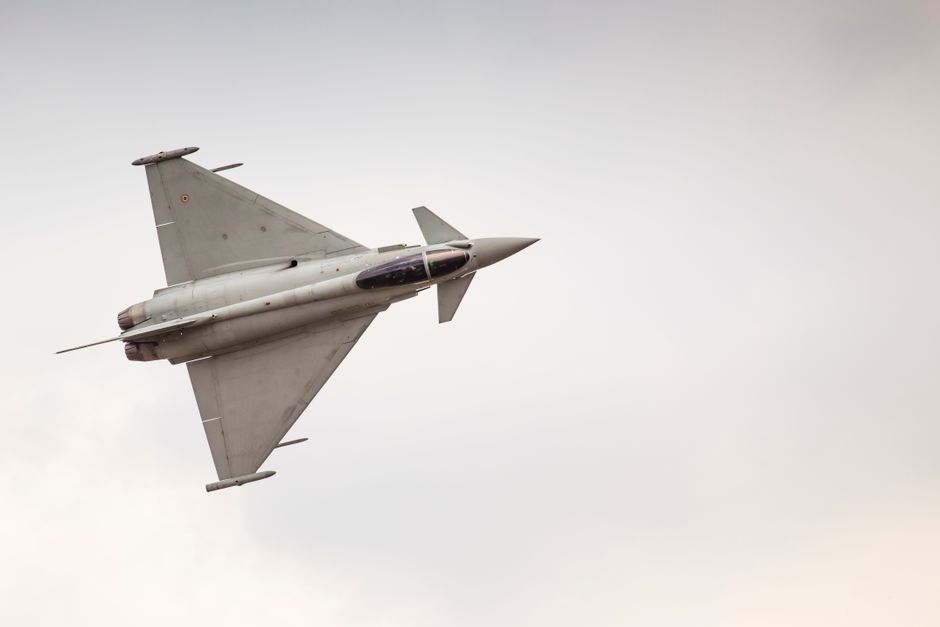
On Sunday July 26, a Romanian F-16 fighter jet shot down a drone over the Black Sea five minutes after it entered Romanian airspace, bringing it down safely over Romanian territorial waters. Senior NATO military spokesperson Martin O'Donnell said the drone appeared to be of Russian origin. The Romanian Foreign Ministry summoned the Russian ambassador that same day. The intercept capped a 72-hour sequence that began on Friday, when an F-16 downed a drone at 9:40 a.m. local time over the Black Sea — the first such engagement Romania had ever conducted, despite frequent incursions since Russia's 2022 invasion of Ukraine. That Friday shootdown was also the first time a NATO member state shot down a drone violating its own airspace.
The drone shot down on Friday was a Shahed model used by the Russian Federation in its war against Ukraine, according to an investigation cited by President Nicușor Dan. (The Shahed-136 is a type of loitering munition — essentially a self-destructing drone that circles a target area until it finds something to strike, with a range of roughly 2,500 kilometers.) Dan said it is "unacceptable and intolerable" for Russia to continue violating Romania's airspace, which is also NATO and EU airspace. Defense Minister Radu Miruță and Foreign Minister Oana Țoiu are overseeing the government's response.
Before this past weekend, Romania had absorbed numerous drone incursions without resorting to kinetic interdiction — that is, without using force to shoot them down. The shift reflects both legal and technical preparations. Romania's parliament adopted a law in 2025 authorizing the downing of drones that breach national airspace. At the end of June 2026, Romania integrated the US-made Merops AI-powered counter-drone system into its air defense architecture. The weekend's three successful intercepts suggest those capabilities are now operationally deployed.
The human and diplomatic stakes are concrete. In May 2026, a drone smashed into a residential building in Galați, a Romanian city on the border with Ukraine, wounding two people. Romania had previously summoned Russia's ambassador on April 25, 2026, regarding the violation of Romanian airspace by a Russian drone carrying an explosive, and again on May 29, 2026, regarding the crash of a Russian drone. The Romanian Foreign Ministry has also summoned the envoy in the past over provocative messaging, including an article titled "NATO barking at" published on the Russian Embassy's official website.
Romania is not alone in confronting this problem. Several countries near the Ukraine conflict have shot down drones since the war started in 2022. What sets Romania's situation apart is its status as both a NATO and EU member state: each violation of Romanian airspace is, by extension, a violation of allied airspace under the alliance's collective security framework. NATO has not invoked Article 5 — the clause that treats an armed attack on one member as an attack on all — in response to drone incursions. The alliance has instead relied on diplomatic demarches (formal protests) and enhanced air policing.
The broader context here is a trajectory of incremental escalation. Russia's drone warfare against Ukraine has routinely spilled into neighboring airspace, and the frequency of these incursions has increased as the conflict has consumed more of the Black Sea coastline. Romania sits directly across the Danube River from Ukraine's Odessa region, a recurrent target of Russian strikes. The Shahed-136's low radar cross-section — meaning it is hard to detect on radar — and its long range mean that flight paths can veer into Romanian territory, whether by design, GPS spoofing (the practice of tricking a navigation system with false signals), or wind drift. The distinction matters for attribution but not for the physical threat to Romanian civilians.
For NATO planners, Romania's decision to shoot rather than shadow represents a shift from passive monitoring to active air defense. The alliance's Supreme Headquarters Allied Powers Europe (SHAPE) has previously indicated that individual member states retain the authority to defend their own airspace under national rules of engagement. Romania's 2025 legislation codified that authority at the national level. The question now is whether other frontline states — Poland, the Baltic republics, Finland — will adopt similar shoot-down protocols if incursions persist or intensify.
The diplomatic channel between Bucharest and Moscow has narrowed considerably. Three ambassadorial summonses in roughly three months — April, May, and July 2026 — each delivered over drone-related incidents, have produced no discernible change in Russian operational behavior. The Russian Embassy's publication of the "NATO barking at" article suggests a deliberate posture of rhetorical defiance alongside the physical incursions. Romania's options for escalation beyond intercepts and diplomatic protests are constrained: it can push for a stronger NATO joint response, seek expanded Allied air defense deployments on its territory, or pursue EU-level sanctions (economic penalties imposed to pressure a government) tied to airspace violations. None of these are immediate mechanisms.
What remains unresolved is the rules-of-engagement question that the weekend has sharpened. Romania acted within its national legal framework and under NATO's established stance that member states may defend their own airspace. But each shootdown carries escalation risk — a misidentified drone, debris causing casualties, or a Russian retaliation against a NATO asset. The fact that the Sunday intercept occurred over territorial waters, not land, may reflect an effort to mitigate that risk. Whether the next incursion follows the same pattern, or whether Russia adjusts its flight corridors to avoid Romanian airspace entirely, will indicate whether this weekend was a threshold crossed or a new equilibrium established.