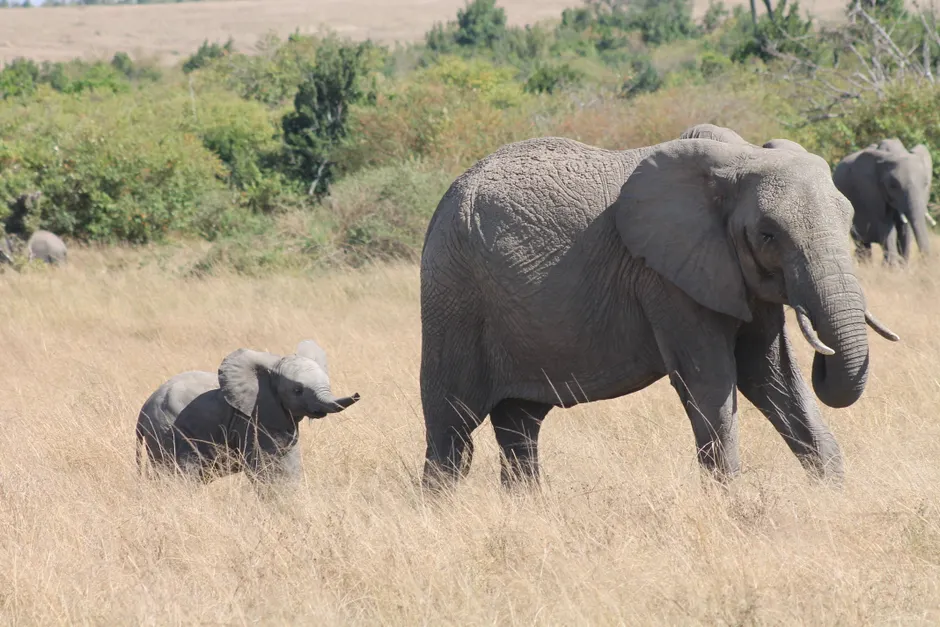
Fourteen Elephants Found Dead in Kenya's Amboseli Region: Investigation Underway

Fourteen elephants have been found dead across the Amboseli ecosystem in southern Kenya, near Amboseli National Park, in what officials describe as the first mass elephant die-off on this scale recorded in the region in decades. BBC
The Kenya Wildlife Service (KWS) confirmed to the BBC that veterinary and field experts are examining the carcasses. Tissue samples have been sent to laboratories to determine whether the deaths were caused by disease, poisoning, or another factor. The agency says there is currently no evidence pointing to a single cause of death.
KWS head of communication Duncan Wanyama told local media that the elephant carcasses were found 15 to 30 kilometres from the boundaries of Amboseli National Park. The Amboseli ecosystem spans the border between Kenya and Tanzania and serves as a critical grazing and movement range for elephant populations that travel between the two countries.
Several details make the event biologically unusual. The dead elephants include individuals of different ages and sexes, meaning the deaths are not confined to a single family group. In a disease outbreak, one would expect clustering within a family or among elephants sharing the same range. A poisoning event tied to contaminated water or plants would likely produce a similar geographic pattern. The demographic spread across the dead elephants, combined with the geographic spread Wanyama described, narrows but does not eliminate the possible causes. Laboratory results will be decisive.
The Amboseli Trust for Elephants, which monitors elephant movements across the ecosystem, recorded more than 2,000 elephants in the Amboseli population as of 2025. Fourteen individuals represent less than one percent of that population. But the significance lies less in the raw number than in the precedent. Officials say this is the first time in decades that elephant deaths on this scale have been documented in Amboseli, a population studied continuously since 1972 by the Trust and its predecessor organizations.
The broader context here is that mass mortality events in long-lived, socially complex animals can carry ripple effects that go beyond the body count. Amboseli's elephants live in matriarchal family structures where older females hold critical knowledge: seasonal water sources, migration routes, and predator-avoidance strategies built up over decades. The loss of even a few mature individuals can disrupt herd cohesion and movement patterns for years. Whether that dynamic applies here depends on the age and sex of the dead elephants, which KWS has not yet detailed beyond confirming demographic diversity.
The Amboseli ecosystem is also distinctive because it crosses national borders. Elephants routinely move into Tanzania, meaning any infectious disease or environmental toxin in the affected area could have implications beyond Kenyan territory. Coordination between KWS and Tanzania's wildlife authorities would be a logical step, though no such coordination has been publicly confirmed.
KWS has not disclosed a timeline for laboratory results, nor has it indicated whether additional carcasses have been found since the initial count of 14. The agency's statement that no single cause has been identified reflects the early stage of the investigation. It is not an absence of evidence so much as an absence of completed diagnostics.
For conservationists working in the Amboseli ecosystem, the stakes extend beyond the immediate deaths. The Amboseli elephant population has been a flagship for community-based conservation in Kenya, showing that pastoralist communities and wildlife can coexist under the right governance and incentive structures. A mortality event of unknown cause, left unresolved, could erode confidence in that model, particularly if the cause turns out to be human-made rather than natural.
What happens next hinges on the laboratory findings. Disease would trigger containment measures and possibly range restrictions on other wildlife. Poisoning, whether intentional or accidental, would shift the focus to law enforcement and land-use management. An environmental factor, such as contamination of a shared water source, would raise questions about broader ecological health across the ecosystem. Until the results arrive, KWS's investigation remains broad rather than targeted, and the Amboseli elephant population stays under watch by the Trust's monitoring teams.